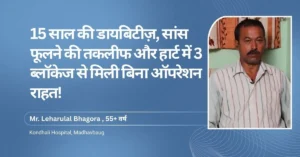
15 Years of Diabetes and 3 Heart Blockages – Recovery Without Surgery
After facing 15 years of diabetes and 3 heart blockages, Leherulal Bhagora struggled with breathlessness and daily fatigue. Doctors advised



Many people wonder why their belly fat isn’t reducing even with dieting and daily walks. This story helps you understand seven science backed reasons behind stubborn abdominal fat and how Ayurvedic Panchakarma with structured nutrition can support healthier, long-term fat loss.
In this article, you will learn:
A few years ago, a patient named Suresh, a 42-year-old corporate manager, walked into my cabin looking tired and disappointed. “Doctor, I’ve reduced rice, stopped sugar, and walk every day… still this stomach is not going in! What am I doing wrong?” he asked while pressing his belly in frustration. What Suresh didn’t realize was this: belly fat is not just about calories, it is about hormones, stress, inflammation, digestion, and metabolism. Dieting alone cannot handle all of that. That day, I explained to him seven science backed reasons behind his stubborn belly fat and how Ayurvedic Panchakarma and the Swasthyam Diet Kit can finally help the body release this fat.
First, I talked about stress and cortisol. Suresh’s high-pressure job, late-night deadlines, and mental load were continuously raising his cortisol levels. Cortisol signals the body to store fat specifically in the abdomen, even if a person is eating very little. No diet can overpower this stress response. Panchakarma therapies like Shirodhara and full-body Abhyanga help reduce cortisol, relax the nervous system, and shift the body from fat storage mode to fat burning mode.
Second, Suresh had insulin resistance, the most common cause of central obesity in Indians. High insulin acts like a lock on fat cells. It prevents fat from being released for energy. This is why dieting often leads to low energy but no inch loss. Panchakarma procedures such as Basti and Virechana help improve insulin sensitivity, reduce internal inflammation, and mobilize stubborn visceral fat. The Swasthyam Diet Kit, being low glycemic and anti inflammatory, maintains stable insulin levels and complements this cleansing process beautifully.
Third, Suresh was sleeping barely five hours a night. Science shows that poor sleep increases hunger hormones, reduces fat burning capacity, and promotes abdominal fat accumulation. I told him, “When the body thinks you’re not resting, it assumes danger and stores fat for protection.” Panchakarma therapies like Nasya and evening Abhyanga restore deeper sleep, calm the mind, and enhance metabolic repair overnight. With the gut friendly Swasthyam diet, sleep quality improves further, allowing better belly fat reduction.
Fourth, Suresh believed his daily walking was enough. Walking is good for general health, but it has limited impact on deep visceral fat. Belly fat requires better muscle engagement. Panchakarma supports this indirectly by reducing stiffness, lowering inflammation, and improving energy levels, making patients more capable of engaging in strength training or higher intensity exercises. Detoxification also enhances mitochondrial efficiency, improving overall fat oxidation.
Fifth, we discussed hormonal imbalances. For men, increased belly fat raises estrogen levels and lowers testosterone. Low testosterone means less muscle, slower metabolism, and more fat storage. Panchakarma procedures like Virechana improve liver detoxification, reduce hormonal burden, and support natural hormonal rebalancing. Combined with the nutrient dense Swasthyam Diet Kit, the body slowly resets its hormonal rhythm.
Sixth, Suresh had significant gut issues, bloating, acidity, irregular bowels. A disturbed microbiome causes chronic inflammation, which directly adds to stubborn belly fat. Panchakarma shines in gut healing. Virechana, Basti, and mild cleansing protocols using Triphala improve bowel regularity, repair gut lining, and reduce endotoxin load. When gut inflammation decreases, belly fat becomes much more responsive to diet and exercise. The Swasthyam Diet Kit supports microbiome health and reduces digestive stress.
Seventh, Suresh was unknowingly consuming hidden calories: multiple cups of sweet tea, evening biscuits, occasional snacks, and late-night dinners. These small but frequent spikes of insulin silently promote fat storage. Panchakarma helps break these habits because detox reduces cravings, stabilizes appetite hormones, and improves digestion. Meanwhile, the Swasthyam Diet Kit provides structured, satisfying meals that naturally prevent snacking and late-night eating.
Eight weeks later, Suresh returned with a confident smile and a noticeably flatter abdomen. “Doctor, it’s finally going!” he said proudly. And he was right. The transformation happened not because he dieted harder, but because he worked smarter, with Panchakarma to reset the body and the Swasthyam Diet Kit to guide his metabolism.
I always tell patients: belly fat doesn’t reduce by force, it reduces when your inner biology is corrected. When stress, insulin, hormones, sleep, gut health, movement, and meal timing are aligned, especially with the help of Panchakarma and Swasthyam, the body naturally shifts from storing fat to burning it.
Dr Gurudatta Ananad Amin
CMO Madhavbaug
This real-life example shows that when belly fat isn’t reducing, the reasons are usually deeper than calories alone. Stress hormones, insulin resistance, poor sleep, lack of muscle engagement, hormonal imbalance, gut health and hidden calories all interact in complex ways. Understanding these mechanisms is essential before jumping to extreme diets or quick fixes.
Stubborn belly fat and central obesity are closely linked with insulin resistance and a higher risk of developing diabetes in the future. In many patients, abdominal fat is an early warning sign that their metabolism needs attention long before they need formal type 2 diabetes treatment. Addressing these risk factors with lifestyle correction and monitored clinical guidance can help protect long-term heart and metabolic health.
The Panchakarma-based detoxification and Swasthyam Diet Kit described in this story follow the same principles used in comprehensive ayurvedic treatment for diabetes: improving insulin sensitivity, reducing inflammation, healing the gut and bringing the body toward balance. Any such approach should always be personalised and supervised by qualified practitioners who understand both modern diagnostics and classical Ayurvedic principles.
This blog post is for educational and informational purposes only. It shares a clinical experience and explains possible reasons why belly fat isn’t reducing despite dieting. It is not a substitute for professional medical advice, diagnosis or treatment.
If you are concerned about persistent abdominal fat, metabolic health or diabetes risk, please consult a qualified healthcare professional who can assess your medical history, perform appropriate investigations and recommend a safe, individualised plan. Never start or stop any medicines, therapies, Panchakarma procedures or diet plans without proper medical supervision.
Dr Gurudatta Anand Amin is the Chief Medical Officer at Madhavbaug, an integrative cardiac and metabolic care institution that combines modern diagnostics with Ayurvedic therapies. With extensive clinical experience in lifestyle disorders, he focuses on prevention, metabolic correction and safe, evidence-aligned application of traditional treatment systems.
*To Study Efficacy of Blood Pressure Management Program in Overweight to Obese Male Patients with Known History of Hypertension:
A Retrospective Study* — Rohit Sane et al., IJAPC, July 2018.
Read Full Study (IJAPC)

After facing 15 years of diabetes and 3 heart blockages, Leherulal Bhagora struggled with breathlessness and daily fatigue. Doctors advised
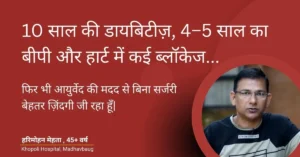
10 साल की डायबिटीज़ (10 years of diabetes), कई वर्षों का हाई ब्लड प्रेशर और हार्ट में मल्टीपल ब्लॉकेज के