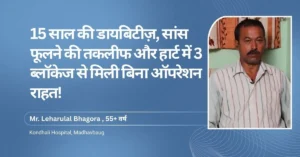
15 Years of Diabetes and 3 Heart Blockages – Recovery Without Surgery
After facing 15 years of diabetes and 3 heart blockages, Leherulal Bhagora struggled with breathlessness and daily fatigue. Doctors advised


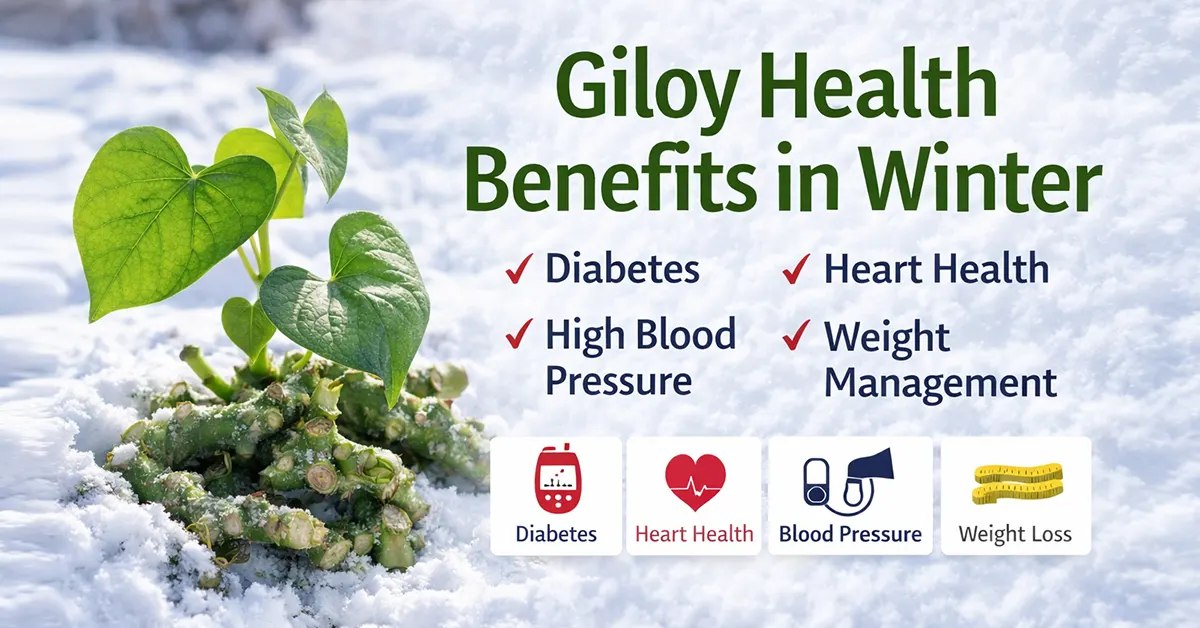
Winter is the season when immunity drops, metabolism slows, and lifestyle diseases like diabetes, heart problems, and high blood pressure tend to worsen. Giloy, an Ayurvedic herb traditionally used in Indian households, is often discussed during winter for its general wellness support and seasonal relevance.
Giloy (Tinospora cordifolia), also known as Guduchi, is a climbing shrub widely referenced in Ayurveda for its role in seasonal wellness practices. It is commonly consumed during winter in the form of decoctions, powders, or tablets as part of traditional routines.
In colder months, the body experiences:
This is where Giloy becomes part of many winter health discussions.
Winter doesn’t affect everyone equally. People with chronic conditions often notice fluctuations during cold months.
Common winter challenges include:
This seasonal vulnerability makes lifestyle-based wellness approaches more relevant.
Important Note: The following information is educational in nature and should not be used as a substitute for medical treatment.
Winter often brings viral infections and recurring colds. Giloy is traditionally associated with immunity-supporting properties and is commonly included in winter routines to support general resistance.
It is often discussed in Ayurveda for:
Supporting the body’s natural defense mechanisms
Learn more about medically supervised care options here: ayurvedic treatment for diabetes
Winter causes blood vessels to constrict, which may increase cardiovascular strain. This is especially important for individuals exploring information related to heart blockage treatment.
Giloy is traditionally described as a plant that supports circulation and internal balance when used responsibly and under guidance.
For clinically guided heart care programs, explore: heart blockage treatment without surgery
Cold exposure can trigger blood pressure fluctuations. Lifestyle measures such as diet control, stress management, and supervised wellness practices gain importance during this season.
People searching for high blood pressure treatment often look for supportive lifestyle guidance along with medical care.
Read about integrated approaches here: Ayurvedic treatment for blood pressure
Winter is associated with:
Giloy is often mentioned in traditional wellness contexts for digestive balance and metabolic awareness. While it is not a weight-loss solution, it is commonly discussed as part of holistic lifestyle practices.
Explore medically supervised options for weight management: Ayurvedic treatment for weight loss
Giloy is used in different forms depending on preference and guidance:
Winter consumption usually focuses on moderation and consistency rather than quantity.
Madhavbaug recommends integrated care where traditional wellness is aligned with modern medical supervision.
As interest in Ayurvedic herbs grows, it becomes important to:
Align traditional knowledge with clinical oversight
This article is especially relevant for:
Integration of Ayurveda with modern medicine
Giloy continues to be discussed as a traditional herb with seasonal relevance, especially during winter. While it holds cultural and historical importance, responsible use, medical guidance, and lifestyle balance remain essential.
For individuals managing diabetes, heart health, blood pressure, or weight concerns, integrated medical care remains the safest and most effective path forward.
Clinical studies have explored the traditional use of Giloy. Research indicates antioxidant and immune-modulating properties of Tinospora cordifolia extracts, which provide context for its use in seasonal wellness practices such as winter health routines.
For example, a pharmacological review published in the Journal of Dietary Supplements examined its medicinal profile (PubMed: 21253987). Separate studies in the Journal of Ethnopharmacology and Indian Journal of Pharmacology have reported immunomodulatory and antioxidant effects (PubMed: 27805575; 11710577).

After facing 15 years of diabetes and 3 heart blockages, Leherulal Bhagora struggled with breathlessness and daily fatigue. Doctors advised
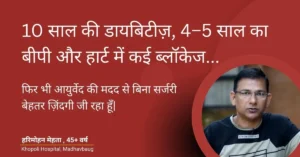
10 साल की डायबिटीज़ (10 years of diabetes), कई वर्षों का हाई ब्लड प्रेशर और हार्ट में मल्टीपल ब्लॉकेज के