


Have you wondered if the breakfast which you eat is actually healthy or not? Many diabetic people may wonder why there is a sudden increase in the blood sugar level even after a healthy meal. It may not be due to an unhealthy type of meal but may be due to some simple tips which you forget while eating. Let’s explore Madhavbaug’s Dr. Asmita’s 7 hidden secrets which cause a blood sugar spike after breakfast.
The 7 Hidden Secrets for Healthy Breakfast for Diabetes
1. Physical Movement After Eating
Heavy exercises are not indicated, but sitting in Vajrasana (thunderbolt pose) or a brisk walk may be a better solution towards healthier digestion and thus reducing the risk of an increase in blood sugar after breakfast.
2. Fiber-Enriched Meal
Carbohydrates can easily turn into blood sugar, but fibre slows the process. Including fibre-rich components like lentils, legumes and vegetables like spinach and many more. (Enloe, A., 2024)
Diabetes Patient ke liye 21 Days Diet Plan 🗓️
3. Avoid Eating Carbohydrates Alone
Instead of eating only parathas, pairing them with dishes having protein and heavy fats may slow down the digestion process, leading to a subtle rise rather than a sharp blood sugar spike after breakfast. (Enloe, A., 2024)
4. Every Individual May Have Individual Trigger Foods
There cannot be a standard Indian breakfast for diabetes since everybody is unique and may respond to food in a different way. Thus, it is important to note one’s specific meal, which can lead to an increase in blood sugar post-meal.
5. Hydration is Important
Dehydration leads to an increase in glucose concentration in the blood, which can lead to an increase in blood glucose post-meal. Something as simple as drinking enough water can support better overall blood sugar control. (MURITALA, I., 2025.)
6. Regularly Reviewing The Medicine Time
Don’t “set and forget” your diabetes medication routine. Sometimes the time of medicine may play an important role in the post-meal spike. It is important to note that the time of medicine may not be the same every time. It may change with seasons and other environmental factors.
7. Monitoring is a Feedback Tool, Not Just a Number
Regularly checking your blood sugar spike after breakfast isn’t just about the reading but also learning your body’s patterns over time so you can prevent complications accordingly. To know more about personalised care for diabetes and continuous monitoring, book a consultation with Madhavbaug at your nearest centre.
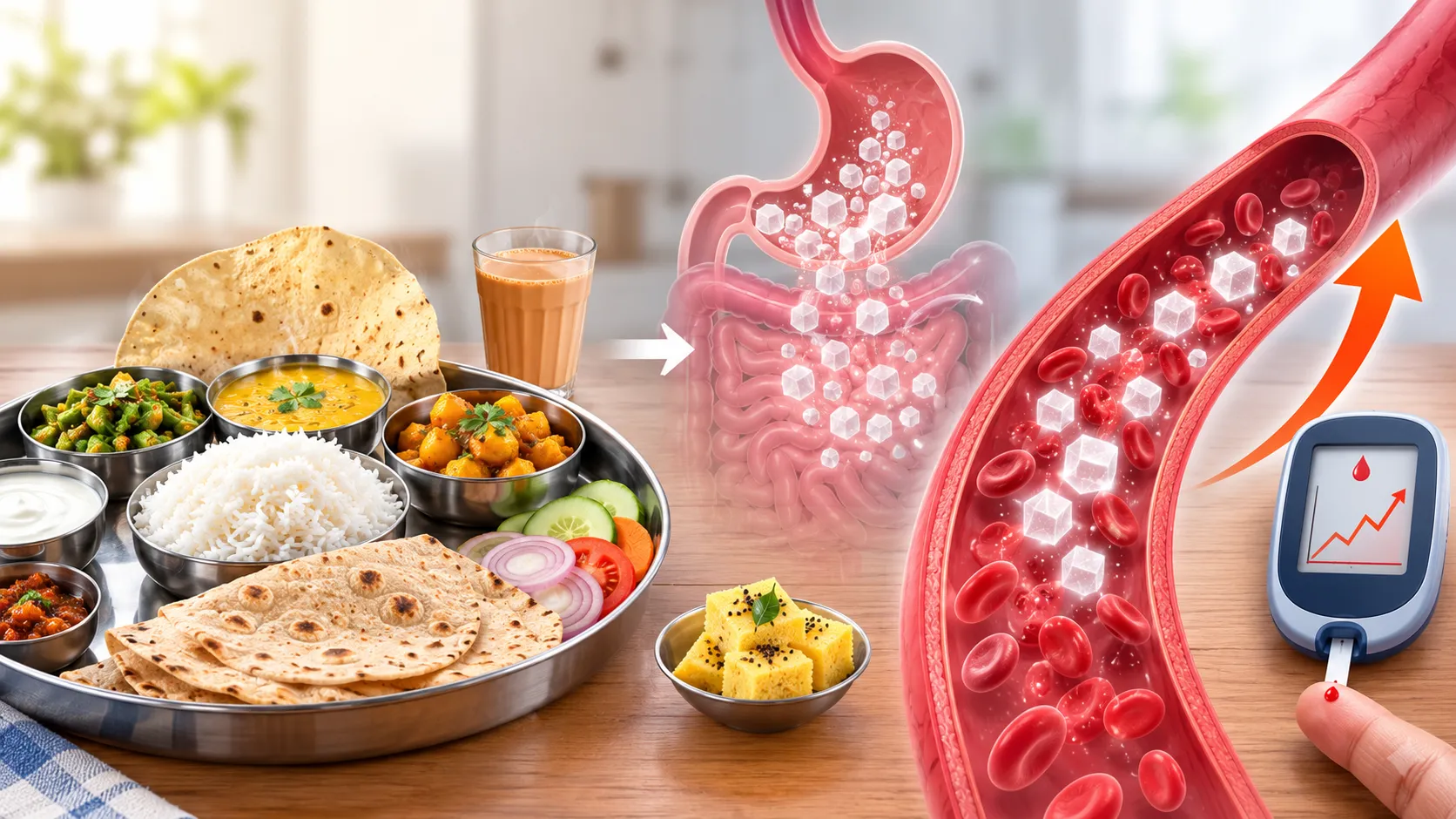
Why Does Blood Sugar Rise After Eating?
Understanding why blood sugar rises after eating helps you tell the difference between a normal response and a spike which may be risky.
The below-mentioned is a generic guideline. However, this may be different and unique to the individual, which shall be confirmed with the doctor.
| Test | Blood Sugar Level | Interpretation |
| Fasting Blood Sugar | Under 100 mg/dL | Normal |
| 2 Hours After a Meal | Under 140 mg/dL | Normal response (non-diabetic) |
| 2 Hours After a Meal | 140–199 mg/dL | Impaired glucose tolerance (consult a doctor) |
| 2 Hours After a Meal | 200 mg/dL or higher | Significant blood sugar spike (needs immediate medical attention) |
How to Monitor Your Breakfast Response
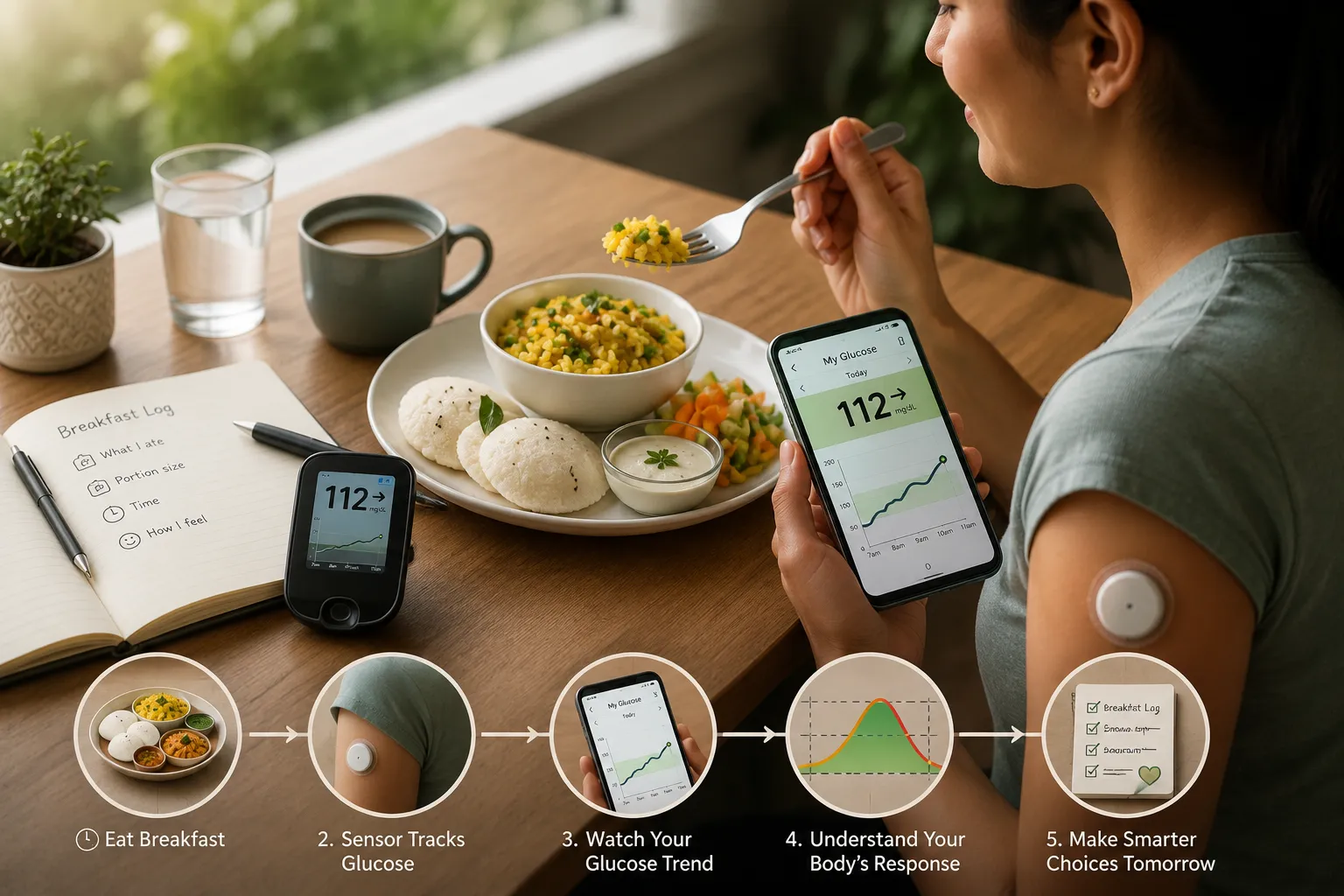
You don’t need to guess which of these traps applies to you. A simple, structured check can show you exactly how your body responds and shows a blood sugar spike after breakfast.
- Check your fasting blood sugar first thing in the morning, before eating
- Eat your usual breakfast
- Check again 2 hours after your first bite
- Log what you ate alongside both readings in the mibPulse app.
- Repeat for 3 consecutive days to spot patterns, not just one-off results
For easy monitoring, Madhavbaug has developed a continuous monitoring system through the mibPulse app and PowerMAP technology. This can be easy help for you since your doctor monitors your readings and, in case of emergency, can call you immediately. To know more, book a consultation at the nearest Madhavbaug centre.
Final Thoughts
Diabetes is a lifestyle disorder for which one needs to be dependent on medicines. However, through Madhavbaug’s unique treatment approach, you may not only manage it but also reverse your diabetes. This includes Panchakarma therapies, personalised diet plans and exercises and much more. Read more about the treatment at https://madhavbaug.org/ayurvedic-diabetes-reversal-treatment-program/
Dr. Asmita Says, “Your breakfast is not just the first meal of the day, it is the first opportunity to guide your blood sugar in the right direction. Simple habits like balanced food combinations, mindful eating, regular movement, and consistent monitoring can help you take control of your diabetes, one morning at a time.”
— Dr. Asmita Mohite, Ayurvedic Diabetologist & Lifestyle Disease Expert (Madhavbaug Vasai East)
The blood sugar spike after breakfast is just one concern. Diabetic people may suffer from many such everyday symptoms which may need attention. Madhavbaug can be a one-step solution for many patients and help them meet a healthier version of themselves. Step up, and start your journey with Madhavbaug today.
Frequently Asked Questions
Q.1 What foods raise blood sugar immediately?
- Most foods that may cause a rapid spike in blood sugar are foods rich in simple, refined carbohydrates or concentrated sugars. They are low in fibre, protein and healthy fats. So your body digests and absorbs them almost instantly into the bloodstream.
Q.2 What is the 15-minute rule for blood sugar?
- The “15-minute rule” (or 15-15 rule) is a standard way to check blood sugar spike. Have 15 grams of quick-acting carbs, wait 15 minutes and recheck your blood sugar. If it is lower than 70 mg/dL, repeat the procedure.
Q.3 Is 170 blood sugar high in the morning?
- Normal blood sugar after a blood test when a person hasn’t eaten anything overnight would be 99 mg/dL or less. A blood sugar level of 100 mg/dL or higher is considered abnormal. If your blood sugar is between 100 and 125 mg/dL, you have prediabetes; if it’s 126 mg/dL or higher, you have type 2 diabetes.
Q.4 Which time is blood sugar high?
- The dawn phenomenon causes high blood sugar levels. This is called ‘hyperglycaemia’. It usually occurs between 4 a.m. and 8 a.m. The reason for the dawn phenomenon is not known. Some researchers think that the natural release of some hormones at night might increase insulin resistance.
Q.5 At what blood sugar level do you start shaking?
- Symptoms usually occur when blood sugar levels drop below four millimoles (mmol) per litre. Early warning signs are often hunger, trembling or shakiness, and sweating. In more serious cases, you might also feel confused and have trouble concentrating.
References
- Enloe, A., 2024. Blood Sugar Balancing Handbook: Simple Recipes, Proven Methods, and Practical Strategies for Improvi: Simple Recipes, Proven Methods, and Practical Strategies for Improving Glucose Levels for Non-Diabet. Simon and Schuster.
- MURITALA, I., 2025. THE DIABETES PLATE: Power Foods for Blood Sugar Balance. Ibrahim Muritala.
- Barnard, N.D. and Stepaniak, J., 2003. Breaking the Food Seduction: The Hidden Reasons Behind Food Cravings—And 7 Steps to End Them Naturally. Macmillan.





 Locate a Centre
