


Heart Attack
Angina that is worsening or unstable is frequently the final warning before a complete heart blockage. Chest pain that goes unaddressed is a significant and preventable risk factor for a heart attack.

Discover how Madhavbaug’s data-driven clinical care helps you address the root cause of your chest pain.

 Overview
Chest pain is not a single condition; it is a signal that can come from several different sources. The type determines the urgency.
It is a type of chest pain characterised by consistent, predictable chest discomfort or pain triggered by physical exertion or emotional stress.
Unstable angina is classified by the American Heart Association (AHA) and American College of Cardiology (ACC) as an Acute Coronary Syndrome (ACS). Scientifically, it is defined as myocardial ischaemia (inadequate blood/oxygen supply to the heart muscle) that presents without significant, sustained ST-segment elevation on an ECG. In easy language, unstable angina is a dangerous type of chest pain that occurs suddenly, often while resting
The American Heart Association defines silent ischaemia (or silent myocardial ischaemia) objectively as a condition in which restricted blood flow and oxygen to the heart muscle occurs in the absence of classic warning signs, such as angina or anginal equivalents. This can be understood as a dangerous condition where your heart muscle is temporarily starved of oxygen-rich blood, but you feel absolutely no symptoms, such as chest pain (angina) or shortness of breath.
The American Heart Association (AHA) and American College of Cardiology (ACC) define noncardiac chest pain (NCCP) as angina-type discomfort where standard clinical evaluations, including angiography and biomarker assays, reveal no evidence of myocardial ischaemia or coronary heart disease which means that recurring discomfort or pain that feels exactly like a heart-related issue (angina), but is proven to not be caused by heart disease.
 Post-Angioplasty Care
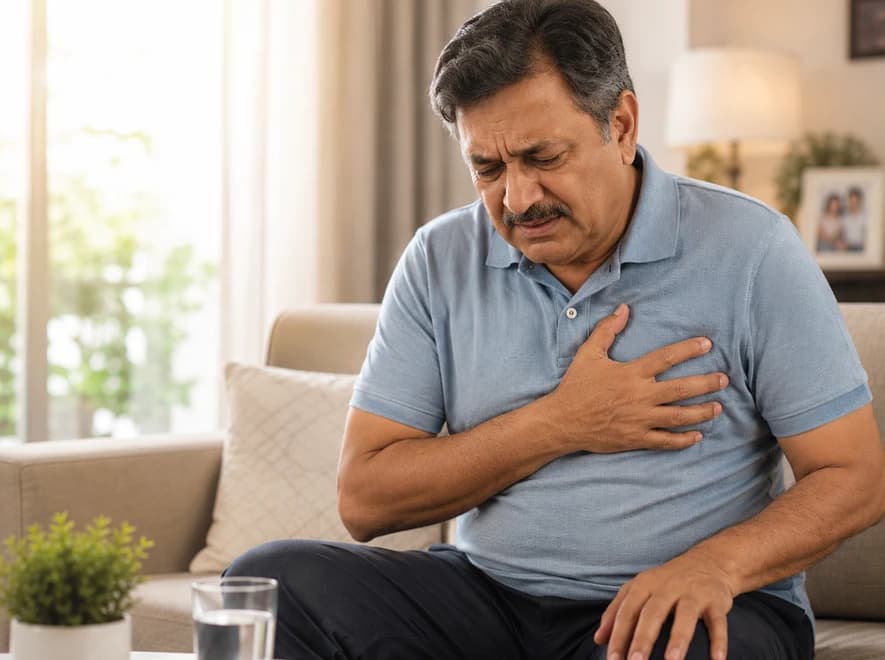
Chest pain is rarely the only sign. It usually comes with one or more of these:
A heavy feeling in the chest that gets worse when you move and feels better when you rest.
This kind of pain often moves beyond the chest and may be mistaken for a muscle strain, tension headache, or dental pain.
Breathlessness that occurs before or along with chest pain may indicate that the heart is struggling to pump blood efficiently enough to meet the body’s demands.
Sudden cold sweats or unexplained nausea alongside chest discomfort may indicate that the heart is under significant stress and require immediate medical attention.
Reduced cardiac output affects blood flow to the brain and is particularly noticeable during episodes of chest pain.
Palpitations are a racing or irregular heartbeat that often accompanies chest discomfort. This occurs as the heart works harder to compensate for reduced blood flow.
Why it Matters Risks
RisksAngina that is worsening or unstable is frequently the final warning before a complete heart blockage. Chest pain that goes unaddressed is a significant and preventable risk factor for a heart attack.

If Stable angina left untreated, the narrowing of arteries continues to worsen, the blood vessels become more blocked, the risk to your heart increases, and the chances of treating it without surgery become smaller.
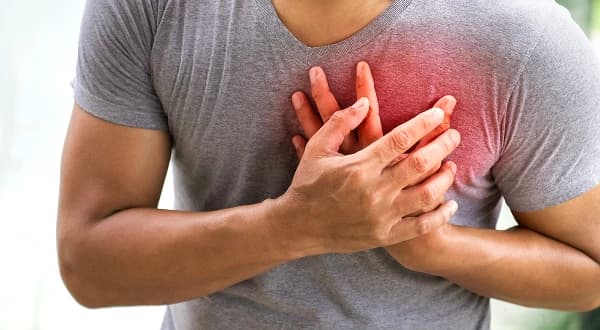
When the heart muscle doesn't get enough blood for a long time, it gradually becomes weaker and loses its ability to pump effectively. Over time, this can lead to a weakened heart and chronic heart failure.

When reduced blood flow disturbs the heart's electrical signals, it can lead to a dangerous irregular heartbeat, sometimes without any warning at all.
Chest pain that recurs with physical activity quietly but significantly reshapes daily life. It limits movement, increases anxiety and reduces independence over time.
Our Approach Why Choose UsFAQs
Rest immediately and stop all physical activity. If the pain eases within a few minutes, it may be stable angina. If it persists at rest, spreads to the arm or jaw, or comes with breathlessness and sweating, seek emergency medical attention. Long-term, stopping cardiac chest pain requires treating the underlying arterial disease, not just managing episodes.
The first step is identifying the cause. For suspected cardiac chest pain, an ECG, blood pressure check, and oxygen saturation reading are the immediate clinical priorities. Once the cause is established, treatment is directed at the underlying condition, whether arterial disease, hypertension, or another cardiac driver.
The five most common causes of chest pain are coronary artery disease, hypertension, acid reflux, anxiety and stress, and musculoskeletal strain. Of these, coronary artery disease is the most clinically significant and should always be ruled out first through a cardiac assessment.
Chest pain is likely serious when it occurs at rest, spreads to the arm, jaw, or back, comes with breathlessness, sweating, or nausea, feels like pressure or squeezing rather than a sharp pain, or does not ease within a few minutes. Any of these warrants immediate medical attention.
Not always. Chest pain can be caused by acid reflux, muscle strain, anxiety, or respiratory conditions. However, cardiac chest pain should always be ruled out first. Any chest pain that is persistent, occurs during exertion, radiates to the arm or jaw, or comes with breathlessness and sweating requires immediate medical assessment.

Don't just manage your condition. Overcome it. Take the first step toward sustainable, evidence-based chronic disease reversal.