
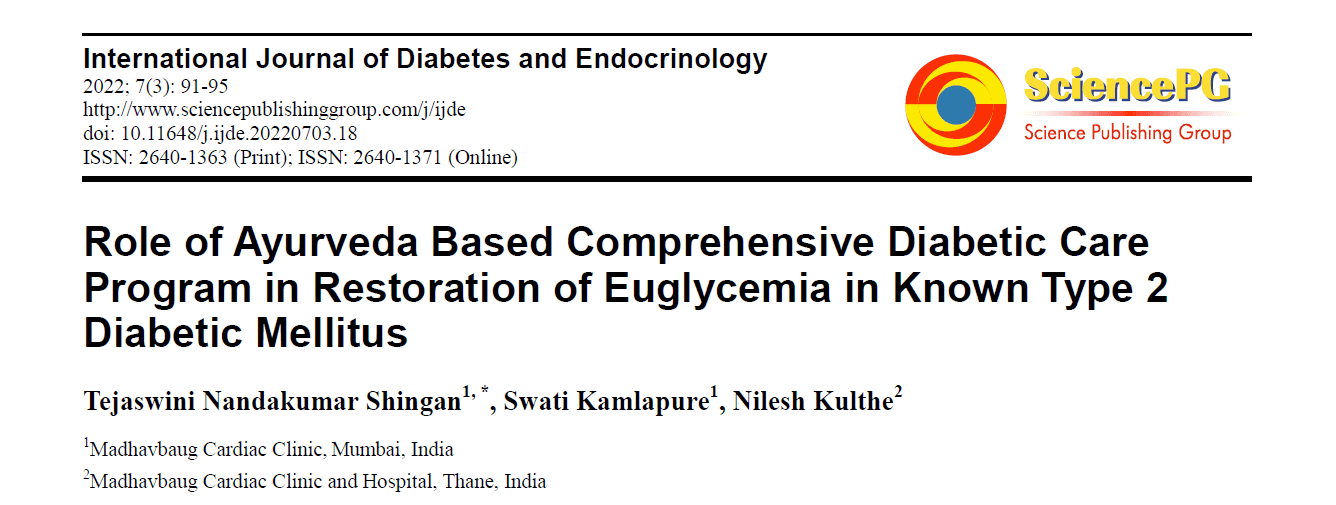
Abstract
Remission of diabetes mellitus could be an ideal solution to prevent impact of the pandemic of non-communicable disease in India. This study sought to understand the extent to which Ayurveda can impact remission of diabetes mellitus and achieve good glycaemic control in patients with diabetes mellitus. A retrospective, observational, single-centre study was conducted between 2018 and 2022 in Maharashtra, India. Patients aged 18 years and older with a diagnosis of diabetes mellitus, regardless of underlying comorbidities participated in the CDC program and were therefore included in this study. Follow-up was conducted at 30, 60, and 90 days. Day 1 and day 90 data were compared. A total of 63 patients were assessed. Of the 63 patients, 77.0% demonstrated post prandial normoglycemia, 50.8% demonstrated remission of diabetes mellitus, and 22.2% remained positive for diabetes mellitus. Variables such as weight (day1: 70.70 ± 9.82 kg and day 90: 65.15 ± 9.93 kg; p < 0.001), body mass index (day 1: 27.00 ± 3.88 and day 90: 24.91 ± 3.75; p < 0.001), abdomen girth (day 1: 98.13 ± 10.08 cm and day 90: 89.24 ± 8.40 cm; p < 0.001), and glycated haemoglobin A1c (HbA1c) levels (day 1: 7.87 ± 1.90% and day 90: 5.79 ± 0.51; p < 0.001) decreased significantly. The improvement in HbA1c levels and other risk factors through implementation to improve glucose metabolism can help restore euglycemic status in 12 weeks of time with adherence to the CDC program. Remission of diabetes mellitus may be dependent on patients’ compliance to a low carbohydrate diet provided during the treatment period.

 Locate a Centre
