
You may be consuming chia seeds daily, but do you really know the chia seeds’ side effects?
For a healthy adult, a safe amount of chia seeds is 1 to 2 tablespoons (about 15 to 28 grams) per day. Overeating may cause gas, bloating and choking hazards when consumed dry. It is not unhealthy to use chia seeds, but every element may have certain side effects which need to be understood before consuming them on a daily basis.
If you’re using chia seeds for weight loss, blood sugar management, or digestion, it’s worth understanding the real side effects of chia seeds before you add another spoon to your routine, not to scare you off them, but to help you use them the way they’re actually meant to be used.
The Direct Safety Answer
For most healthy adults, chia seeds are safe when consumed in moderate quantities, which is generally around 1 to 2 tablespoons (roughly 15–20 grams) a day and properly soaked before eating.
The concerns aren’t really about the disadvantages of chia seeds but about the specific situations, like:
- Eating them dry
- Eating too much too quickly
- Combining them with certain medicines without medical guidance
- Having a pre-existing condition that changes how your body handles fibre, oxalates their mild blood-thinning and blood-pressure-lowering effects
Knowing these specifics is what turns “chia seeds are healthy” into “chia seeds are healthy for me”, highlighting the need for personalisation to be done before consuming any food or adhering to any diet.
Possible Side Effects of Chia Seeds
Chia seeds are extremely high in fibre, and that’s usually a good thing, but a sudden increase in fibre intake is one of the most common reasons people may experience:
- Bloating and gas
- Abdominal cramping
- Changes in bowel movements (either looser stools or, in some cases, constipation if fluid intake is inadequate)
This is rarely dangerous, but it’s uncomfortable, and it’s almost always related to having chia seeds too quickly or not drinking enough water along with them. Starting with a smaller quantity and increasing gradually over a week or two, while staying well hydrated, resolves this for most people.
Central Content: Experiencing bloating, gas or changes in bowel movements after adding chia seeds to your diet? Understanding the right quantity, preparation and hydration can help you avoid unnecessary discomfort.
Choking and Swallowing Risk
This is the chia seed’s disadvantage that is underrated but needs attention. Chia seeds can absorb up to roughly 27 times their weight in water, forming a thick gel almost immediately on contact with liquid. That property is exactly what makes them useful for weight loss and digestion, but it’s also what makes dry chia seeds a genuine choking and swallowing hazard.
There’s a well-documented medical case of a man who swallowed a tablespoon of dry chia seeds followed by a glass of water and developed a complete esophageal obstruction within hours. This is because the seeds expanded into a gel-like mass inside his oesophagus that couldn’t be removed with a standard endoscope, requiring more advanced intervention (Rawl et al., 2014).
Who should avoid chia seeds?
This risk is significantly higher in people with any history of swallowing difficulty (dysphagia) or oesophageal narrowing.
The takeaway is simple and non-negotiable: never eat chia seeds dry.
Always soak them in water, milk, or another liquid for at least 15–30 minutes (ideally longer) until they’ve fully formed their gel before eating them.
Allergy
True chia seed allergy is uncommon but has been reported, particularly in people with existing sesame or mustard seed allergies. Watch for itching, swelling, hives, or difficulty breathing after eating chia seeds for the first time, and stop use immediately if any of these occur. This warrants prompt medical attention, not a wait-and-see approach.
Kidney and Thyroid Misconceptions and What’s Actually True
There are a lot of exaggerated claims regarding the side effects of chia seeds and kidney or thyroid health, so let’s see and understand what genuinely is true and what isn’t.
Chia seeds do contain a meaningful amount of oxalates, and there is a documented clinical case of a woman who developed oxalate nephropathy (kidney damage from oxalate crystal deposits) after consuming six tablespoons of chia seeds daily (alongside almonds) as part of a self-directed IBS diet over an extended period (Garland, Herlitz and Regunathan-Shenk, 2020).
This is an important finding, highlighting the need for knowing the safe daily chia seed quantity.
Did you notice the quantity consumed?
6 tablespoons daily, over time, which is a considerably higher dose.
Consuming 1–2 tablespoons is generally considered safe.
This isn’t a reason to avoid chia seeds altogether.
It’s to control the excessive daily intake, especially for anyone with existing kidney disease, a history of kidney stones, or on a potassium/phosphorus-restricted diet, all of whom should speak with their doctor before making chia seeds a daily habit.
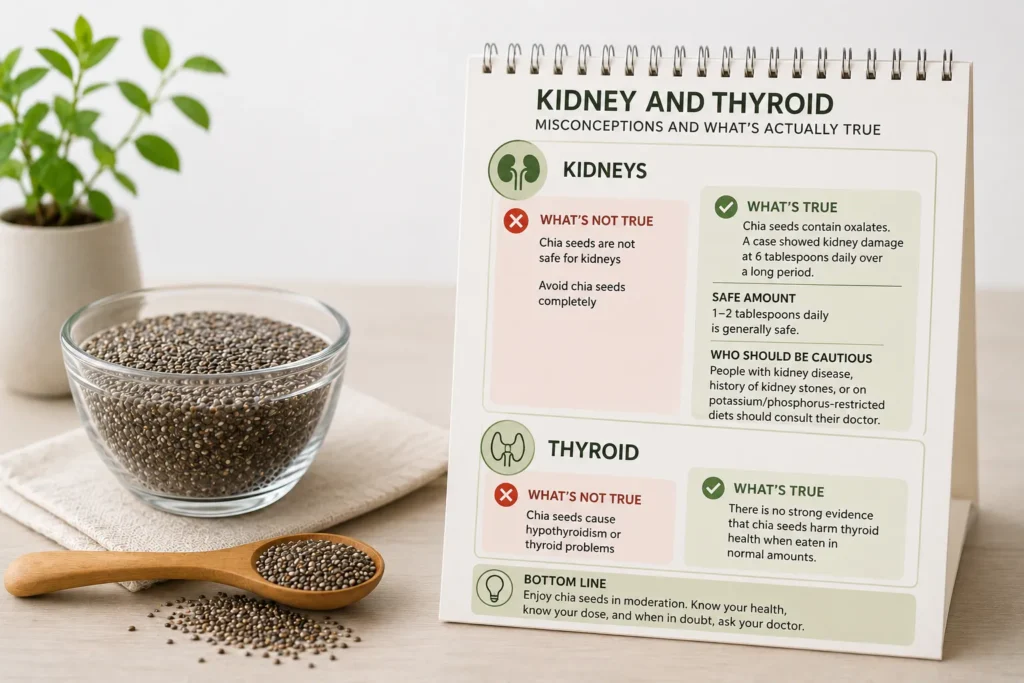
Unlike some cruciferous vegetables like cabbage, chia seeds are not established goitrogens (substances that interfere with thyroid hormone production) in typical dietary amounts.
The “chia seeds harm your thyroid” claim isn’t well supported by evidence at normal intake levels. However, anyone diagnosed with a thyroid condition should still discuss any significant dietary changes with their doctor as a general practice.
Safe Soaking and Quantity
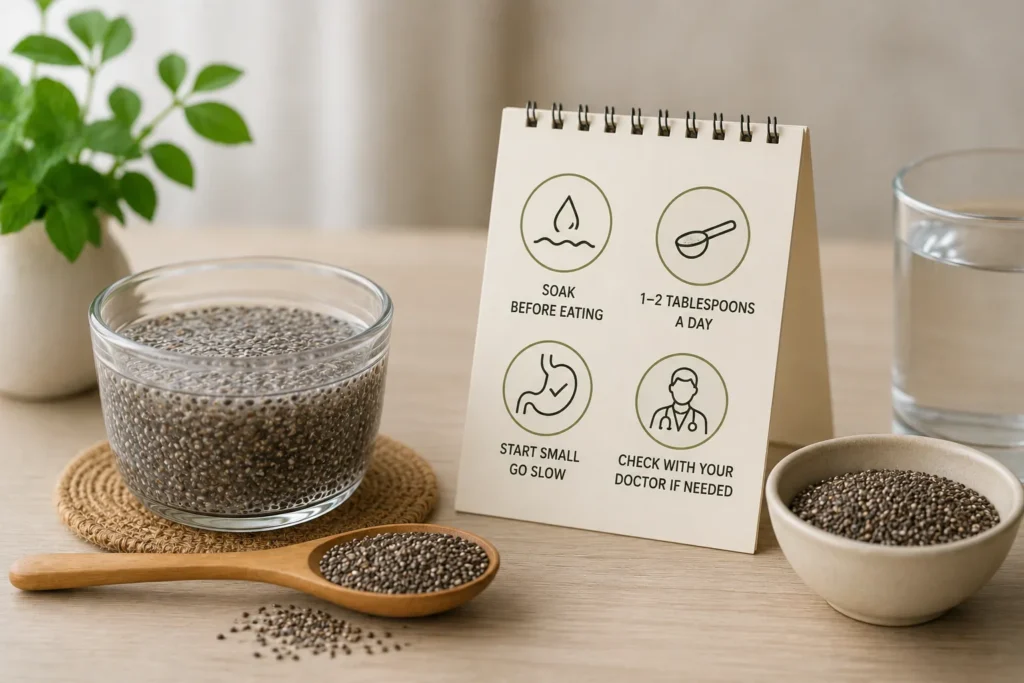
This is where the side effects of chia seeds simply disappear with the right preparation:
- Soak before eating
This should be done daily without any exception.
15–30 minutes minimum in water, milk, or curd is recommended.
Soaking longer (a few hours, or overnight) is even better and improves digestibility.
- Safe daily chia seed quantity
Roughly 1–2 tablespoons (15–20 grams) per day for most healthy adults may be recommended.
- Start low, go slow
If you’re new to chia seeds, begin with a teaspoon and gradually build up over one to two weeks.
- Drink enough water
If you are consuming chia seeds regularly, it’s advised to drink enough water throughout the day, as their gelling action needs enough fluid intake to work properly.
Who Should Avoid Chia Seeds
- Anyone with a history of dysphagia (swallowing difficulty) or esophageal stricture
- People on blood thinners, antiplatelet medication, or blood-pressure-lowering drugs
- People with diabetes on insulin or medicines that carry a hypoglycaemia risk
- Anyone with kidney disease, a history of kidney stones, or on a restricted mineral diet
- Pregnant or breastfeeding women, due to limited safety data specific to these groups
- Anyone with a known seed or sesame allergy
None of this means chia seeds are to be permanently avoided. It means the decision should be made with a doctor who knows your specific health picture, not based on a general wellness trend. To know more, book a consultation at your nearest Madhavbaug clinic to get a personalised diet and treatment recommendation.
Red Flags
Discontinue chia seeds and seek medical attention if you experience:
- Difficulty swallowing, chest discomfort, or a sensation of food being stuck after eating chia seeds
- Any signs of an allergic reaction, including hives, swelling, and breathing difficulty
- Unusual bruising or bleeding if you’re on blood-thinning medication
- A noticeable, unexplained drop in blood pressure or blood sugar readings after starting regular chia seed use
Use Chia Seeds the Right Way
Chia seeds can be a genuinely useful addition to a weight-loss or blood-sugar-friendly diet, but “useful” only holds true when the quantity, preparation and your personal medical context are all accounted for. If you’re using chia seeds specifically to support weight loss, our detailed guide on how to take chia seeds for weight loss and our homemade weight-loss drinks collection are good next reads.
If you’d like a more personalised, doctor-guided approach to weight management, explore our Ayurvedic treatment for weight loss, and if you’re managing diabetes alongside your diet, our Ayurvedic Diabetes Reversal Treatment Program looks at nutrition as part of a fuller care plan.
If you’re on any blood pressure or diabetes medication and want to know whether chia seeds are a good fit for your specific case, you need a personalised assessment, for which Madhavbaug is a one step solution brining a holistic transformation together with all the necessary elements including Panchakarma, diet, exercise and continuous monitoring system. To explore now, visit your nearest Madhavbaug centre.
Whether your goal is weight management, better blood sugar control or a healthier diet, the right nutrition plan should suit your individual needs. Get personalised guidance to understand what works best for your health.
Frequently Asked Questions
- What are the side effects of eating chia seeds every day?
The most common effects are bloating, gas, or changes in bowel movements, usually from too much fibre introduced too quickly. Less common but more serious risks include swallowing difficulty if eaten dry and interactions with blood pressure or blood sugar medication at regular daily use.
- How many chia seeds are safe to eat per day?
Around 1–2 tablespoons (15–20 grams) daily is considered a safe, well-tolerated amount for most healthy adults, always soaked before eating rather than consumed dry.
- Who should avoid chia seeds?
People with swallowing difficulties, those on blood thinners or blood pressure medication, individuals with kidney disease or a history of kidney stones, and anyone with a seed allergy should speak with a doctor before regular use.
- Can chia seeds cause kidney problems?
Chia seeds contain oxalates, and there is a documented case of kidney damage linked to very high daily intake over time (Garland, Herlitz and Regunathan-Shenk, 2020). At moderate quantities of 1–2 tablespoons a day, this risk is low for most people without existing kidney disease.
- Is it safe to eat chia seeds dry?
No. Dry chia seeds can absorb many times their weight in water and expand rapidly, creating a real choking and swallowing hazard, particularly for anyone with swallowing difficulties (Rawl et al., 2014). Always soak chia seeds fully before eating them.
References
- Garland, V., Herlitz, L. and Regunathan-Shenk, R. (2020) ‘Diet-induced oxalate nephropathy from excessive nut and seed consumption’, BMJ Case Reports, 13(11), e237212.
- Rawl, R.E., Bickston, S.J., Vora, N. and Weber, F. (2014) ‘Watch It Grow: Esophageal Impaction With Chia Seeds’, American Journal of Gastroenterology, 109, S833.
- TaghipourSheshdeh, F., Behzadi, M., Bashiri, S. and Mohammadi-Sartang, M. (2025) ‘The Effect of Chia Seed on Blood Pressure, Body Composition, and Glycemic Control: A GRADE-Assessed Systematic Review and Dose-Response Meta-Analysis of Randomized Controlled Trials’, Nutrition Reviews, 83(3), pp.448–465.




 Locate a Centre
