

It’s a busy morning, and you are looking for recipes for making high-protein oats for weight loss
You made oats and added a banana, a spoon of honey, and maybe some almonds. It looked healthy. And yet by 11 a.m., you were staring into the office pantry, wondering how you were already hungry again.
If that sounds familiar, the oats weren’t the problem, but the bowl was incomplete. Plain oats are mostly carbohydrates. They fill you up for a while because of their fiber, but they alone may not be sufficient, especially if you are suffering from weight loss, blood sugar control, or protecting muscle is part of your goal.
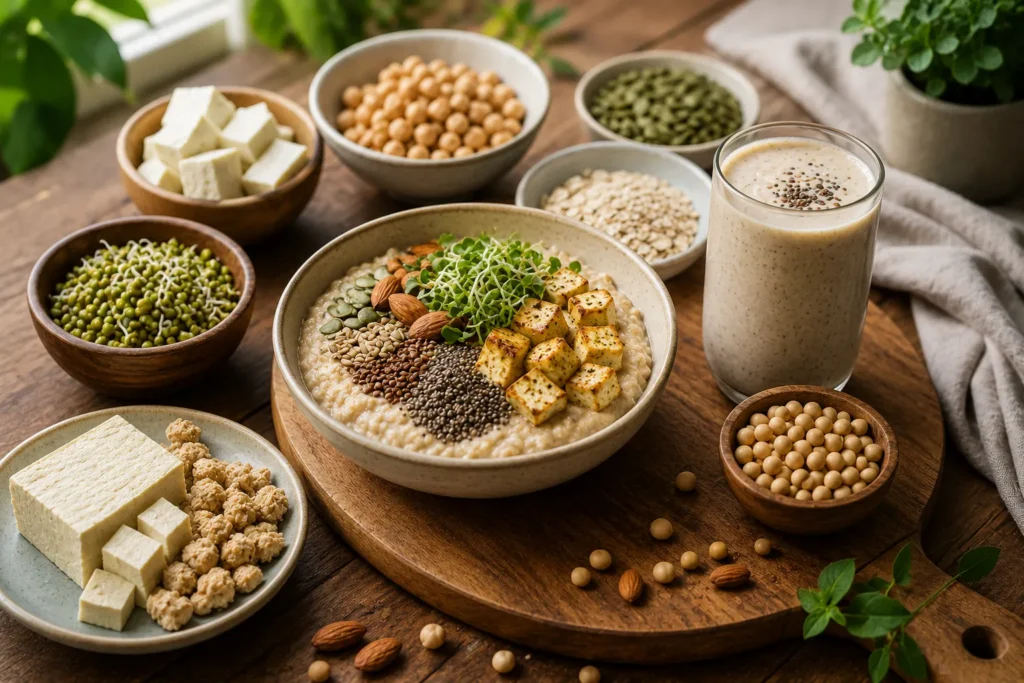
The fix isn’t switching breakfasts. It’s building a high-protein oatmeal recipe the right way, with enough protein, the right portion, and the recommended toppings.
In this guide, you will explore protein oats for weight loss and various high-protein oatmeal recipes and their benefits.
What Is the Role of Protein in Breakfast?
Not all calories help you feel full. Protein is digested more slowly than refined carbohydrates, which means it stays in your stomach longer and triggers hormones that tell your brain “you’ve had enough” while also keeping the hormone that signals hunger, ghrelin, from spiking as quickly. (Giezenaar, C., 2018)
Also, a bowl of oats with milk but no added protein can still cause a noticeable rise and fall in blood glucose for some people, or the urge to reach for something sweet. Adding protein and pairing it with the fibre that is already present in oats helps reduce the swing and gives you a steadier few hours.
This is precisely why protein oats for weight loss work better as a strategy than oats alone. This combination also targets both appetite and energy stability and not just calories alone.
How Much Protein Does Your Breakfast Actually Need?
There’s no single number that fits everyone, but a useful working target for most adults is 20–30 grams of protein at breakfast. (Beermann, T., 2016)
This is a recommended guideline that can vary depending upon a few individual factors:
Weightlifting and Physical Activity
People who go to the gym and do weight-lifting may tend to have more protein.
Age
Protein needs for preserving muscle tend to go up, not down, after 50, for which you may need a high-protein oats breakfast for muscle preservation.
Total daily protein target
If you’re aiming for roughly 1.2–1.6 g of protein per kg of body weight across the day (a common range for people focused on weight loss with muscle preservation), breakfast is one of three or four chances to hit that number, so it shouldn’t be the meal you skip on protein. (Beermann, T., 2016)
Sugar and Calorie Traps to Avoid
This is where a lot of “healthy” high-protein oatmeal recipes quietly stop being healthy:
- Flavoured instant oats sachets
- Overpouring honey or jaggery
- Dried fruit by the handful
- Store-bought granola clusters
- Uncontrolled peanut butter pours
None of these need to be eliminated entirely; they just need to be measured rather than eyeballed generously.
High-Protein Oatmeal Recipes
At Madhavbaug, we’ve created several delicious, high-protein oatmeal recipes that are ideal for people looking to manage their weight, diabetes, or overall metabolic health. These recipes are easy to prepare, rich in fiber and protein, and can keep you feeling full for longer.
- High-Protein Oatmeal Chilla
This oatmeal chilla combines oats with protein-rich ingredients and vegetables to create a wholesome meal that supports better health and helps avoid unnecessary snacking.
https://www.youtube.com/watch?v=uUu3-BaFcMA
- Savoury Masala Oatmeal Bowl
This power-packed oatmeal recipe may be a nutritious alternative to traditional breakfast options. It may be a great choice for those who want a balanced meal without compromising on taste.
https://www.youtube.com/watch?v=1SWlXQ3nJrE
- Protein-Rich Oatmeal Breakfast Recipe
This recipe is designed to help provide sustained energy while supporting healthy blood sugar management and weight loss goals.
https://www.youtube.com/watch?v=Mb-cGbXr6lg
Explore More Healthy Oatmeal Recipes
Watch these delicious and healthy oatmeal recipes from the Madhavbaug YouTube channel:
Healthy Oatmeal Recipe – https://www.youtube.com/watch?v=bhXmQraH2oA
Easy High-Protein Oatmeal Recipe – https://www.youtube.com/watch?v=tueb0sPwUWg
Nutritious Oatmeal Breakfast – https://www.youtube.com/watch?v=vOzC2jKtSCI
Another Healthy Oatmeal Recipe by Madhavbaug – https://www.youtube.com/watch?v=ZSMS8MmFpRg
These are a few recommended high-protein oatmeal recipes by Madhavbaug. Madhavbaug focuses on integrated care, including a personalised diet plan that may include these recipes. To know more, book a consultation at the nearest Madhavbaug clinic.
If You Have Diabetes or Kidney Concerns
High-protein oats for weight loss are worth knowing. However, they do come with some concerns to be taken care of.
Oats generally have a lower glycaemic impact than refined cereals, but toppings may matter. Sweetened yoghurt, excess dried fruit or a heavy honey pour can undo that advantage. (Zhang, K., 2021)
Pairing oats with protein, as described above, is one of the more effective ways to balance the post-meal glucose curve, but portion and topping choices still need a personalised touch.
If you have chronic kidney disease or reduced kidney function, higher protein intake may not be a good choice. (Ko, G.J., Rhee, 2020)
Doctor’s Guidance
You need a doctor’s specific guidance before you increase protein at any meal, oats included. For this you not only need a simple consultation, but you also require a holistic approach including medicines, diet and exercise, which Mahdavbaug provides. It integrates Panchakarma with modern diagnostics in order to help you not only treat but also build a healthy lifestyle. To start your journey, visit your nearest Madhavabaug centre today.
Frequently Asked Questions
- Is oatmeal good for high protein?
Oatmeal alone is not a high-protein food, but it makes a great base if you add high-protein ingredients. A standard half-cup serving of dry rolled oats provides only about 5 grams of protein alongside 27 grams of carbohydrates.
- How to get 30g of protein in oats?
To get 30g of protein in your oats, mix 1/2 cup of rolled oats with 1 scoop of protein powder, 1/4 cup of Greek yoghurt, and 1/2 cup of dairy or soy milk.
- Can I eat oats every day?
Yes, you can eat oats every day. They provide a healthy source of fibre, plant-based protein, and essential minerals like iron and magnesium.
- Why do some doctors say not to eat oats?
Doctors may advise certain individuals to avoid oats due to blood sugar spikes, gluten cross-contamination, or specific digestive and kidney issues.
- Is it healthier to cook oatmeal with milk or water?
If you want a simple, low-calorie base that lets the flavour of your toppings shine, water is a great choice. If you’re aiming for a richer, creamier breakfast that provides extra protein and calcium to keep your child full longer, milk is the way to go.
References
- Koliaki, C., Kokkinos, A., Tentolouris, N. and Katsilambros, N., 2010. The effect of ingested macronutrients on postprandial ghrelin response: a critical review of existing literature data. International journal of peptides, 2010(1), p.710852.
- Giezenaar, C., Lange, K., Hausken, T., Jones, K.L., Horowitz, M., Chapman, I. and Soenen, S., 2018. Acute effects of substitution, and addition, of carbohydrates and fat to protein on gastric emptying, blood glucose, gut hormones, appetite, and energy intake. Nutrients, 10(10), p.1451.
- Beermann, T., Mortensen, M.N., Skadhauge, L.B., Høgsted, R.H., Rasmussen, H.H. and Holst, M., 2016. Protein and energy intake improved by breakfast intervention in hospital. Clinical nutrition ESPEN, 13, pp.e23-e27.
- Landi, F., Calvani, R., Tosato, M., Martone, A.M., Ortolani, E., Savera, G., D’Angelo, E., Sisto, A. and Marzetti, E., 2016. Protein intake and muscle health in old age: from biological plausibility to clinical evidence. Nutrients, 8(5), p.295.
- Zhang, K., Dong, R., Hu, X., Ren, C. and Li, Y., 2021. Oat-based foods: Chemical constituents, glycemic index, and the effect of processing. Foods, 10(6), p.1304.
- Ko, G.J., Rhee, C.M., Kalantar-Zadeh, K. and Joshi, S., 2020. The effects of high-protein diets on kidney health and longevity. Journal of the American Society of Nephrology, 31(8), pp.1667-1679.




 Locate a Centre
