

 Add to Preferred Sources
Key Takeaways
|
Berberine has become one of the most searched supplements for weight loss and blood sugar, and it is sometimes called “nature’s Ozempic” on social media. The comparison is catchy but misleading. Berberine does not work like the new weight loss injections, and it does not give similar results.
This guide explains what berberine is, how it connects with Daruharidra in Ayurveda, what the research shows about weight and blood sugar and what to know about safety. It is for information only and is not advice to start a supplement.
Thinking about herbs or supplements for weight or blood sugar?
What Is Berberine?
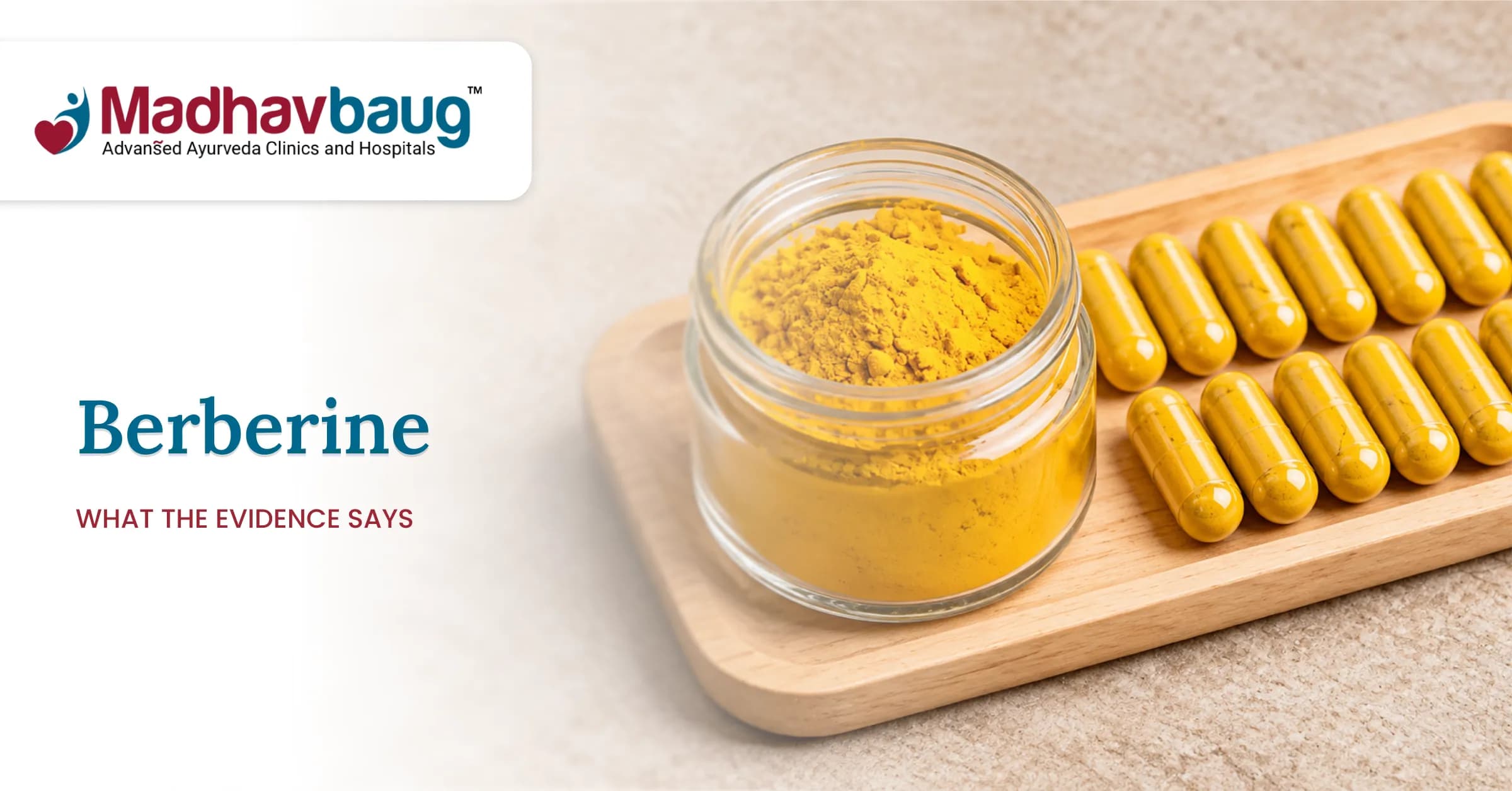
Berberine is a yellow, bitter plant compound called an alkaloid. It is found in the roots, stem and bark of several plants, including Indian barberry (Berberis aristata), European barberry (Berberis vulgaris), goldenseal and Chinese goldthread. It has been used for centuries in traditional medicine systems, and today it is sold as a purified capsule or tablet (Potdar et al., 2012).
Berberine is not absorbed well from the gut, which is one reason why trials often use doses of several hundred milligrams taken two or three times a day.
Daruharidra in Ayurveda
Daruharidra is the Sanskrit name for Berberis aristata. The word means “wood turmeric”, because the cut stem is yellow like turmeric. Ayurvedic texts describe it as bitter and astringent and use it for a range of conditions, including prameha, a group of metabolic and urinary disorders that includes what is now called diabetes, and for skin problems and eye care.
Berberine is one of the main active compounds in Daruharidra. But the herb and the capsule are different.
| Berberine capsule or tablet | Daruharidra (the herb) | |
| What it is | A purified single compound | A whole plant part (root or stem) with many compounds |
| Typical form | Capsule or tablet | Powder, decoction, extract or a formulation prepared by an Ayurvedic pharmacy |
| Strength | Printed on the label, but quality varies | Varies with the plant, part and preparation |
| How it is chosen | Often self-selected | In Ayurveda, chosen after an assessment of the person, with other herbs and diet |
| Research | Most modern trials are on berberine | Limited, and often on mixed formulations |
Classical use is not enough evidence to prove that something works for weight loss or diabetes today. Modern evidence has mostly been gathered on purified berberine.
How Might Berberine Work?
Laboratory studies suggest that berberine switches on an enzyme called AMPK, which helps cells use sugar and fat for energy (Turner et al., 2008). It may also reduce sugar production by the liver, improve how cells respond to insulin and change the gut bacteria. These ideas come mostly from cell and animal studies, and they do not prove the same effect in people.
Berberine for Weight Loss
Berberine may help you lose a small amount of weight, but research has not shown it to be as effective as prescription weight loss injections. A review of 49 clinical trials found that people taking berberine lost around 0.8 kg on average. The results varied across studies, and many trials had weaknesses that make the findings less reliable.
Berberine is a natural compound found in certain plants. It is often sold as a supplement for blood sugar control and weight management. However, being plant-based does not automatically make it safe or effective for everyone.
The researchers found that berberine appeared to work better in studies using doses above 1,000 mg a day or lasting longer than eight weeks. However, the overall effect on waist size was not clearly significant. Also, 38 of the 49 trials had a high risk of bias, meaning their results may not give a reliable picture of how well berberine works in everyday life (Asbaghi, O et al, 2020).
In simple terms, berberine may support modest weight loss, but you should not expect a major change in your weight from this supplement alone.
| Approach | Average weight change in trials | What the evidence tells us |
| Berberine supplement | Around 0.8 kg of weight loss | Limited evidence. Many studies had a high risk of bias |
| Semaglutide 2.4 mg weekly injection | Around 15% of body weight over 68 weeks (Wilding et al., 2021) | Strong evidence from large clinical trials |
| Tirzepatide weekly injection | Around 15–21% over 72 weeks (Jastreboff et al., 2022) | Strong evidence from large clinical trials |
These treatments are not interchangeable. Prescription injections have been studied in much larger trials and can produce greater weight loss, but they also have side effects and may not be suitable for everyone. Berberine can interact with medicines, so speak to your doctor before taking it, especially if you use medication for diabetes.
“I tell my patients not to depend on berberine alone for weight loss. What you eat, how active you are and your existing health conditions matter just as much. If you are taking diabetes medicines, speak to your doctor before trying it.”
– Dr. Priyadarshini Bhalekar, Zonal Medical Head, Madhavbaug
Berberine for Blood Sugar
Berberine may help lower blood sugar levels in people with type 2 diabetes. Research suggests that it may improve fasting blood sugar and HbA1c, which measures your average blood sugar over the past two to three months.
Berberine is a natural compound found in certain plants. Researchers have studied it for its effects on blood sugar control. A review of clinical trials found that people with type 2 diabetes who took berberine had lower fasting blood sugar and HbA1c levels than those who received a placebo or lifestyle care alone (Lan et al., 2015).
In a small three-month study, researchers also found that taking 500 mg of berberine three times a day lowered blood sugar by a similar amount to metformin, a commonly prescribed diabetes medicine (Yin et al., 2008).
| What does this mean for you? Berberine may have a role in blood sugar management, but it is not a proven substitute for prescribed diabetes medicines. It can also interact with medicines and may increase the risk of low blood sugar when combined with certain diabetes treatments. Speak to your doctor before taking it, and do not stop or reduce your prescribed medication on your own. |
Side Effects of Berberine
In trials, side effects were mostly mild and related to the stomach which may include:
- Loose stools or diarrhoea
- Constipation
- Gas, bloating or cramps
- Nausea
These side effects can sometimes be related to the side effects of weight loss injections. Taking berberine with meals and starting with a lower dose may reduce these effects. A very low blood sugar level (hypoglycaemia) can happen if berberine is added to insulin or sulfonylureas. Symptoms include sweating, shakiness, confusion and a racing heart.
Who Should Avoid Berberine or Check With a Doctor First
Berberine is not safe for everyone. If you are pregnant, breastfeeding, taking regular medicines or living with a liver or kidney condition, speak to your doctor before using it. Even though berberine comes from plants, it can affect how your body processes medicines and may cause side effects.
Here is who should take extra care before using berberine.
| Who should be careful? | Why it matters |
| Pregnant or breastfeeding women | Berberine may reach the baby through the placenta or breast milk. It is best avoided during pregnancy and breastfeeding. |
| Newborns and infants | Berberine may increase the risk of jaundice and related complications in newborns. |
| People taking diabetes medicines | Berberine may lower blood sugar further and increase the risk of hypoglycaemia. |
| People taking blood pressure medicines | It may lower blood pressure further and cause dizziness or weakness. |
| People taking medicines such as ciclosporin or certain heart medicines | Berberine can affect how the liver processes some medicines. This may change the amount of medicine in your blood. |
| People with liver or kidney disease | There is not enough evidence to establish its safety in these conditions. Medical advice is needed before use. |
| People preparing for surgery | Tell your surgeon if you take berberine. It may affect blood sugar control and interact with medicines used around surgery. |
What Should You Check Before Buying Berberine?
Berberine supplements may differ in strength and quality. The amount listed on the label may not always reflect what the product contains. Some supplements may also include other ingredients that are not clearly disclosed.
If you are considering an Ayurvedic preparation containing Daruharidra, buy it from a licensed pharmacy and check its ingredients. Tell your doctor about any supplements you take, especially if you are already using medicines for diabetes, blood pressure or heart disease.
Berberine vs Weight Loss Injections
Berberine and weight loss injections like Ozempic and Mounjaro are not alternatives to each other. They differ in how strong the evidence is, what they can achieve and how they are regulated.
| Berberine | Weight loss injections (semaglutide, tirzepatide) | |
| Status in India | Sold as a supplement or herbal product | Prescription medicines approved for specific uses |
| Average weight effect | Under 1 kg in a large review | Roughly 15 per cent or more of body weight in large trials |
| Evidence for heart protection | Not shown | Shown for semaglutide in people with heart disease and overweight (Lincoff et al., 2023) |
| Who supervises | Often self-selected | Doctor |
| Main side effects | Stomach upset | Nausea, vomiting, diarrhoea, rarely serious problems |
How to Manage Weight and Blood Sugar Naturally
Berberine and Ayurvedic herbs such as Daruharidra may support weight management or blood sugar control, but they are only one part of the picture. Healthy eating, regular exercise and good sleep have a stronger role in long-term health. These habits can help you manage your weight and keep blood sugar levels under control.
- Include protein and fibre in your Indian meals. Dal, beans, vegetables, curd and whole grains help you feel full for longer.
- Move your body every day. A short walk after meals can help manage blood sugar. Strength training twice a week also helps maintain muscle mass and supports weight management.
- Get 7–8 hours of sleep. Poor sleep can increase hunger and affect how your body responds to insulin.
- Pay attention to belly fat. Your weight alone does not show the full picture of your metabolic health.
- Understand the evidence behind Ayurvedic options. Herbs such as Triphala and Daruharidra have traditional uses, but evidence for weight loss and blood sugar control varies.
The best approach is one you can follow consistently. If you have diabetes or take regular medication, discuss any supplement with your doctor before adding it to your routine.
| Clinical Insight “In clinical practice, we look at your eating habits, physical activity, sleep, waist circumference and blood sugar readings together. A supplement such as berberine may show some benefit, but it cannot replace these daily habits or prescribed treatment. Before starting any herbal product, discuss it with your doctor to make sure it is suitable for your health condition and current medicines.” Dr. Pravin Jayram Ghadigaonkar, BAMS, MD, PhD (Scholar) – Preventive Cardiology 20+ Years of Clinical Experience, Head Medical Operations & Patient Improvement, Madhavbaug |
Weight Loss and Diabetes Care at Madhavbaug
Managing excess weight and high blood sugar requires a care plan that considers your eating habits, daily activity, medical history and current treatment. At Madhavbaug, doctors assess these factors before recommending a suitable approach to obesity or diabetes management.
The care plan may include diet planning, guidance on physical activity and Ayurvedic therapies based on your health needs. Doctors can also review any herbal supplements you are considering, including berberine or Daruharidra, to check whether they are suitable alongside your existing medicines.
If you are struggling to manage your weight or blood sugar despite making lifestyle changes, a medical assessment can help you understand what needs attention. Regular monitoring of your weight, blood glucose and HbA1c can help you and your doctor track progress and adjust your care plan when needed.
Madhavbaug provides care for obesity and diabetes through its network of over 360 dedicated medical clinics and specialised hospitals across India. For your personalised care, visit your nearest clinic.
Looking for a personalised approach to weight loss or blood sugar management?
Curious about your own numbers? Try our Diabetes Assessment Tool for a quick personal assessment, then talk to your doctor about what it means for you.
Frequently Asked Questions
Does berberine help with weight loss?
It may help a little. A review of 49 trials found an average loss of under 1 kg. The trials were mostly small and at high risk of bias.
Is berberine the same as Ozempic?
No. Ozempic is a prescription semaglutide injection that acts on GLP-1 receptors and has strong evidence in large trials. Berberine is a plant compound with much weaker evidence and a much smaller effect.
Is berberine the same as Daruharidra?
No. Berberine is one compound found in Daruharidra. The herb contains many other compounds and is used in Ayurveda in different preparations.
Can berberine replace metformin?
No. A small trial found a similar effect on blood sugar, but berberine has not been proven to replace metformin. Do not stop your medicine unless your doctor advises it.
Can I take berberine with diabetes medicines?
Only after speaking to your doctor. It can add to the blood sugar lowering effect and cause low blood sugar, especially with insulin or sulfonylureas.
How long does berberine take to work?
Trials that showed effects on blood sugar usually lasted 8 to 12 weeks or more. Any benefit varies from person to person.
What are the side effects of berberine?
The most common are diarrhoea, constipation, gas and nausea. It can also interact with other medicines.
Is berberine safe in pregnancy?
It is generally advised to avoid berberine in pregnancy and while breastfeeding.
References
Asbaghi, O., Ghanbari, N., Shekari, M., Reiner, Ž., Amirani, E., Hallajzadeh, J., Mirsafaei, L., & Asemi, Z. (2020). Effects of berberine supplementation on body weight, BMI and waist circumference: a systematic review and meta-analysis of randomized controlled trials. Front Nutr. 2022;9:1013055.
Lan J, et al. Meta-analysis of the effect and safety of berberine in the treatment of type 2 diabetes mellitus, hyperlipemia and hypertension. J Ethnopharmacol. 2015;161:69-81.
Yin J, Xing H, Ye J. Efficacy of berberine in patients with type 2 diabetes mellitus. Metabolism. 2008;57(5):712-717.
Turner N, et al. Berberine and its more biologically available derivative, dihydroberberine, inhibit mitochondrial respiratory complex I. Diabetes. 2008;57(5):1414-1418.
Potdar D, Hirwani RR, Dhulap S. Phyto-chemical and pharmacological applications of Berberis aristata. Fitoterapia. 2012;83(5):817-830.
Wilding JPH, et al. Once-weekly semaglutide in adults with overweight or obesity (STEP 1). N Engl J Med. 2021;384:989-1002.
Jastreboff AM, et al. Tirzepatide once weekly for the treatment of obesity (SURMOUNT-1). N Engl J Med. 2022;387:205-216.
Lincoff AM, et al. Semaglutide and cardiovascular outcomes in obesity without diabetes (SELECT). N Engl J Med. 2023;389:2221-2232.




 Locate a Centre

