

Key Takeaways
|
If you are looking for weight loss, the important question is not just whether Triphala can reduce weight, but how it may support digestion, bowel regularity and healthy metabolic function as part of a personalised plan.
Triphala is a classic Ayurvedic formula that combines three fruits, Amalaki, Haritaki and Bibhitaki. Studies of Triphala have shown positive effects on body weight, BMI and waist circumference in some clinical trials.
At Madhavbaug, weight loss is not just one herb or one remedy but a combination of medical assessment, personalised Ayurveda, diet, physical activity and regular monitoring.
What Is Triphala?
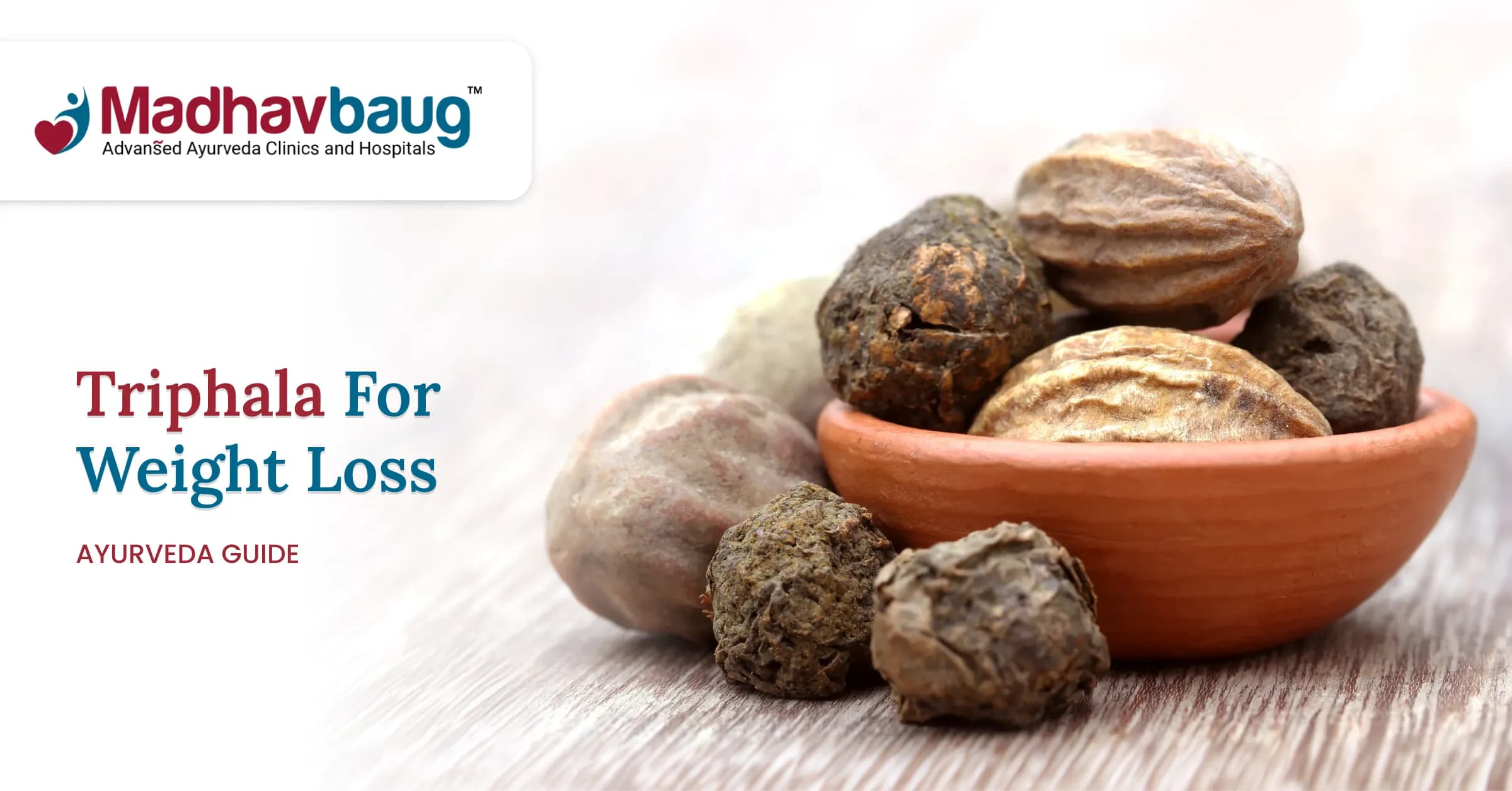
Triphala means “three fruits” in Sanskrit. It is traditionally prepared using:
- Indian goose berry (Amalaki)
- Haritaki
- Bibhitaki
These three ingredients are combined into a classical Ayurvedic formulation traditionally used to support digestion and bowel regularity.
Modern research has also explored the antioxidant, metabolic and weight-related effects of Triphala. Research found that several studies reported improvements in lipid parameters, with five trials reporting statistically significant reductions in body weight, BMI and waist circumference among people with obesity (Phimarn, Sungthong & Itabe, 2021).
This does not mean that everyone taking Triphala will lose weight. The response can vary according to diet, activity, sleep, metabolic health, dosage and the individual’s overall treatment plan.
Considering Triphala for weight loss?
How Does Triphala Support Weight Loss?
Triphala may support weight management by supporting digestion, bowel regularity and overall metabolic health. There are many factors that influence weight gain, including your food intake, your level of physical activity, your sleep, stress, insulin resistance, hormonal factors and metabolic health. Ayurveda also classifies excess weight based on digestion and the body’s ability to digest and excrete waste.
Triphala can assist in this process in several ways.
1. Triphala and Digestion
Triphala is traditionally used to help with digestion and bowel regularity. This benefit can be particularly important for people with slow digestion or constipation as well as weight concerns.
While having a healthy bowel pattern is important for overall digestive comfort, regular bowel movements should not be confused with direct fat loss.
2. Triphala and Body Weight and Waist Circumference
Triphala helps support a healthy body weight and BMI and waist circumference.
In clinical studies, measurable improvement in these parameters has been demonstrated in overweight or obese adults. Research found that Triphala significantly reduced body weight, BMI, waist circumference and body fat percentage after 3 months. Also, a higher number of participants in the Triphala group achieved a reduction of at least 5% body weight (Salunke, Banjare & Bhalerao, 2019).
Another study also found reductions in body weight, BMI and waist circumference in several studies evaluating Triphala in people with obesity (Phimarn, Sungthong & Itabe, 2021).
These findings suggest that Triphala may be a supportive agent in weight management, but it is important to keep in mind that Triphala should be considered part of a proper diet, exercise regime and individual medical and Ayurvedic treatment.
3. Triphala and Antioxidant Activity
Triphala contains plant compounds which work as antioxidants. Antioxidants help to protect cells from damage by free radicals. These advantages are important for metabolic health because oxidative stress is often related to obesity and other metabolic conditions.
So, research on Triphala has also explored its antioxidant effects and its possible role in supporting metabolic health.
4. Triphala and Metabolic Health Management
Triphala has also been investigated for its effects on blood glucose and lipid levels, which are important markers of metabolic health. Some studies have shown improved parameters, but results can be variable depending on the person, formulation and dosage used.
Although triphala can be incorporated into an individual approach to metabolic health, it should not be considered a replacement for prescribed treatment for diabetes, high cholesterol or other medical conditions. This is why the link between obesity and diabetes is worth understanding before relying on any single herb.
At Madhavbaug, your medical history, relevant blood tests and regular follow ups are used to assess your metabolic health. This helps the doctor determine whether or not Triphala and other Ayurvedic therapies are appropriate for your individual health needs.
“Triphala should not be looked at as a quick weight-loss remedy. When used appropriately, it can be included as part of a personalised plan that addresses digestion, diet, physical activity and metabolic health together.”
– Dr. Priyadarshini Bhalekar, Zonal Medical Head, Madhavbaug
What Is the Best Time to Take Triphala for Weight Loss?
Traditionally, Triphala is taken at night, although some people may be advised to take it at a different time, depending on their digestive pattern and health needs.
If you’re thinking about Triphala for weight management, the timing may vary based on:
| Condition | Time to think |
| Gut health | You can adjust the timing to suit your digestion and your tolerance to Triphala. |
| Bowel Movement | Triphala is traditionally preferred at night when used to support bowel regularity. |
| Existing drugs | Your doctor may need to arrange the timing around your regular medicines. |
| Blood sugar levels | If you are managing diabetes, timing should be planned around your medicines and blood glucose level. |
| Other health problems | The right time will depend on your health condition and treatment plan. |
Some like to take Triphala as part of their Ayurvedic routine at night, as it has been traditionally used to promote regularity and digestion. But more Triphala does not mean faster weight loss. Loose stools, abdominal discomfort or diarrhoea can result from larger amounts.
How to Take Triphala Churna for Weight Loss
Triphala churna is traditionally taken with warm water, but the right dose and timing depends on your health, digestion and the particular Triphala preparation. Triphala can also be taken in tablet and capsule form, which may have different strengths and dosing instructions.
Don’t decide the quantity of Triphala just based on your weight loss goal. You should also consider your digestive health, bowel habits, any existing health conditions, and current medicines.
Various Triphala formulations and doses have been used in clinical investigations. For example, in one clinical trial of 12 weeks duration, 5 g of Triphala was used twice daily, but this was a specific research protocol that should not be taken as a standard home dosage (Kamali et al., 2012).
In the case of taking triphala for weight management, it’s best to stick to the dosage recommended for your particular preparation and health condition. Taking more doesn’t mean losing weight faster and can lead to loose stools, stomach discomfort or diarrhoea.
Triphala Churna vs Triphala Tablets for Better Weight Management?
Triphala tablets offer a convenient and measured way to take Triphala, while Triphala churna provides the traditional powdered form. Both contain the three fruits used in Triphala, but their formulation, strength and recommended dosage may differ.
| Dosage Form | Major advantage | Things to consider |
| Triphala Powder. | Traditional powdered form, which dissolves in water | You have to measure the quantity. Taste may not be for everyone. |
| Tablets of Triphala | Convenient to carry and provide a pre-measured dose | Check the specific product’s ingredients, strength, and recommended dosage. |
| Triphala capsule. | Suitable for those who do not want to take powder | The amount of Triphala in each capsule can vary between products. |
When considering the benefits of Triphala tablets, the main practical benefits are convenience and consistent dosing. However, one should not automatically equate a tablet with a certain quantity of Triphala churna. Always check the formulation and dosage before using.
| Clinical Insight “A useful way to look at Triphala is as one component of a larger health plan. Sustainable weight management depends on improving the factors that contribute to excess weight, including food habits, movement, sleep, digestion and metabolic health.” Dr. Pravin Jayram Ghadigaonkar, BAMS, MD, PhD (Scholar) – Preventive Cardiology 20+ Years of Clinical Experience, Head Medical Operations & Patient Improvement, Madhavbaug |
Can Triphala Alone Reduce Belly Fat?
Triphala itself is not a sure-shot remedy to reduce belly fat. It might aid digestion and overall weight control, but belly fat loss usually occurs alongside general fat loss and better lifestyle and metabolic health.
Belly fat is influenced by diet, exercise, sleep, insulin resistance, and overall metabolic health. Reducing excess abdominal fat is also important for better metabolic health for those with central obesity, diabetes, high cholesterol or high blood pressure.
That is why weight management at Madhavbaug is about the individual and not just one formula. A personalised plan can include diet changes, physical activity, ayurvedic therapies and regular medical monitoring according to the health needs of the person.
Triphala can be added where applicable, but sustainable weight management depends on addressing the causes of excess weight.
Who Should Be Careful With Triphala?
Triphala is generally well tolerated when taken in the right amount, but it may not be suitable for everyone. Taking more than recommended can cause loose stools, abdominal cramps or diarrhoea.
Talk to your doctor before taking Triphala if you:
- Take regular medicines for diabetes or blood pressure
- Take blood-thinning medicines
- Are pregnant or breastfeeding
- Have a chronic health condition
- Have ongoing diarrhoea or digestive problems
- Are already receiving treatment for obesity or diabetes or another metabolic condition
If you take regular medicines, do not stop or reduce them after starting triphala. Your doctor can review your medicines, health condition and investigation results and advise whether Triphala can be included safely in your routine. This is the same caution outlined in Ayurveda alongside prescription medicines.
Triphala and Weight Loss at Madhavbaug
At Madhavbaug, Triphala may be included as part of a personalised weight-management plan when it is appropriate for the individual. Weight management starts with understanding why weight gain is occurring and how it is affecting overall health.
During the assessment, factors such as diet, physical activity, digestion, sleep, blood sugar, lipid levels, blood pressure and existing health conditions may be considered. Based on these findings, the weight loss plan may include personalised diet guidance, exercise, Ayurvedic therapies such as panchakarma, herbal formulations, and regular follow-up.
Madhavbaug’s approach combines Ayurvedic principles with medical assessment and monitoring, allowing the treatment plan to be adjusted according to the person’s health condition, lifestyle and progress.
For people with obesity, the focus also extends beyond body weight to metabolic health. Changes in waist circumference, blood sugar, lipid levels, blood pressure and other relevant health markers can help track progress alongside weight.
The goal is to support measurable and sustainable improvements in health, with Triphala used as one component of a personalised plan where appropriate.
If you are considering Triphala for weight management, consult a Madhavbaug doctor at your nearest centre to understand whether it is suitable for you and how it can be included in your personalised treatment plan.
Want to know if Triphala is suitable for your weight-management plan?
Frequently Asked Questions
Does Triphala help with weight loss?
Yes, Triphala may support weight management. Clinical studies have reported reductions in body weight, BMI and waist circumference in some people with obesity. It works best as part of a structured diet and lifestyle plan.
What is the best time to take Triphala for weight loss?
Triphala is most commonly taken at night before bed with warm water; some people are advised to take it in the morning on an empty stomach instead.
How should I take Triphala churna for weight loss?
Triphala churna is generally mixed with water before consumption. The appropriate quantity depends on the preparation and individual health needs. Do not use a clinical trial dose as your personal dosage without medical guidance.
Are Triphala tablets beneficial for weight loss?
Triphala tablets can be a convenient way to take a measured formulation. Studies have examined different Triphala preparations for weight-related outcomes, but the dose and composition vary between products.
Can Triphala reduce belly fat?
Triphala may support overall weight management, but it should not be considered a direct belly-fat burning remedy. Reduction in abdominal fat usually occurs with overall fat loss and improvements in metabolic health.
How long does Triphala take to work for weight loss?
There is no fixed timeline. Clinical studies have assessed Triphala over periods ranging from several weeks to a few months. Individual results depend on diet, activity, health status, dosage and consistency.
Can I take Triphala with my regular medicines?
You should check with your doctor before combining Triphala with regular medicines. This is particularly important if you take medicines for diabetes, blood pressure, cholesterol or blood thinning.
Is Triphala enough for weight loss?
No. Sustainable weight management requires more than one supplement or formulation. Diet, physical activity, sleep, metabolic health and personalised medical care all play an important role.
References
- Phimarn, W., Sungthong, B. & Itabe, H. (2021). Effects of Triphala on Lipid and Glucose Profiles and Anthropometric Parameters: A Systematic Review. Journal of Evidence-Based Integrative Medicine, 26.
- Kamali, S.H. et al. (2012). Efficacy of ‘Itrifal Saghir’, a combination of three medicinal plants in the treatment of obesity: a randomized controlled trial. DARU Journal of Pharmaceutical Sciences, 20, 33.
- Salunke, S. et al. (2019). Effect of selected herbal formulations on anthropometry and body composition in overweight and obese individuals: A randomized, double blind, placebo-controlled study. Journal of Ayurveda and Integrative Medicine.




 Locate a Centre
