
Key Takeaways
|
An HbA1c test is a blood test that measures your average blood sugar levels over the past 2 to 3 months. Also called the HbA1c blood test or glycated haemoglobin test, it helps show how well your blood sugar has been controlled over time. Unlike a fasting blood sugar test, which measures your glucose level at one point in time, the HbA1c test means to give you a longer-term picture of your blood sugar.
If you have been asked to get an HbA1c test, you may be wondering what the result means for you. The test can help your doctor check for prediabetes, diagnose diabetes or monitor your blood sugar control if you already have diabetes. In simple terms, your HbA1c result helps you understand whether your blood sugar has generally stayed within a healthy range or has been running higher than it should.
What Is HbA1c?
HbA1c stands for glycated haemoglobin and is a measure of your average blood sugar over the past 2 to 3 months. It shows how much glucose has attached to haemoglobin, the protein in your red blood cells that carries oxygen throughout your body. Because red blood cells usually live for around three months, the HbA1c test gives you a longer-term picture of your blood sugar levels.
When glucose is present in your blood, some of it naturally attaches to haemoglobin. If your blood sugar remains higher, more glucose attaches to haemoglobin, which can result in a higher HbA1c level. This is why your HbA1c result can tell you more about your blood sugar pattern than a single blood sugar reading.(Del Rio et al., 2016)
If you have recently been advised to get an HbA1c blood test, think of it as a way to look beyond what your blood sugar was on one particular day. Your result can help you and your doctor understand how your blood sugar has been behaving over the past few months and whether you may need to pay closer attention to your diet, activity, lifestyle or diabetes management.
So, when you look at your HbA1c report, what is that number actually telling you? The answer becomes clearer when you understand exactly what the test measures.
Want to understand what your HbA1c result means for your health?
What Does an HbA1c Test Measure?
An HbA1c test measures the percentage of haemoglobin that has glucose attached to it. The result is given as a percentage and shows your average blood sugar level over the past 2 to 3 months. Generally, a higher HbA1c means your blood sugar has been higher during this period.
Your HbA1c result can tell you something that a single blood sugar test may not. For example, your fasting blood sugar may be normal on the day of your test, while your HbA1c may show that your blood sugar has been higher than normal over the past few months. (Feng et al., 2018; Safari et al., 2021)
That is why HbA1c is one of the important tests used in a diabetes health checkup. Looking at it along with other blood sugar tests can help your doctor understand your overall blood sugar levels better.
| Remember HbA1c does not show your blood sugar level at one particular time. It gives you an idea of your average blood sugar over the past 2 to 3 months. |
The HbA1c is a useful test for understanding your blood sugar over time. But why is this test done, and when might your doctor recommend it? That is where the purpose of the HbA1c test becomes important.
What Is the Purpose of an HbA1c Test?
The HbA1c test is used to check your average blood sugar over the past 2 to 3 months. It can help your doctor identify prediabetes, diagnose diabetes and monitor how well your blood sugar is being managed if you already have diabetes.
You may be advised to get an HbA1c test for one of these three reasons:
- To check for prediabetes: Your HbA1c can show whether your blood sugar is higher than normal but has not yet reached the diabetes range. This can help you understand your risk and take steps to manage your blood sugar early.
- To diagnose diabetes: An HbA1c level of 6.5% or higher can indicate diabetes when the test is performed appropriately. If you do not have clear symptoms of high blood sugar, your doctor may recommend repeating the test or using another blood sugar test to confirm the result.
- To monitor diabetes: If you already have diabetes, regular HbA1c testing helps you and your doctor see how your blood sugar has been doing over time. Your result can also help your doctor decide whether your current diet, lifestyle or treatment plan needs to be adjusted.
Your HbA1c result is only one part of your overall health assessment. Your doctor may consider it along with your blood sugar readings, weight, blood pressure, diet, activity and other health tests to understand your condition better.
Research following people over many years has found that higher HbA1c levels are linked with a greater chance of developing type 2 diabetes, even when other health factors are considered (Leong et al., 2018).
“An HbA1c result should not be viewed as an isolated number. I always look at it alongside the person’s blood sugar readings, weight, blood pressure, lifestyle and overall health before deciding what the result means for them.”
– Dr. Bipin Gond, Zonal Medical Head, Madhavbaug
With these factors, knowing whether your number falls within the normal, prediabetes or diabetes range can help you understand what the result means for you. Let’s look at the normal HbA1c range and what different levels may indicate.
HbA1c Test Normal Range
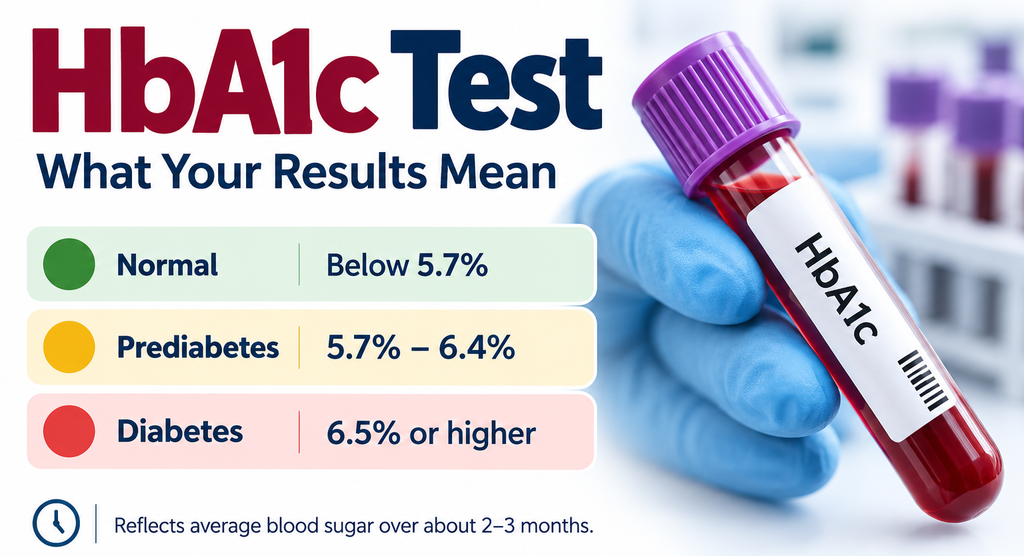
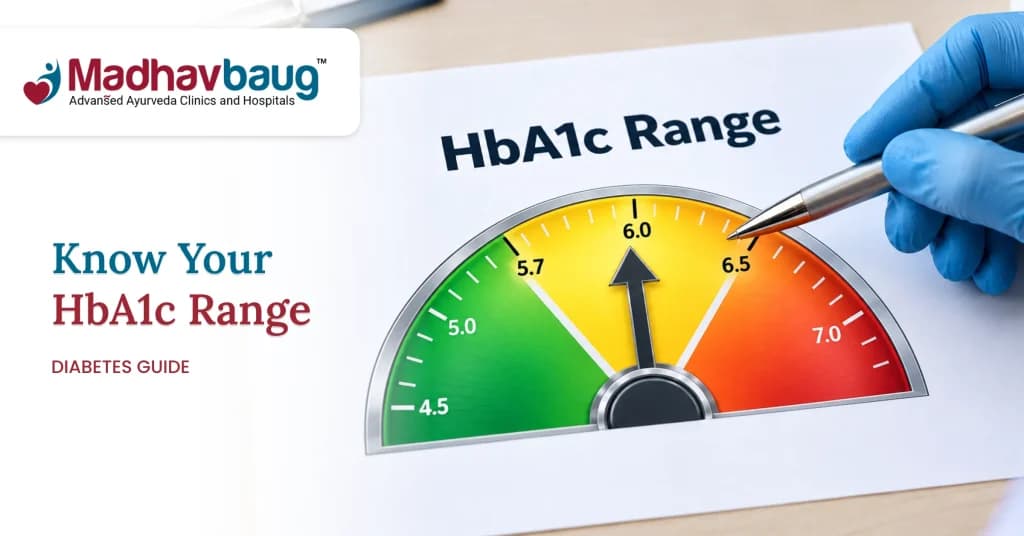
For most non-pregnant adults, an HbA1c below 5.7% is considered within the normal range. A result between 5.7% and 6.4% is generally in the prediabetes range, while 6.5% or above is in the diabetes range. These values help your doctor assess where your blood sugar levels stand over time.
| HbA1c level | What it may indicate |
| Below 5.7% | Normal range |
| 5.7% to 6.4% | Prediabetes range |
| 6.5% or above | Diabetes range |
If your HbA1c result is higher than the normal range, don’t assume that the number tells the whole story. Your doctor will consider your symptoms, medical history and other blood sugar tests and may recommend another test to confirm the result when needed.
A result in the prediabetes range can be an early sign that your blood sugar is starting to rise. The HbA1c normal range and diabetes risk can vary with your overall health, so your result is best understood alongside your other health factors.
Worried about your blood sugar or diabetes risk?
HbA1c Test Time and Procedure
An HbA1c test is a simple blood test that usually takes only a few minutes. A healthcare professional will take a small blood sample, usually from a vein in your arm, and send it to a laboratory for testing.
The blood collection itself is quick, but your sample needs to be analysed before your HbA1c result is available. Your doctor can then interpret the result based on your overall health and other blood sugar readings.
Since the HbA1c test looks at your average blood sugar over the past 2 to 3 months, what you eat immediately before the test does not usually have a major effect on the result. Studies comparing HbA1c with glucose testing have found that recent food intake and other short-term changes that can affect blood glucose do not significantly alter HbA1c values (Sacks et al., 2011)
This means you may not need to change your routine just because you have an HbA1c test scheduled. This also means it is useful to know whether you need to fast before your HbA1c test.
Do You Need to Fast for an HbA1c Test?
You usually do not need to fast before an HbA1c test. You can generally eat and drink as usual before giving your blood sample.
This is because the HbA1c test measures your average blood sugar over the past 2 to 3 months, so what you eat just before the test does not usually change the result significantly.
However, if your doctor has asked you to have an HbA1c test along with other blood tests, such as a fasting blood sugar or lipid profile, you may need to fast for those tests. In that case, follow the preparation instructions given by your doctor or laboratory.
This is different from a fasting blood sugar test, where you need to avoid eating for a specific period before the blood sample is taken.
HbA1c vs Fasting Blood Sugar
HbA1c and fasting blood sugar are both blood sugar tests, but they tell you different things. A fasting blood sugar test shows your glucose level at one particular time, while an HbA1c test gives you an idea of your average blood sugar over the past 2 to 3 months.
If you are getting your blood sugar checked, your doctor may recommend one or both tests depending on your symptoms, risk factors, previous results and overall health. Looking at both can sometimes give you a better understanding of how your blood sugar has been changing.
A study in high-risk South Indian adults found that the two tests did not always identify prediabetes and diabetes in exactly the same people. This means one test can sometimes show something that the other does not, which is why your doctor may look at both when checking your blood sugar (Radhakrishna et al., 2018).
If your blood sugar is already slightly higher than normal, knowing how it is being tested can help you understand your risk of developing diabetes. This is particularly useful when checking for prediabetes and early changes in blood sugar.
How Often Should HbA1c Be Checked?
How often you need an HbA1c test depends on your blood sugar levels, overall health and diabetes treatment. If your diabetes is well controlled and your results are stable, your doctor may recommend checking HbA1c about twice a year. If your blood sugar is not within your target range or your treatment has recently changed, you may need the test more often, often every three months.
Your doctor may also ask you to have other tests for blood sugar, cholesterol, kidney health and other factors linked to diabetes. Looking at these results together can help you get a clearer understanding of your overall health. A diabetes health checkup may include several of these tests depending on your individual needs.
Your HbA1c result is useful, but certain health conditions can sometimes affect the result. Knowing about these factors can help you understand why your HbA1c number may not always match your other blood sugar readings.
Can HbA1c Results Be Affected by Other Health Conditions?
Certain health conditions can affect how accurately an HbA1c test reflects your blood sugar levels. Conditions that affect your red blood cells or haemoglobin, such as anaemia and some haemoglobin disorders, as well as kidney or liver disease, recent blood loss, blood transfusion and pregnancy, may affect your HbA1c result.
This means your HbA1c number may be high and sometimes look different from what you are seeing in your home blood sugar readings or other blood tests.
Research has shown that changes in red blood cells, haemoglobin and certain health conditions can affect the relationship between HbA1c and actual blood sugar levels, so these factors may need to be considered when interpreting your result (Nielsen et al., 2014).
If that happens, let your doctor know so they can look at the result along with your other health information.
So, if your HbA1c is higher than expected, it is important to understand what the number means for you and what you should do next.
| Clinical Insight “In my experience, I would never judge a patient’s diabetes control from one HbA1c value alone. What matters is the direction it is taking. If your HbA1c has risen from 6.2% to 7.1%, for example, we need to understand why your average blood sugar is increasing and look at it alongside your weight, blood pressure and daily glucose readings.” Dr. Pravin Jayram Ghadigaonkar, BAMS, MD, PhD (Scholar) – Preventive Cardiology 20+ Years of Clinical Experience, Head Medical Operations & Patient Improvement, Madhavbaug |
What Should You Do If Your HbA1c Is High?
A high HbA1c means your blood sugar has generally been higher than the healthy range over the past 2 to 3 months. It is not a reflection of what you ate or did on just one day, so there is no need to panic over a single result.
The first step is to understand what may be causing your blood sugar to stay high. Your doctor may look at your weight, waist measurement, blood pressure, eating habits, physical activity, sleep, stress, family history, medicines and other health tests along with your HbA1c.
At Madhavbaug, your diabetes assessment can include your blood sugar levels along with your overall health and lifestyle. Based on your individual needs, your diabetes treatment plan may include personalised diet and lifestyle guidance, Ayurvedic assessment and doctor-supervised therapies like Panchakarma. Your progress can then be followed through HbA1c, blood sugar and other health parameters.
Most importantly, you do not have to figure out what your HbA1c result means on your own. If your HbA1c has recently increased or you have been told that you are in the prediabetes or diabetes range, you can visit your nearest Madhavbaug clinic and speak with a doctor about your result, reducing HbA1c safely and discuss the next steps for your health.
Not sure what your high HbA1c means for you?
Frequently Asked Questions
What does an HbA1c test tell you?
An HbA1c test tells you your average blood sugar level over the past 2 to 3 months. It can help your doctor check for prediabetes, diagnose diabetes or monitor your blood sugar if you already have diabetes.
Is an HbA1c test the same as a blood sugar test?
No. A regular blood sugar test shows your glucose level at a particular time, while an HbA1c test shows your average blood sugar over the past 2 to 3 months. Your doctor may recommend both to get a better understanding of your blood sugar levels.
What is a normal HbA1c level?
For most non-pregnant adults, an HbA1c below 5.7% is considered normal. A result between 5.7% and 6.4% is generally in the prediabetes range, while 6.5% or above is in the diabetes range.
Do you need to fast for an HbA1c test?
Usually, you do not need to fast for an HbA1c test. You can generally eat and drink normally before the test. If you are having other blood tests at the same time, your doctor may give you different preparation instructions.
How often should you get an HbA1c test?
How often you need an HbA1c test depends on your blood sugar levels and diabetes treatment. If your diabetes is stable and well controlled, your doctor may recommend testing about twice a year. If your blood sugar is not within your target range or your treatment has changed, testing may be needed more often.
Can other health conditions affect your HbA1c result?
Yes. Conditions such as anaemia, certain blood disorders, kidney or liver disease, recent blood loss and pregnancy can affect how your HbA1c result reflects your blood sugar. If your HbA1c does not match your other blood sugar readings, speak with your doctor.
What is the sugar test HbA1c?
The sugar test HbA1c is a blood test that shows your average blood sugar level over the past 2 to 3 months. It does not usually require fasting and is commonly used to check for prediabetes and diabetes.
What should you do if your HbA1c is high?
A high HbA1c means your blood sugar has generally been higher than the healthy range over the past 2 to 3 months. Speak with your doctor to understand what may be affecting your blood sugar and what changes may be appropriate for you. Your doctor may consider your diet, activity, weight, medicines and other health factors before suggesting the next steps.
References
Del Rio, M.B., Tiwari, M., Amodu, L.I., Cagliani, J. and Rodriguez Rilo, H.L. (2016). Glycated Hemoglobin, Plasma Glucose, and Erythrocyte Aging. Journal of Diabetes Science and Technology, 10(6), pp.1303–1307.
Feng, L., Nian, S., Zhao, Y., Bai, X., Luo, F., Luo, X., Xu, W., Ye, D. and Tong, Z. (2018). Higher HbA1c and/or glucose levels and fasting glucose levels. Diabetes Research and Clinical Practice, 142, pp.353–362.
Leong, A., Daya, N., Porneala, B., Devlin, J.J., Shiffman, D., McPhaul, M.J., Selvin, E. and Meigs, J.B. (2018). Prediction of Type 2 Diabetes by Hemoglobin A1c. Diabetes Care, 41(1), pp.60–68.
Radhakrishna, P., Vinod, K.V., Sujiv, A. and Swaminathan, R.P. (2018). Comparison of Hemoglobin A1c with Fasting and 2-h Plasma Glucose Tests. Indian Journal of Endocrinology and Metabolism, 22(1), pp.50–56.
Sacks, D.B. (2011). A1C versus glucose testing: A comparison. Diabetes Care, 34(2), pp.518–523.
Safari, S., Amini, M., Aminorroaya, A. and Feizi, A. (2021). Patterns of changes in fasting plasma glucose, hemoglobin A1c and the area under the curve. Acta Diabetologica, 58(3), pp.371–381.
Vikøren, T.B., Berg, J.P. and Berg, T.J. (2014). Sources of error when using haemoglobin A1c. Tidsskrift for Den norske legeforening, 134(4), pp.417–421.

 Locate a Centre
