
Key Takeaways
|
A fasting blood sugar test measures your blood glucose after you have gone without food for at least 8 hours. For most adults, a fasting blood sugar below 100 mg/dL is considered normal, 100 to 125 mg/dL falls in the prediabetes range, and 126 mg/dL or above is in the diabetes range when the result is appropriately confirmed.
If you have been asked to get a fasting blood sugar test, you may be wondering how long you need to fast, whether you can drink water and what the number on your report actually means. The test itself is simple. Knowing what to expect can make the process much easier.
What Is a Fasting Blood Sugar Test?
A fasting blood sugar test is a blood test that measures the amount of glucose in your blood after you have not eaten for several hours. It is commonly used to check for prediabetes and diabetes.
When you eat, carbohydrates are broken down into glucose and your blood sugar rises. Your body uses insulin to help move glucose from your blood into your cells. A fasting blood sugar test gives your doctor a look at your glucose level after the effect of your last meal has had time to settle.
Want to know what your blood sugar reading means for you?.
What Is the Normal Fasting Blood Sugar Range?
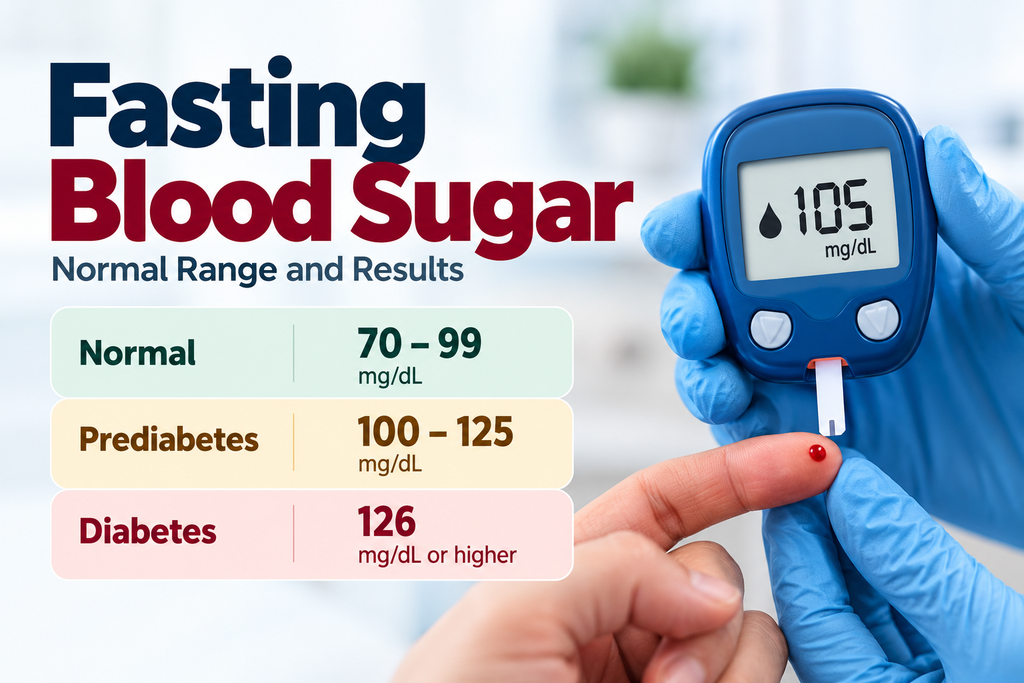
For most adults, a fasting blood sugar below 100 mg/dL is generally considered normal. A result between 100 and 125 mg/dL is in the prediabetes range. A fasting blood sugar of 126 mg/dL or above is in the diabetes range when the result is appropriately confirmed.
| Fasting blood sugar level | What it generally indicates |
| Below 100 mg/dL | Normal range |
| 100 to 125 mg/dL | Prediabetes range |
| 126 mg/dL or above | Diabetes range |
These numbers give you a useful starting point when you look at your report. Your doctor may still need to repeat an abnormal result or use another blood sugar test before confirming diabetes, especially when you do not have clear symptoms.
Research also found that fasting glucose and HbA1c do not always identify exactly the same people as having prediabetes or diabetes. This is one reason your doctor may look at more than one blood sugar measurement when needed (Radhakrishna et al., 2018).
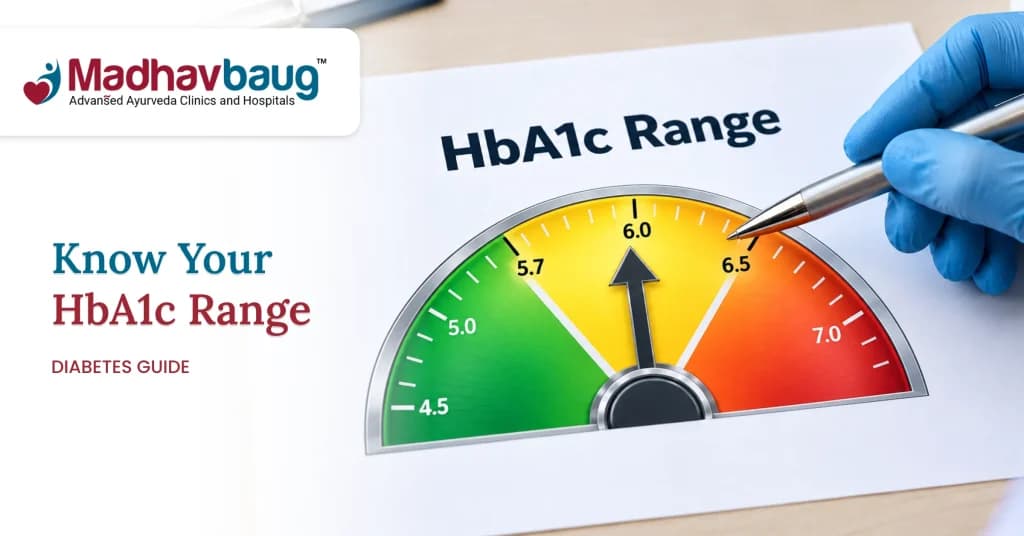
If you have also had an HbA1c test, looking at your HbA1c normal range can help you see how your longer-term blood sugar levels compare with your fasting reading.
How Many Hours of Fasting Are Required for a Blood Sugar Test?
You will usually need to fast for at least 8 hours before a fasting blood sugar test. This means you should not eat during this period before your blood sample is collected.
For many people, an overnight fast is easiest. For example, if your test is at 8 am, you may finish dinner around 8 pm the previous evening and then have your blood sample taken the following morning.
During the fasting period, plain water is generally allowed. You should avoid food, tea, coffee, milk, juice and other drinks containing calories.
If you take regular medicines, do not stop them or change the timing yourself. Ask your doctor or laboratory whether you should take them before the diabetes test.
What Can You Drink Before a Fasting Blood Sugar Test?
Plain water is generally the safest choice while you are fasting.
Tea, coffee, milk, fruit juice, soft drinks and other calorie-containing drinks can interfere with the fasting period. Even if you do not add sugar to your tea or coffee, it is better to avoid them unless your doctor or laboratory has given you different instructions.
If you are unsure about what you can have before the test, check the instructions provided by the laboratory. This becomes especially important if you are having several blood tests at the same time.
| Clinical Insight “When a patient brings me a fasting blood sugar report, I first look at where that number sits in relation to their earlier readings. A result of 110 mg/dL means something different when it is a first-time finding than when similar readings have been appearing repeatedly. Following the numbers over time often gives us a much clearer picture of what is happening with a patient’s blood sugar.” Dr. Pravin Jayram Ghadigaonkar, BAMS, MD, PhD (Scholar) – Preventive Cardiology 20+ Years of Clinical Experience, Head Medical Operations & Patient Improvement, Madhavbaug |
Fasting Blood Sugar Test Procedure
The fasting blood sugar test procedure is straightforward. After you arrive at the laboratory, a healthcare professional will clean the area and take a small blood sample, usually from a vein in your arm. The sample is then sent to the laboratory for analysis.
The actual blood collection generally takes only a few minutes. Once the sample has been taken, you can usually eat and return to your normal routine.
If you have been fasting since the previous evening, it can be helpful to carry something to eat with you afterwards.
What Is the Fasting Blood Sugar Test Time?
There is no single required clock time for every fasting blood sugar test. What matters is that you have completed the required fasting period before your blood sample is taken.
Many people have the test in the morning because an overnight fast is easier to manage. If your laboratory gives you a particular fasting blood sugar test time, follow its instructions.
For example, if your appointment is at 8 am and you are asked to fast for 8 hours, your last meal would usually need to be finished by around midnight at the latest. An early dinner can make the overnight fast more comfortable.
What Can Affect Your Fasting Blood Sugar Result?
Your fasting blood sugar can change from one day to another. An illness, poor sleep, stress, changes in physical activity, recent eating habits and some medicines can affect your blood glucose.
The way the test is performed also matters. If you ate during the fasting period or did not complete the required fasting time, tell your doctor or laboratory.
This is also why your doctor may not make a diagnosis from one unexpected number alone. If the result is higher than expected, it may be repeated or checked alongside another blood sugar test.
Fasting Blood Sugar vs HbA1c
Fasting blood sugar and HbA1c are both used to assess blood sugar, but they tell you different things.
A fasting blood sugar test shows your glucose level after fasting on a particular day. HbA1c gives an estimate of your average blood sugar over the previous 2 to 3 months.
| Test | What it tells you |
| Fasting blood sugar | Your blood glucose after fasting |
| HbA1c | Your average blood sugar over the previous 2 to 3 months |
Research found that fasting glucose and HbA1c did not always identify the same people as having diabetes or prediabetes. This means that one test can sometimes give a different picture from the other (Radhakrishna et al., 2018).
If your fasting blood sugar and HbA1c do not seem to match, do not try to decide which result is correct on your own. Your doctor can look at both results and decide whether further testing is needed.
A fasting reading that is higher than expected may also need to be checked for early blood sugar changes seen in prediabetes.
Could the diabetes reversal score help you understand your blood sugar?
What Does High Fasting Blood Sugar Mean?
A high fasting blood sugar means your glucose was above the expected range after fasting. A result between 100 and 125 mg/dL falls in the prediabetes range. A result of 126 mg/dL or above is in the diabetes range when appropriately confirmed.
A single high reading does not mean you should diagnose yourself with diabetes. Your doctor may repeat the fasting blood sugar test or use HbA1c or another appropriate test to confirm the finding.
This is particularly useful when your result is close to a diagnostic cut-off. Research has shown that fasting glucose and HbA1c can classify people differently, which highlights why the result needs to be considered in context (Gujral et al., 2019).
Can Fasting Blood Sugar Be Normal While You Have Diabetes?
It is possible for fasting blood sugar and another measure of blood sugar to give different results.
Your fasting blood sugar only tells you what your glucose level was after fasting on that particular occasion. It does not show every change in your blood sugar during the day.
If your results do not agree, your doctor may look at your HbA1c, symptoms and previous readings and decide whether another test is needed.
“I often tell patients not to judge their blood sugar control from one fasting reading alone. Blood sugar can change during the day, so a normal morning reading does not always tell us what is happening at other times. When the numbers do not seem to fit together, looking at the pattern over time gives us a better clinical picture.”
– Dr. Cinni Vijay Pandey, Regional Medical Head, Madhavbaug
How Often Should You Check Fasting Blood Sugar?
If you have never been diagnosed with diabetes, your doctor may recommend a fasting blood sugar test when you have risk factors or when another health assessment suggests that your blood sugar should be checked.
If you already have diabetes, how often you need to check your blood sugar depends on your treatment, blood sugar control and the type of monitoring your doctor has recommended.
If you regularly monitor your blood sugar at home, keep a record of your readings. Looking at the pattern over time can be more useful than focusing on one number.
What Should You Do If Your Fasting Blood Sugar Is High?
If your fasting blood sugar is above the normal range, start by discussing the result with your doctor. You do not need to work out what the number means on your own.
Your doctor may repeat the test or check your HbA1c to see whether your blood sugar has also been running high over the past few months. Your previous reports and health history may also help put the result into context.
At Madhavbaug, a diabetes assessment can look at your blood sugar along with your overall health and lifestyle. Depending on your individual needs, your care plan may include personalised diet, lifestyle guidance, Ayurvedic assessment and doctor-supervised therapies such as Panchakarma for type 2 diabetes. Your progress can be followed through HbA1c, blood glucose and other relevant health parameters.
If you have recently received a high fasting blood sugar result or have been told that your blood sugar is in the prediabetes or diabetes range, you can visit your nearest Madhavbaug clinic and discuss your report with a doctor.
Have questions about your blood sugar report?
Frequently Asked Questions
What is a fasting blood sugar test?
A fasting blood sugar test measures the amount of glucose in your blood after you have fasted for at least 8 hours. It is commonly used to check for prediabetes and diabetes.
How many hours do you need to fast before a blood sugar test?
You usually need to fast for at least 8 hours before a fasting blood sugar test. Follow the instructions given by your doctor or laboratory.
What is the fasting blood sugar test name?
The fasting blood sugar test is commonly called fasting plasma glucose (FPG) or fasting blood glucose (FBG) test. It measures your blood glucose level after you have not eaten for at least 8 hours.
What is the fasting blood sugar test price?
The fasting blood sugar test price can vary depending on the laboratory, city and healthcare provider. You can check the current price with the laboratory or diagnostic centre before booking the test.
Can you drink water during fasting for a blood sugar test?
Yes. Plain water is generally allowed while fasting. Avoid tea, coffee, milk, juice and other calorie-containing drinks unless your doctor gives you different instructions.
What is a normal fasting blood sugar level?
For most adults, a fasting blood sugar below 100 mg/dL is generally considered normal. A result from 100 to 125 mg/dL is in the prediabetes range. A result of 126 mg/dL or above is in the diabetes range when appropriately confirmed.
What is the fasting blood sugar test procedure?
A healthcare professional takes a small blood sample from a vein, usually in your arm. The sample is then sent to a laboratory to measure your blood glucose.
What is the fasting blood sugar test time?
The test can be done at different times of the day as long as you have completed the required fasting period. Morning testing is common because an overnight fast is easier for most people.
Is fasting blood sugar the same as HbA1c?
No. Fasting blood sugar measures your glucose after fasting on a particular day. HbA1c gives an estimate of your average blood sugar over the previous 2 to 3 months.
What should you do if your fasting blood sugar is high?
Speak with your doctor about the result. Depending on the number, your doctor may repeat the test or recommend another test such as HbA1c before deciding what the result means.
References
Cheng, C., et al. (2006). The utility of fasting glucose for detection of prediabetes. Metabolism, 55(5), pp.645–649.
Gujral, U.P., Prabhakaran, D., Pradeepa, R., Kandula, N.R., Kondal, D., Deepa, M., Zakai, N.A., Anjana, R.M., Rautela, G., Mohan, V., Narayan, K.M.V., Tandon, N. and Kanaya, A.M. (2019). Isolated HbA1c identifies a different subgroup of individuals with type 2 diabetes compared to fasting or post-challenge glucose in Asian Indians: The CARRS and MASALA studies. Diabetes Research and Clinical Practice, 153, pp.93–102.
Radhakrishna, P., Vinod, K.V., Sujiv, A. and Swaminathan, R.P. (2018). Comparison of hemoglobin A1c with fasting and 2-h plasma glucose tests for diagnosis of diabetes and prediabetes among high-risk South Indians. Indian Journal of Endocrinology and Metabolism, 22(1), pp.50–56.
Saeedi, P., Petersohn, I., Salpea, P., Malanda, B., Karuranga, S., Unwin, N., Colagiuri, S., Guariguata, L., Motala, A.A., Ogurtsova, K., Shaw, J.E., Bright, D. and Williams, R. (2019). Global and regional diabetes prevalence estimates for 2019 and projections for 2030 and 2045. Diabetes Research and Clinical Practice, 157, 107843.
Unnikrishnan, R., Anjana, R.M. and Mohan, V. (2011). Diabetes mellitus and its complications in India. Nature Reviews Endocrinology, 7, pp.283–290.

 Locate a Centre
