
Key Takeaways
|
A diabetes health checkup usually includes tests for blood sugar, HbA1c, cholesterol and kidney health. Depending on your health and diabetes history, your doctor may also recommend an eye examination, foot check or other tests.
You may be thinking, “I already checked my sugar. Why do I need all these other tests?”
That is a fair question. Every diagnostic test tells your doctor something different. Your HbA1c shows how your sugar has been doing over the past few months. A cholesterol test tells you about your blood fats. Kidney tests check how well your kidneys are working. An eye examination can detect the changes that you may not notice in your vision.
You may already have some of these reports. Take them with you when you meet your doctor.
What Is a Diabetes Health Checkup?
A diabetes health checkup includes tests that check your blood sugar and look for changes in your cholesterol, kidney health and eyes. It may also include blood pressure and foot checks, depending on your health and diabetes history.
You may be wondering why so many checks are needed when you are already checking your sugar.
Think about your last glucose reading. It tells you what your sugar was at that moment. It cannot tell you what your average sugar has been for the last few months. It also cannot tell you how your kidneys are doing or whether your cholesterol has gone up.
Want to understand your diabetes health better?
That is why your checkup may include a few different tests. Each one gives you a different piece of information.
If you have old reports at home, take them with you. They can help your doctor see how your results have changed. Diabetes care recommendations also include regular checks of blood sugar, blood pressure, cholesterol, kidney health, eyes and other diabetes related complications (American Diabetes Association, 2026).
Which Tests Are Included in a Diabetes Health Checkup?
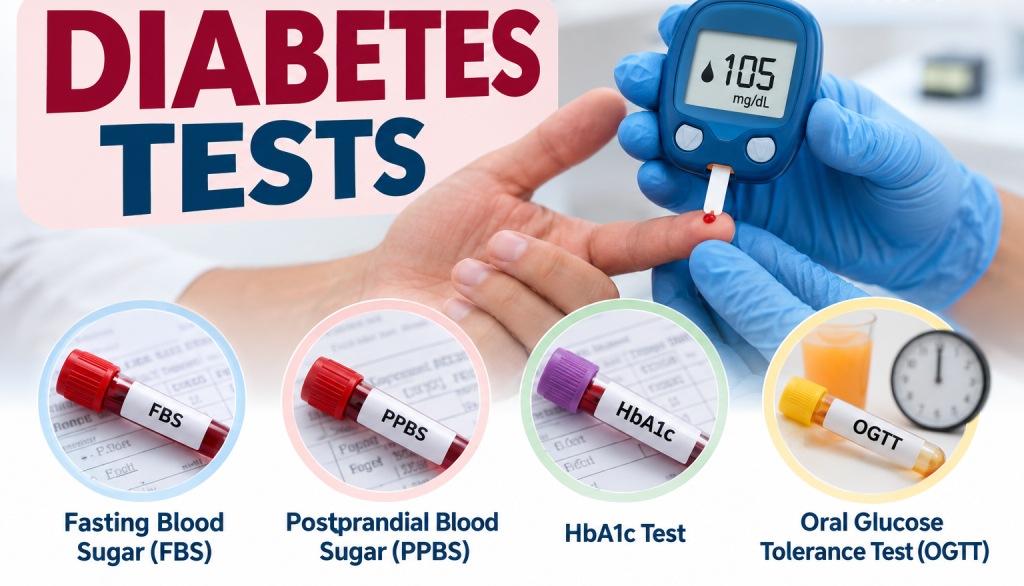
A diabetes health checkup can include HbA1c, fasting blood sugar, post meal blood sugar, lipid profile, kidney tests, urine albumin testing and an eye examination. Your doctor may also check your blood pressure and feet as part of your diabetes care.
So, what are all these tests actually checking?
You do not need to remember the names of every test. Each one answers a different question about your health.
| Diabetes test | What it tells you |
| HbA1c test | Your average blood sugar over the past 2 to 3 months |
| Fasting blood sugar test | Your blood sugar after fasting |
| Post meal blood sugar test | How your blood sugar responds after eating |
| Lipid profile | Your cholesterol and triglyceride levels |
| Kidney function tests | How well your kidneys are working |
| Urine albumin test | Whether albumin is leaking into your urine |
| Diabetic eye examination | Whether there are diabetes-related changes in your eyes |
Your blood pressure and feet are checked too. They are simple checks but they can tell your doctor a lot about how diabetes is affecting your health.
HbA1c Test for Diabetes
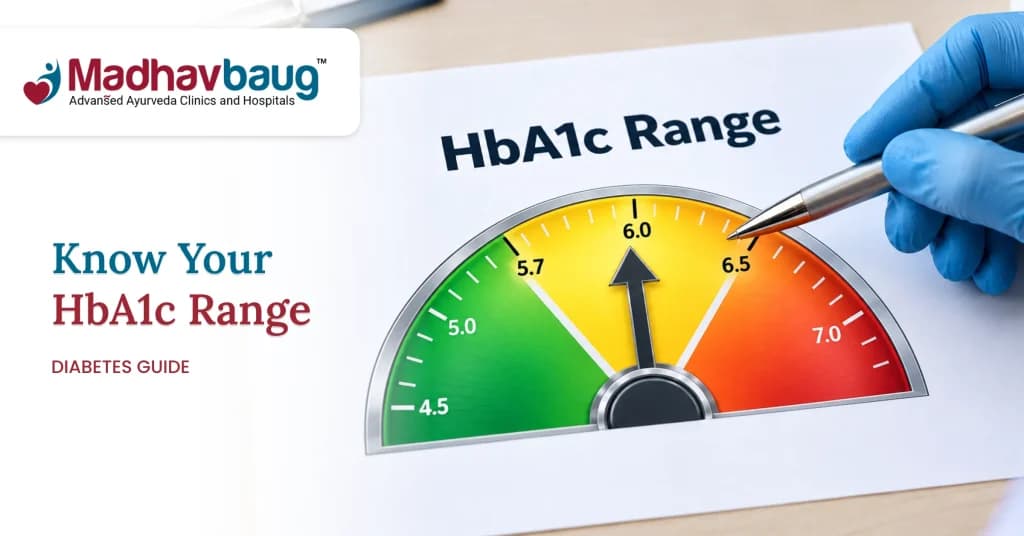
The HbA1c test shows your average blood sugar over the past 2 to 3 months. It is one of the main tests used to check how well your blood sugar is being controlled.
You may have checked your sugar at home and wondered why you need another test. The difference is simple. Your home reading shows what your sugar is doing at that particular time. HbA1c gives you a longer view.
You do not usually need to fast for an HbA1c test. Your older HbA1c reports can also be useful. If your latest number is different from the previous one, your doctor can look at the change and discuss what may have contributed to it.
The American Diabetes Association recommends HbA1c as a key measure for assessing and monitoring blood sugar in people with diabetes (American Diabetes Association, 2026).
Of course, HbA1c is not the only blood sugar test you may come across. Your doctor may also ask you to check your sugar after fasting, especially when they want to see what your glucose level is before you have eaten. That is where a fasting blood sugar test comes in.
Fasting Blood Sugar Test for Diabetes
A fasting blood sugar test checks your blood sugar after you have gone without food for at least 8 hours. It is commonly used to check for diabetes and to keep track of blood sugar in people who already have diabetes.
You may have been told, “Come fasting for your blood test,” and wondered how long you actually need to go without eating. For most fasting blood sugar tests, you are asked not to eat for at least 8 hours before the sample is taken.
The number on your report tells you what your blood sugar was at that point. It does not tell you what happens to your sugar after meals or later in the day.
Your doctor may also look at this result along with your HbA1c and other sugar readings. This can help you understand what has been happening with your blood sugar beyond that one morning reading.
Your fasting result tells you what your blood sugar looks like before you eat. But what happens once you have a meal? That is where a post meal blood sugar test can give you a different piece of the picture.
Post Meal Blood Sugar Test for Diabetes
A post meal blood sugar test checks your glucose level after you have eaten. It helps show how your blood sugar responds to a meal and can give information that a fasting reading cannot.
You may have noticed that your sugar looks fine in the morning but is higher after lunch or dinner. That can happen. Your blood sugar changes through the day, and meals are one of the things that can affect it.
This is why your doctor may sometimes ask you to check your sugar after eating. It can be useful when your readings have been changing or when your fasting number does not tell the whole story.
If you have been asked to check your sugar after a meal, the timing is important too. Your doctor or laboratory will tell you when to check it so you get a reading that can actually be compared with your other results.
Wonder how much your diabetes can improve?
Lipid Profile Test in Diabetes Care
A lipid profile measures the main fats in your blood, including total cholesterol, LDL cholesterol, HDL cholesterol and triglycerides. It is not a test for diabetes, but it is commonly checked as part of diabetes care because cholesterol levels are linked with heart and blood vessel health.
You may be wondering why your doctor is checking cholesterol when you came in to discuss your blood sugar.
The two are not measuring the same thing. Your blood sugar tells you about glucose. A lipid profile tells you about the fats in your blood but when you have diabetes, your doctor may want to keep an eye on both.
Your doctor may look at your LDL, HDL and triglycerides along with your blood pressure, age, diabetes history and other health details before deciding what your results mean for you. The American Diabetes Association includes lipid assessment among the cardiovascular risk checks used in diabetes care (American Diabetes Association, 2026).
Your cholesterol report tells you something about your heart and blood vessel health, but there is another part of your health that your diabetes checkup should keep an eye on too. Your kidneys can be affected by diabetes without causing any clear symptoms at first which is why your doctor may also ask for kidney function tests.
Kidney Tests for People With Diabetes
Kidney testing is an important part of diabetes care. It usually includes a blood test to estimate how well your kidneys are filtering and a urine test to check for albumin, a protein that can appear in the urine when the kidney’s filtering barrier is affected.
You may wonder why your doctor is checking your kidneys when your appointment is about diabetes. Diabetes can affect the kidneys over time, and early kidney changes often do not cause symptoms. You can feel completely well and still have a change that shows up on a routine test.
That is why you may be asked to give both a blood sample and a urine sample. They look at different things.
The blood test measures serum creatinine. Your doctor uses this result along with other information to estimate your eGFR, which gives an estimate of how well your kidneys are filtering.
You may see creatinine, eGFR and UACR mentioned separately on your report. They are not the same test. Each one tells your doctor something different about your kidney health.
The urine albumin test looks at the urine side of this check by showing whether albumin is present in your urine.
Urine Albumin Test for People With Diabetes
A urine albumin test checks whether albumin, a protein that normally stays in your blood, is leaking into your urine. It is commonly used in diabetes care to look for early changes in kidney health.
You may not expect a urine sample to be part of your diabetes checkup. But your doctor may ask for one for a good reason. Changes in the kidneys can begin without causing pain or any other symptom you can notice.
When albumin starts appearing in your urine, it can be an early sign that the kidneys are being affected. That is why your doctor may check your urine albumin along with your blood tests for kidney function.
If the result comes back higher than expected, it does not always mean there is permanent kidney damage. Things such as an infection, recent strenuous exercise or other temporary changes can affect the result. Your doctor may ask you to repeat the test to get a clearer picture.
If you have received an abnormal result, do not worry based on that number alone. Take the report to your doctor and let them look at it along with your eGFR, blood pressure, diabetes history and earlier reports.
Your kidney tests help you keep track of changes that may be happening quietly. Diabetes can affect other parts of your body in the same way, including your eyes. You may not notice any change in your vision at first, which is why an eye examination is another useful part of regular diabetes care.
Diabetic Eye Test
Your eyes may not be the first thing you think about when you hear diabetes testing, but an eye examination is an important part of diabetes care.
Diabetes can affect the tiny blood vessels in the retina and cause diabetic retinopathy. The difficult part is that early changes may not affect your eyesight.
You may be able to read, drive and carry on with your normal routine without noticing anything unusual.
The Indian diabetic retinopathy screening consensus recommends regular eye examination for people with diabetes because early disease can be present without symptoms (Raman et al., 2021).
Your eyes may look fine even when diabetes has started to cause changes. Blood pressure is similar. You may not feel anything unusual even when your blood pressure is high, which is why your doctor may check it during your diabetes visit.
| Clinical Insight “In my experience, patients often wait for their vision to change before taking an eye examination seriously. By that stage, we may be looking at a problem that has already been developing for some time. A routine eye check gives us the opportunity to find these changes earlier, when the person may still be seeing perfectly well.” Dr. Gurudatta Amin, BAMS, MD, PGDEMS, 19+ Years of Clinical Experience, CMO, Madhavbaug |
Blood Pressure Check for Diabetes
Blood pressure is not a laboratory test, but it should not be forgotten during a diabetes health checkup.
You can have high blood pressure without feeling any different. When diabetes and high blood pressure occur together, your doctor may pay closer attention to your cardiovascular and kidney health.
A blood pressure check is simple and can usually be done during your regular appointment.
Diabetes care recommendations include blood pressure assessment as part of the physical examination and ongoing risk assessment.
Your doctor may also check your feet during a diabetes visit. It is a simple check, but it can help spot changes in sensation, skin or circulation that you may not have noticed yourself.
Foot Examination for Diabetes
A foot examination checks your skin, sensation and circulation for changes that can sometimes happen with diabetes. It can help your doctor spot a foot problem before it becomes something you notice yourself.
You may not think about your feet when you go for a diabetes checkup. But diabetes can affect the nerves and blood flow in your feet over time. A small blister or cut may then be harder to feel, especially if you have reduced sensation.
Your doctor may look at the skin, check the blood flow and test how well you can feel touch or pressure. The exact checks can depend on your diabetes history and what your doctor finds.
If you have noticed numbness or tingling, have had a foot ulcer before or have a wound that is taking longer than usual to heal, mention it during your appointment. You do not need to wait for your next routine checkup to bring it up.
Regular foot checks are part of diabetes care because nerve and circulation changes can develop gradually, sometimes before you notice a problem yourself.
How Often Should You Have Diabetes Tests?
How often you need diabetes tests depends on your blood sugar, treatment, previous reports and overall health. You may need some tests more often than others.
For example, your doctor may ask you to repeat an HbA1c test about every three months if your blood sugar is not at your target or your treatment has recently changed. If your blood sugar is stable and you are meeting your treatment goals, testing may be needed about twice a year.
The same timing does not apply to every diabetes test. Your kidney tests, cholesterol checks, eye examinations and other health checks may be due at different times.
You may also find that your testing schedule changes over the years. A medicine change, a new health concern or a change in your blood sugar can mean that your doctor wants to check something sooner.
If you are unsure when your next test is due, ask your doctor and keep your previous reports with you. Looking at your own results over time is much more useful than simply following someone else’s testing routine.
Why Are Diabetes Health Checkups Important in India?
Diabetes is common across India, and it can affect people at different ages and from different backgrounds. Regular diabetes health checkups can help you keep track of changes before they start affecting how you feel.
The ICMR INDIAB study found diabetes in 11.4% of the people studied, while 15.3% had prediabetes. (Anjana et al., 2023).
You may be feeling perfectly fine and still have a change in your blood sugar or blood pressure. Your cholesterol can change too. You may not notice any of it in your daily routine.
That is why a diabetes health checkup can be useful. It gives you and your doctor a chance to see how things are going and decide if any test needs a closer look and even detect prediabetes. It also gives you a clearer idea of what is happening with your health instead of waiting until you notice a problem yourself.
“I have seen many patients who felt completely well when they came for a routine checkup. Their reports were the first sign that something needed attention. That is why I always tell my patients not to wait for symptoms before checking their blood sugar, blood pressure and other important health markers. Early detection gives you more time to act on it.”
-. Dr. Bipin Gond, Zonal Medical Head, Madhavbaug
What Happens After a Diabetes Health Checkup?
Getting your diabetes tests done is one thing. Looking at the reports and knowing what to do with them is another.
You may have an HbA1c report, fasting sugar reading, cholesterol results and kidney tests sitting in front of you and still be unsure which number matters most. That is completely understandable. You do not have to work it all out from the report on your own.
At Madhavbaug, you can sit down with a doctor and go through your reports, your usual food, your daily routine and any concerns you have about your diabetes. Depending on what you need, your diabetes treatment plan may include personalised diet and lifestyle guidance, Ayurvedic assessment and doctor supervised therapies such as Panchakarma for type 2 diabetes.
Your HbA1c, blood glucose and other relevant health measurements can then be followed over time. This lets you see how your numbers are changing as you continue with your care.
If you have a few old diabetes reports at home and are not sure what to look at next, take them with you when you visit your nearest Madhavbaug clinic. You can go through them with a doctor and get a clearer idea of what your results mean and what you should focus on next.
Have your diabetes reports ready? Let’s understand them together.
Frequently Asked Questions
What tests are included in a diabetes health checkup?
A diabetes health checkup may include HbA1c, fasting blood sugar, post meal blood sugar, lipid profile, kidney function tests, urine albumin testing, blood pressure measurement, foot examination and diabetic eye screening.
What is the main blood test to check for diabetes?
HbA1c and fasting plasma glucose are commonly used blood tests for diagnosing and monitoring diabetes. Your doctor may recommend other testing depending on your situation.
What tests are done for diabetic patients?
Tests for diabetic patients may include fasting blood sugar, post-meal blood sugar, HbA1c and an oral glucose tolerance test. Your doctor may recommend specific tests based on your blood sugar levels, symptoms and health history.
What laboratory tests are used for diabetes?
Common laboratory tests for diabetes include fasting blood sugar, HbA1c and an oral glucose tolerance test. These tests help doctors assess blood sugar levels and identify diabetes or prediabetes.
Which blood tests are needed for diabetic patients?
Common blood tests include HbA1c, fasting or post meal blood glucose, lipid profile, serum creatinine and eGFR. The tests you need depend on your diabetes and other health factors.
How often should you have a diabetes health checkup?
The timing depends on your diabetes control, treatment and previous results. HbA1c may be checked about every three months when glucose goals are not being met and about twice a year when glucose levels are stable and at goal (American Diabetes Association, 2026).
Is HbA1c enough to monitor diabetes?
No. HbA1c is an important diabetes test, but it does not provide information about cholesterol, kidney health, blood pressure, diabetic retinopathy or foot problems.
Why do diabetic patients need kidney tests?
Diabetes can affect the kidneys without causing noticeable symptoms early on. Blood tests such as creatinine and eGFR and urine albumin testing can help your doctor monitor kidney health.
Do people with diabetes need regular eye tests?
Yes. Diabetic retinopathy can develop without noticeable changes in vision, which is why regular eye screening is recommended for people with diabetes.
Can fasting blood sugar and HbA1c give different results?
Yes. Fasting blood sugar shows your glucose after fasting at a particular time, while HbA1c reflects average blood sugar over approximately two to three months.
What should you take to a diabetes health checkup?
Take your recent and older diabetes reports, medicine list, home glucose readings if available and any recent kidney, cholesterol or eye examination reports.
References
Anjana, R.M., Pradeepa, R., Deepa, M. et al. (2017) ‘Prevalence of diabetes and prediabetes in 15 states of India: results from the ICMR INDIAB population based cross sectional study’, The Lancet Diabetes & Endocrinology, 5(8), pp. 585–596. doi: 10.1016/S2213-8587(17)30174-2.
Anjana, R.M., Unnikrishnan, R., Deepa, M. et al. (2023) ‘Metabolic non communicable disease health report of India: the ICMR INDIAB national cross sectional study’, The Lancet Diabetes & Endocrinology, 11(7), pp. 474–489. doi: 10.1016/S2213-8587(23)00119-5.
American Diabetes Association Professional Practice Committee (2026) ‘4. Comprehensive Medical Evaluation and Assessment of Comorbidities: Standards of Care in Diabetes 2026’, Diabetes Care, 49(Supplement 1), pp. S61–S85.
American Diabetes Association Professional Practice Committee (2026) ‘6. Glycemic Goals, Hypoglycemia, and Hyperglycemic Crises: Standards of Care in Diabetes 2026’, Diabetes Care, 49(Supplement 1), pp. S132–S149.
Raman, R., Ramasamy, K., Rajalakshmi, R., Sivaprasad, S. and Natarajan, S. (2021) ‘Diabetic retinopathy screening guidelines in India: All India Ophthalmological Society diabetic retinopathy task force and Vitreoretinal Society of India Consensus Statement’, Indian Journal of Ophthalmology, 69(3), pp. 678–688. doi: 10.4103/ijo.IJO_667_20.

 Locate a Centre
