

Key Takeaways
|
Prediabetes means your blood sugar is higher than normal but has not reached the diabetes range. A fasting blood sugar test, HbA1c or oral glucose tolerance test can show whether your reading falls in this range.
If your report shows prediabetes, you may be surprised. There may be no clear symptoms at this stage. You may only find out when a routine blood test shows that your blood sugar has started to rise.
What Is a Prediabetes Test?
A prediabetes test checks whether your blood sugar is higher than normal but has not reached the diabetes range. Your doctor may use a fasting blood sugar test, HbA1c test or oral glucose tolerance test to check this.
Each test gives you a different view of your blood sugar.
A fasting blood sugar test checks your glucose after you have fasted for at least 8 hours. An HbA1c test shows your average blood sugar over the past 2 to 3 months. An oral glucose tolerance test checks how your blood sugar responds after you drink a measured glucose solution.
You may need one test or more than one. This depends on your blood sugar readings and your health history.
Has your blood sugar entered the prediabetes range?
Prediabetes Meaning – What Does It Mean?
Prediabetes means your blood sugar is higher than the normal range, but it has not reached the level used to diagnose diabetes. It is often a sign that your body is beginning to have difficulty keeping blood sugar under control.
You may not notice any clear symptoms at this stage. Many people find out they have prediabetes during a routine blood sugar test or health checkup.
Having prediabetes does not mean that you have diabetes. It is a stage where your blood sugar needs attention, along with your eating habits, physical activity, weight and other health factors.
Your doctor may look at your blood sugar results over time to understand whether your levels are improving, staying in the prediabetes range or moving towards diabetes. Regular monitoring can help you take timely steps to support healthier blood sugar levels.
What Is the Prediabetes Sugar Level?
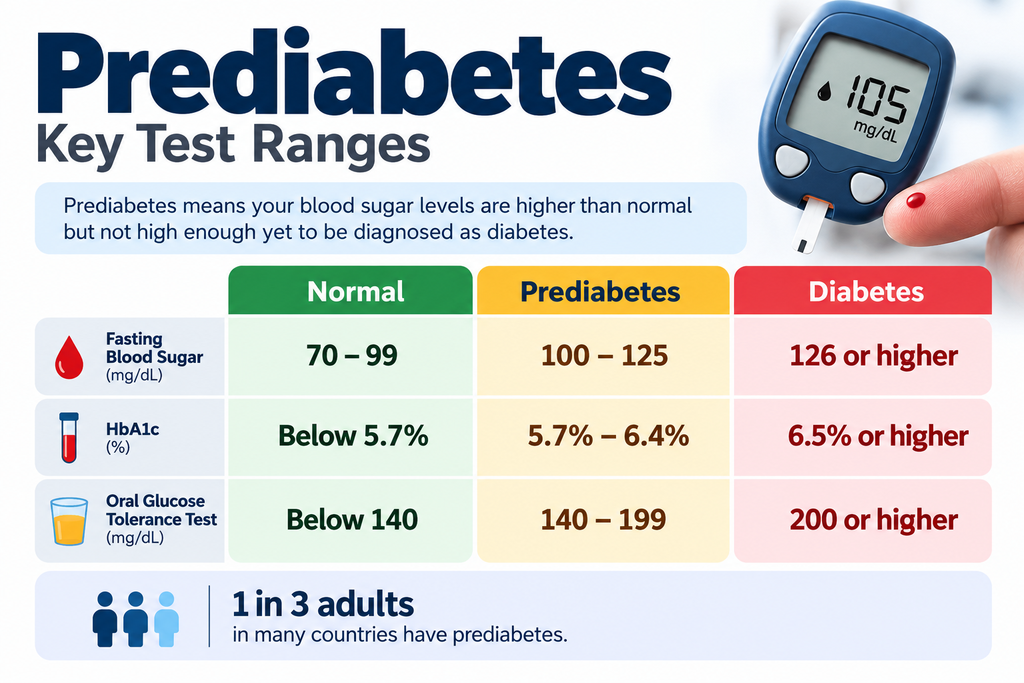
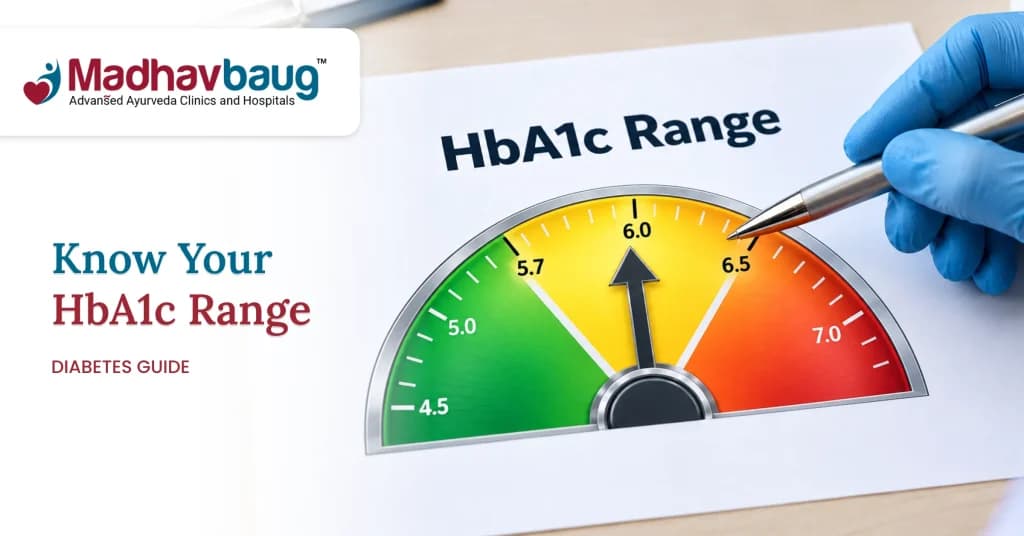
The prediabetes sugar level depends on the blood test you take. A fasting blood sugar of 100 to 125 mg/dL, an HbA1c of 5.7% to 6.4%, or a 2 hour oral glucose tolerance test result of 140 to 199 mg/dL generally falls in the prediabetes range.
| Blood sugar test | Prediabetes range |
| Fasting blood sugar | 100 to 125 mg/dL |
| HbA1c | 5.7% to 6.4% |
| 2-hour oral glucose tolerance test | 140 to 199 mg/dL |
So what is prediabetes sugar level for you?
It depends on which test you have taken. For example, if your fasting blood sugar is 110 mg/dL, your reading is in the prediabetes range. If your HbA1c is 6.0%, that also falls in this HbA1c prediabetes range.
“A prediabetes result is a stage where you still have time to work on your blood sugar. I often tell my patients not to be frightened by the word prediabetes. Take the result seriously, make the changes your doctor recommends and keep checking your levels. What you do at this stage can make a real difference to your future blood sugar.”
— Dr. Bipin Gond, Zonal Medical Head, Madhavbaug
Prediabetes is common in India. The ICMR INDIAB study found that several factors were linked with a higher chance of prediabetes, including age, family history, abdominal obesity and high blood pressure (Anjana et al., 2017). This is why your doctor may look at more than your blood sugar number when discussing your result with you.
You may now be wondering where your blood sugar stood before it entered the prediabetes range. Knowing the usual normal level can help you put your own reading into perspective. So, before looking at what happens when blood sugar rises further, let’s look at what normal blood sugar looks like before prediabetes.
What Is the Normal Blood Sugar Before Prediabetes?
A fasting blood sugar below 100 mg/dL is generally considered normal. A reading from 100 to 125 mg/dL falls in the prediabetes range. This gives you a simple way to see where your fasting blood sugar falls before it reaches the prediabetes range.
If your report shows a reading below 100 mg/dL, you are generally within the normal range. If your number is close to 100 mg/dL, you may still want to discuss it with your doctor, especially if you have had higher readings in the past.
Knowing these numbers can be useful even when you feel perfectly well. Prediabetes often does not cause noticeable symptoms, so the next question is whether you should get tested even if you have no symptoms.
Wondering What Your Diabetes Reversal Score Says About You?
Should You Take a Prediabetes Test If You Have No Symptoms?
You can have prediabetes without knowing it. Your blood sugar can start going up even when you feel just as you normally do.
You may sometimes feel more thirsty or tired than usual or need to urinate more often. These signs are not specific to prediabetes, but you cannot tell from the symptoms alone whether your blood sugar is in the prediabetes range.
A blood test is the way to find out. Your doctor may suggest a fasting blood sugar test or an HbA1c test based on your health and previous readings.
If you have a family history of diabetes or have had high blood sugar before, you may be asked to get tested even if you feel well. The same may apply if you have gained weight around your waist or have high blood pressure.
But does everyone need a prediabetes test, or are there certain people who should be more careful about getting one?
| Clinical Insight “I have seen many people come to me saying they feel perfectly fine, only to find that their blood sugar has already started going up. This is one reason I do not advise waiting for symptoms before getting your blood sugar checked. When you find a change early, you have more time to work on it and keep a closer watch on your health.” Dr. Pravin Jayram Ghadigaonkar, BAMS, MD, PhD (Scholar) – Preventive Cardiology 20+ Years of Clinical Experience, Head Medical Operations & Patient Improvement, Madhavbaug |
Who Should Get a Prediabetes Test?
You may need to check your blood sugar even if you feel perfectly fine. This is especially worth discussing with your doctor if your parents or siblings have type 2 diabetes, you have gained weight around your waist or your blood pressure has been high.
Think about your previous reports too. If you have ever had a high blood sugar reading, it is important to ask your doctor when you should test again. The same applies if you had diabetes during pregnancy or you are not physically active enough.
Your age also matters when your doctor decides how often you should have your blood sugar checked. You may have no symptoms at all and still have a higher than normal reading.
If you are getting your blood sugar checked, you can also ask your doctor whether you need a prediabetes test. A diabetes health checkup lets you check your blood sugar along with other health measurements in the same visit.
What Should You Do If Your Prediabetes Test Is Positive?
Seeing the word prediabetes on your report can leave you wondering what you should change first. You do not need to turn your whole routine upside down in one day. Start by talking to your doctor about the result and what it means for you.
Think about your usual day. What do your meals look like? How much time do you spend sitting? Are you getting enough sleep? Have you gained weight around your waist recently? These details can help you and your doctor understand where your blood sugar may be heading. Your previous blood sugar and HbA1c reports can also show whether this is a recent change or something that has been building over time.
If you are not sure what your prediabetes report means or what you should change first, you can bring the report to Madhavbaug and discuss it with a doctor. Depending on what you need, your care may include changes to your food and daily routine, Ayurvedic assessment and doctor supervised therapies such as Panchakarma for type 2 diabetes. Your HbA1c and blood sugar can be checked over time to see how you are doing.
You do not have to figure out your report by yourself. Take it with you when you visit your nearest Madhavbaug clinic and ask the doctor what your numbers mean and what you should focus on first.
Want to know what your prediabetes report means for you?
Frequently Asked Questions
What is a prediabetes test?
A prediabetes test checks whether your blood sugar is higher than normal but below the diabetes range. Fasting blood sugar, HbA1c and an oral glucose tolerance test can be used.
What is the prediabetes sugar level?
A fasting blood sugar of 100 to 125 mg/dL or an HbA1c of 5.7% to 6.4% generally falls within the prediabetes range.
What does prediabetes mean?
Prediabetes means your blood sugar is higher than normal but has not reached the level used to diagnose diabetes.
Can you have prediabetes without symptoms?
Yes. Prediabetes often does not cause noticeable symptoms. A blood test can identify changes in blood sugar even when you feel well.
Can prediabetes become normal again?
Yes. Some people with prediabetes return to normal blood sugar levels. Your doctor can help you identify the changes that may be appropriate based on your health and blood sugar results.
Does prediabetes mean you have diabetes?
No. Prediabetes means your blood sugar is above the normal range but below the diabetes range. It is a stage where timely attention to your blood sugar can be helpful.
References
Anjana, R.M., Pradeepa, R., Deepa, M., Datta, M., Sudha, V., Unnikrishnan, R., Bhansali, A., Joshi, S.R., Joshi, P.P., Dhandania, V.K., Madhu, S.V., Rao, P.V., Geetha, L., Subashini, R., Shukla, D.K., Kaur, T., Ali, M.K., Narayan, K.M.V. and Mohan, V. (2017). ‘Prevalence of diabetes and prediabetes in 15 states of India: results from the ICMR-INDIAB population-based cross-sectional study’, The Lancet Diabetes & Endocrinology, 5(8), pp. 585–596.
Morris, D.H., Khunti, K., Achana, F., Srinivasan, B., Gray, L.J., Davies, M.J. and Webb, D. (2013). ‘Progression rates from HbA1c 6.0–6.4% and other prediabetes definitions to type 2 diabetes: a meta-analysis’, Diabetologia, 56(7), pp. 1489–1493.
Radhakrishna, P., Vinod, K.V., Sujiv, A. and Swaminathan, R.P. (2018). ‘Comparison of Hemoglobin A1c with Fasting and 2-h Plasma Glucose Tests for Diagnosis of Diabetes and Prediabetes among High-risk South Indians’, Indian Journal of Endocrinology and Metabolism, 22(1), pp. 50–56.


 Locate a Centre
