
 Add to Preferred Sources
Key Takeaways
|
Passive smoking can cause damage to your heart despite you not smoking. Passive smoking causes damage to blood vessels and causes your blood to be more likely to clot. Regular exposure can cause increased risk of heart disease. Bidis and Hookah aren’t safer alternatives to cigarettes.
You may assume you’ll be protected from the smoke if someone is smoking with a window open. Whilst some of the smoke will be dispersed out of the window, there will still be some left in the room. People sitting nearby including family members who would never smoke will inhale some of the smoke.
What Is Passive Smoking (Second Hand Smoke) and How Does It Affect the Heart?
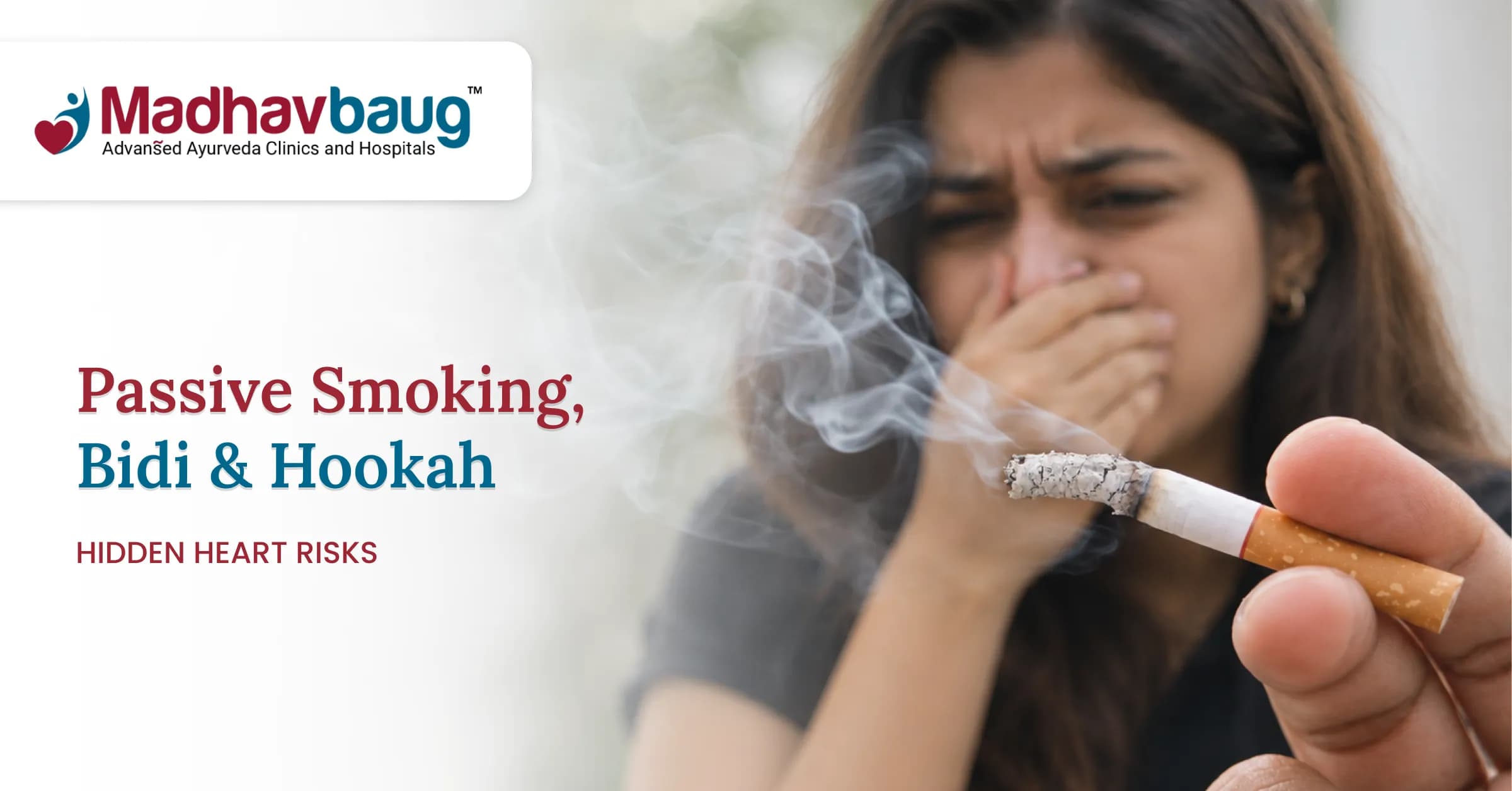
Passive smoking is when you inhale someone else’s tobacco smoke. This includes the smoke from the cigarette, bidi or hookah and the exhaled smoke.
Even short periods of exposure can cause changes to blood vessels and cause platelets (blood cells responsible for clotting) to be stickier, according to the CDC. This can be particularly concerning if you already have narrowed coronary arteries.
According to the CDC, non smokers who regularly inhale secondhand smoke have an estimated 25-30% increased risk of coronary heart disease and a 20-30% increased risk of stroke.
This is a relative risk that isn’t saying that 25-30% of those exposed will develop heart disease. Those living with someone who smokes every day is very different to sitting next to someone who smokes on the odd occasion. Both aren’t great but the risks shouldn’t be seen as equal.
Should I be worried about smoke exposure?
Are we protecting our family by smoking near the window/balcony?
Opening windows, turning on fans and smoking in another room won’t help to protect people from tobacco smoke. The CDC says smoke from one cigarette can linger in a room for hours.
- Another room – Smoke can still travel through doors, gaps and shared ventilation systems such as between flats.
- Opening windows/fans – Will cause some of the smoke to be dispersed but people sitting nearby will still inhale.
- Air Purifier – May reduce some of the particles but will not remove all of the harmful gases.
- In a car – Even with the window open you’re in a small space. Make sure your car is completely smoke free.
- Balcony – Smoking outside will mean less smoke gets into your house. However, smoke could still travel to your neighbours.
“The air purifier only starts working once the smoke has got into the room. Anyone sitting next to the smoker would have already inhaled. Making your home and car completely smoke free is a much more reliable way to protect your whole household.”
– Dr Bipin Gond, Zonal Medical Head, Madhavbaug
Is Bidi smoking a safer option?
A bidi is made up of tobacco wrapped in a dried leaf (tendu leaf) and often tied using thread. There is usually no filter. The smaller size can give the impression it is less harmful.
However, the tendu leaf isn’t as easy to burn and people may inhale more deeply or frequently to keep the bidi burning. Machine testing has shown there is a large release of nicotine, carbon monoxide and tar. Sometimes even more than normal cigarettes. This doesn’t mean there is a set amount you can convert from cigarettes to bidi as it all depends on what product you are using and how you smoke.
| Research A study looking at men in South Asia (India, Pakistan and Bangladesh) found that those who were heavy bidi smokers had an increased adjusted risk of cardiovascular events compared to non-smokers, with a hazard ratio of 1.55. Heavy cigarette smokers had an increased risk too, with a hazard ratio of 1.47. These results overlap and don’t prove bidis are more dangerous than cigarettes. However, it does show there is a large risk of cardiovascular issues with both. This study was done by Duong and colleagues in 2017. |
This was an observational study so causation couldn’t be proven. It also didn’t look at women so the results may not be the same for them. This study is useful for those in India as it helps to dispel the myth that traditional/smaller tobacco products are safer.
Hookah Side Effects on the Heart
During a hookah session your heart rate and blood pressure can increase. You will be inhaling nicotine and carbon monoxide. The charcoal that is used to heat the tobacco can cause a large increase in carbon monoxide. Those sitting nearby can inhale this too, according to the CDC.
- Carbon Monoxide – This attaches to the haemoglobin reducing the amount able to carry oxygen. Don’t assume you’ll be fine if you feel a head rush after a long session.
- Long sessions – You may inhale a lot more smoke during a session. The CDC state it can be 100-200x more than one cigarette. This doesn’t mean you’re 100-200x more likely to develop heart disease.
- Flavour/Herbal Hookah – Flavours such as fruit won’t remove the toxic elements. Even tobacco free shisha can cause exposure to carbon monoxide due to the heating of the charcoal.
- Those nearby – You can still be exposed to second hand hookah smoke. This is from the tobacco and the heating element. Even if you don’t smoke, just being at a hookah session means you can still be exposed.
The American Heart Association have stated that there are immediate cardiovascular effects and potential long term harm. However, there isn’t as much evidence on the long term effects as there is with cigarette smoking.
| Myth or Fact? Myth – The water in the hookah pipe removes the dangerous chemicals.Fact – The water will cool down the smoke but won’t remove any of the nicotine, carbon monoxide or other toxins. It will just make it easier to inhale. |
E-Cigarette Side Effects: How Does Vaping Affect Your Heart?
Using a vape can cause your heart to beat faster and temporarily increase your blood pressure. However, it isn’t clear how much your risk of developing heart disease will increase if you vape regularly for years. Researchers are still looking into this.
Vapes work by heating a liquid rather than burning tobacco. However, you’re not just inhaling water vapour. Depending on the device and liquid used you could be inhaling fine particles, metals and other potentially harmful chemicals, according to the CDC.
| Vaping laws in IndiaUnder the Prohibition of Electronic Cigarettes Act, 2019 it is illegal to manufacture, import, sell, distribute or advertise e-cigarettes in India. It is also illegal to transport, export or store e-cigarette stock.If you’re trying to quit smoking talk to a healthcare professional about the right support. |
How do passive smoking, Bidi, Hookah and Vaping affect your heart?
There are differences between smoking a bidi, having a hookah session and inhaling someone elses cigarette smoke. The amount and type of substances you inhale can vary.
| Exposure | What affects your heart |
| Passive smoking | You may not smoke but still inhale tobacco chemicals at home/work. Regular exposure can cause issues with your arteries and make your blood more likely to clot. |
| Bidi | The small size can be misleading. Burning the tobacco can cause nicotine and carbon monoxide to be released causing cardiovascular risk. |
| Hookah | During a session you may inhale a lot of smoke. The charcoal used to heat the tobacco can cause carbon monoxide to be released. |
| Herbal Hookah | Whilst there is no tobacco, the charcoal will still cause carbon monoxide to be released. |
| Vaping | Products containing nicotine can cause temporary issues with your pulse and blood pressure. Long term effects are still being researched. |
The amount and frequency you’re exposed to will affect your heart but none are safe.
Chest pain, breathlessness and other signs to look out for
If you’re regularly exposed to tobacco smoke you should be aware. If you already have diabetes, high blood pressure or family history of heart disease you should be aware of any chest discomfort when active, unusual breathlessness or regular palpitations. Get your heart health checked.
If you have severe headaches, dizziness, nausea or confusion after a hookah session you may be suffering from carbon monoxide poisoning. This requires urgent attention. If you’re experiencing symptoms of a suspected heart attack (such as constant chest pressure, severe breathlessness, fainting or pain travelling to arm or jaw) call 112 in India.
| Clinical Insight “Sometimes patients will say they don’t smoke but still live with someone who smokes inside or regularly attend hookah sessions. It is therefore important to ask about exposure within the home and socially. For patients with coronary disease, the carbon monoxide can reduce the oxygen being delivered and the nicotine can cause a greater workload on the heart. Patients with diabetes may also not notice the signs as much. You should consider the exposure along with symptoms, blood pressure, cholesterol and blood sugar.” Dr. Pravin Jayram Ghadigaonkar, BAMS, MD, PhD (Scholar) – Preventive Cardiology 20+ Years of Clinical Experience, Head Medical Operations & Patient Improvement, Madhavbaug |
Understanding your heart risk with Madhavbaug
Whilst you cannot determine exactly how much smoke you’ve inhaled during a check up, we can determine factors such as high blood pressure, abnormal cholesterol and diabetes that can affect your overall cardiovascular risk.
Our doctors can look into your reports and smoking/exposure history. We can then discuss whether further assessment is required. Any Ayurvedic/lifestyle based treatments should be used alongside evidence based cessation support or medication. Continue taking your medication unless told otherwise by the doctor prescribing it.
Concerned about the effect tobacco exposure could have on you?
Frequently Asked Questions
Can passive smoking lead to a heart attack?
Passive smoking can cause an increased risk of coronary heart disease over time. It can also cause clotting issues even after short periods of exposure. If you have existing coronary disease it is important to avoid exposure. Usually you won’t be able to determine that one exposure caused a heart attack.
Is passive smoking as bad as smoking?
Generally those smoking will inhale more tobacco smoke than those nearby. However, just because you’re getting less exposure doesn’t mean it is safe. The risk depends on how frequently, long and where you’re exposed.
Is occasional hookah bad for the heart?
Even just one session can cause an increase in heart rate, blood pressure and carbon monoxide exposure. The long term risk of occasional use is harder to determine than regular cigarette smoking but is not risk free.
Is herbal/nicotine free hookah safe?
Although there is no tobacco there may not be any nicotine exposure. However, the charcoal will still cause carbon monoxide and other pollutants. Herbal shisha shouldn’t be considered safe for those using or those nearby.
Is it safe to be around someone vaping?
The exhaled aerosol can contain nicotine and other harmful substances. The effect on bystanders isn’t as well studied as cigarette smoking. The safest option is to keep areas smoke/vape free.
References
Bhatnagar, A. et al. (2019) ‘Water pipe (hookah) smoking and cardiovascular disease risk: a scientific statement from the American Heart Association’, Circulation, 139(19), pp. e917–e936.
Centers for Disease Control and Prevention (CDC) (1999) ‘Bidi use among urban youth: Massachusetts, March–April 1999’, MMWR, 48(36), pp. 796–799.
Centers for Disease Control and Prevention (CDC) (2024a) Hookahs.
Centers for Disease Control and Prevention (CDC) (2024b) Preventing exposure to secondhand smoke in the home.
Centers for Disease Control and Prevention (CDC) (2025a) Health problems caused by secondhand smoke.
Centers for Disease Control and Prevention (CDC) (2025b) Health effects of vaping..
Duong, M. et al. (2017) ‘Effects of bidi smoking on all-cause mortality and cardiorespiratory outcomes in men from south Asia: an observational community-based substudy of the Prospective Urban Rural Epidemiology Study (PURE)’, The Lancet Global Health, 5(2), pp. e168–e176.
Government of India (2019) The Prohibition of Electronic Cigarettes (Production, Manufacture, Import, Export, Transport, Sale, Distribution, Storage and Advertisement) Act, 2019.


 Locate a Centre

