
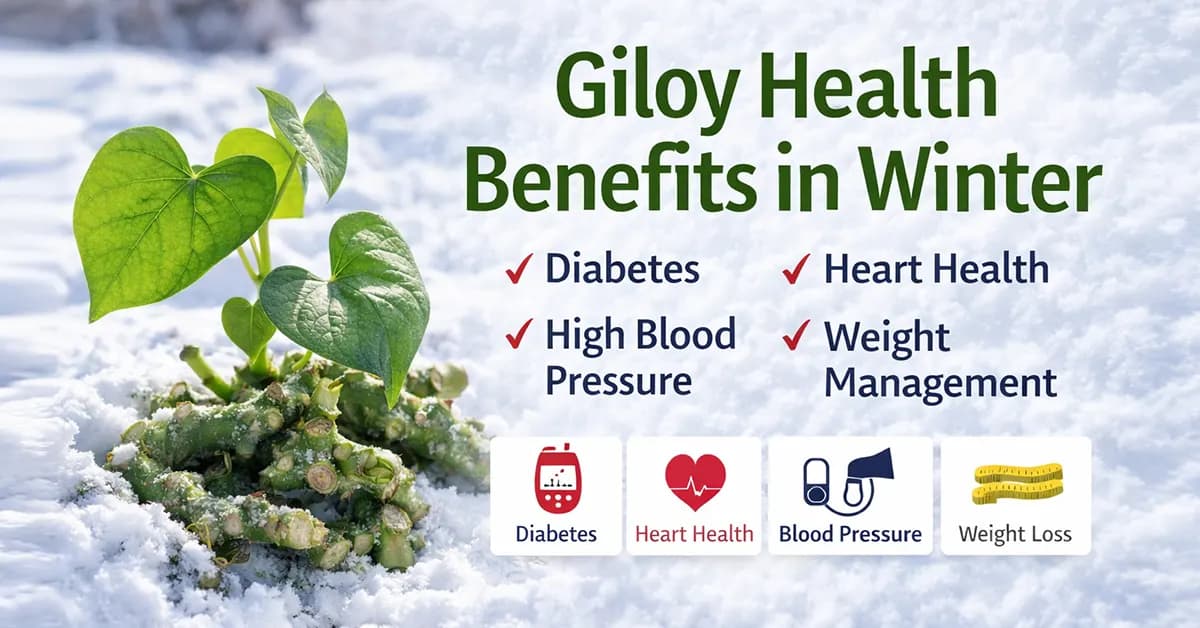
Winter is the season when immunity drops, metabolism slows, and lifestyle diseases like diabetes, heart problems, and high blood pressure tend to worsen. Giloy, an Ayurvedic herb traditionally used in Indian households, is often discussed during winter for its general wellness support and seasonal relevance.
What is Giloy?
Giloy (Tinospora cordifolia), also known as Guduchi, is a climbing shrub widely referenced in Ayurveda for its role in seasonal wellness practices. It is commonly consumed during winter in the form of decoctions, powders, or tablets as part of traditional routines.
In colder months, the body experiences:
- Reduced physical activity
- Increased inflammation sensitivity
- Higher infection exposure
- Slower digestion and metabolism
This is where Giloy becomes part of many winter health discussions.
Why Winter Demands Extra Care for Chronic Health Conditions
Winter doesn’t affect everyone equally. People with chronic conditions often notice fluctuations during cold months.
Common winter challenges include:
- Blood sugar instability in diabetes patients
- Blood pressure variations due to cold-induced vasoconstriction
- Reduced circulation impacting heart health
- Weight gain due to reduced activity
This seasonal vulnerability makes lifestyle-based wellness approaches more relevant.
Giloy Health Benefits in Winter: General Wellness Perspective
Important Note: The following information is educational in nature and should not be used as a substitute for medical treatment.
Seasonal Immunity Support
Winter often brings viral infections and recurring colds. Giloy is traditionally associated with immunity-supporting properties and is commonly included in winter routines to support general resistance.
It is often discussed in Ayurveda for:
- Seasonal adaptability
Supporting the body’s natural defense mechanisms
Giloy and Blood Sugar Awareness in Winter
- Cold weather can alter insulin sensitivity and daily activity levels.
- For people seeking information related to type 2 diabetes treatment, winter lifestyle management becomes crucial. Giloy is frequently talked about in traditional wellness discussions for its role in metabolic balance when combined with medical guidance.
Learn more about medically supervised care options here: ayurvedic treatment for diabetes
Heart Health Considerations During Cold Months
Winter causes blood vessels to constrict, which may increase cardiovascular strain. This is especially important for individuals exploring information related to heart blockage treatment.
Giloy is traditionally described as a plant that supports circulation and internal balance when used responsibly and under guidance.
For clinically guided heart care programs, explore: heart blockage treatment without surgery
Giloy and Blood Pressure Stability in Winter
Cold exposure can trigger blood pressure fluctuations. Lifestyle measures such as diet control, stress management, and supervised wellness practices gain importance during this season.
People searching for high blood pressure treatment often look for supportive lifestyle guidance along with medical care.
Read about integrated approaches here: Ayurvedic treatment for blood pressure
Weight Management Challenges During Winter
Winter is associated with:
- Reduced outdoor activity
- Increased calorie intake
- Slower metabolic rate
Giloy is often mentioned in traditional wellness contexts for digestive balance and metabolic awareness. While it is not a weight-loss solution, it is commonly discussed as part of holistic lifestyle practices.
Explore medically supervised options for weight management: Ayurvedic treatment for weight loss
How Giloy is Traditionally Consumed in Winter
Giloy is used in different forms depending on preference and guidance:
- Decoction (Kadha)
- Powder mixed with warm water
- Tablets prescribed by practitioners
Winter consumption usually focuses on moderation and consistency rather than quantity.
Important Safety
- Giloy is not a replacement for prescribed medication
- Individuals with chronic illness should consult their doctor before use
- Self-medication, especially in heart and diabetes conditions, should be avoided
- Responses to herbs vary from person to person
Madhavbaug recommends integrated care where traditional wellness is aligned with modern medical supervision.
Why Scientific Awareness Matters
As interest in Ayurvedic herbs grows, it becomes important to:
- Avoid exaggerated health claims
- Understand context-based usage
Align traditional knowledge with clinical oversight
Who Can Benefit from Learning About Giloy in Winter?
This article is especially relevant for:
- Diabetes patients seeking seasonal wellness information
- Individuals managing heart health
- People with fluctuating blood pressure
- Those experiencing winter weight gain
- Health-conscious readers exploring traditional knowledge responsibly
Why Giloy Health Benefits in Winter Is a Trending Search Topic
- Rising interest in immunity post-pandemic
- Seasonal spikes in chronic disease symptoms
- Increased awareness of lifestyle-based health management
Integration of Ayurveda with modern medicine
Final Thoughts
Giloy continues to be discussed as a traditional herb with seasonal relevance, especially during winter. While it holds cultural and historical importance, responsible use, medical guidance, and lifestyle balance remain essential.
For individuals managing diabetes, heart health, blood pressure, or weight concerns, integrated medical care remains the safest and most effective path forward.
Clinical & Scientific References
Clinical studies have explored the traditional use of Giloy. Research indicates antioxidant and immune-modulating properties of Tinospora cordifolia extracts, which provide context for its use in seasonal wellness practices such as winter health routines.
For example, a pharmacological review published in the Journal of Dietary Supplements examined its medicinal profile (PubMed: 21253987). Separate studies in the Journal of Ethnopharmacology and Indian Journal of Pharmacology have reported immunomodulatory and antioxidant effects (PubMed: 27805575; 11710577).
- Tinospora cordifolia (Giloy): A multipurpose medicinal plant — Journal of Medicinal Plant Studies
- Immunomodulatory effects of Tinospora cordifolia extract — National Institute of Health
- Evaluation of antioxidant potential of Tinospora cordifolia — International Journal of Pharmaceutical Sciences and Research
- Effect of Tinospora cordifolia on generalized stress response — National Institute of Health
- Immune modulation by Tinospora cordifolia in infectious disease models — Bentham Science



 Locate a Centre
