
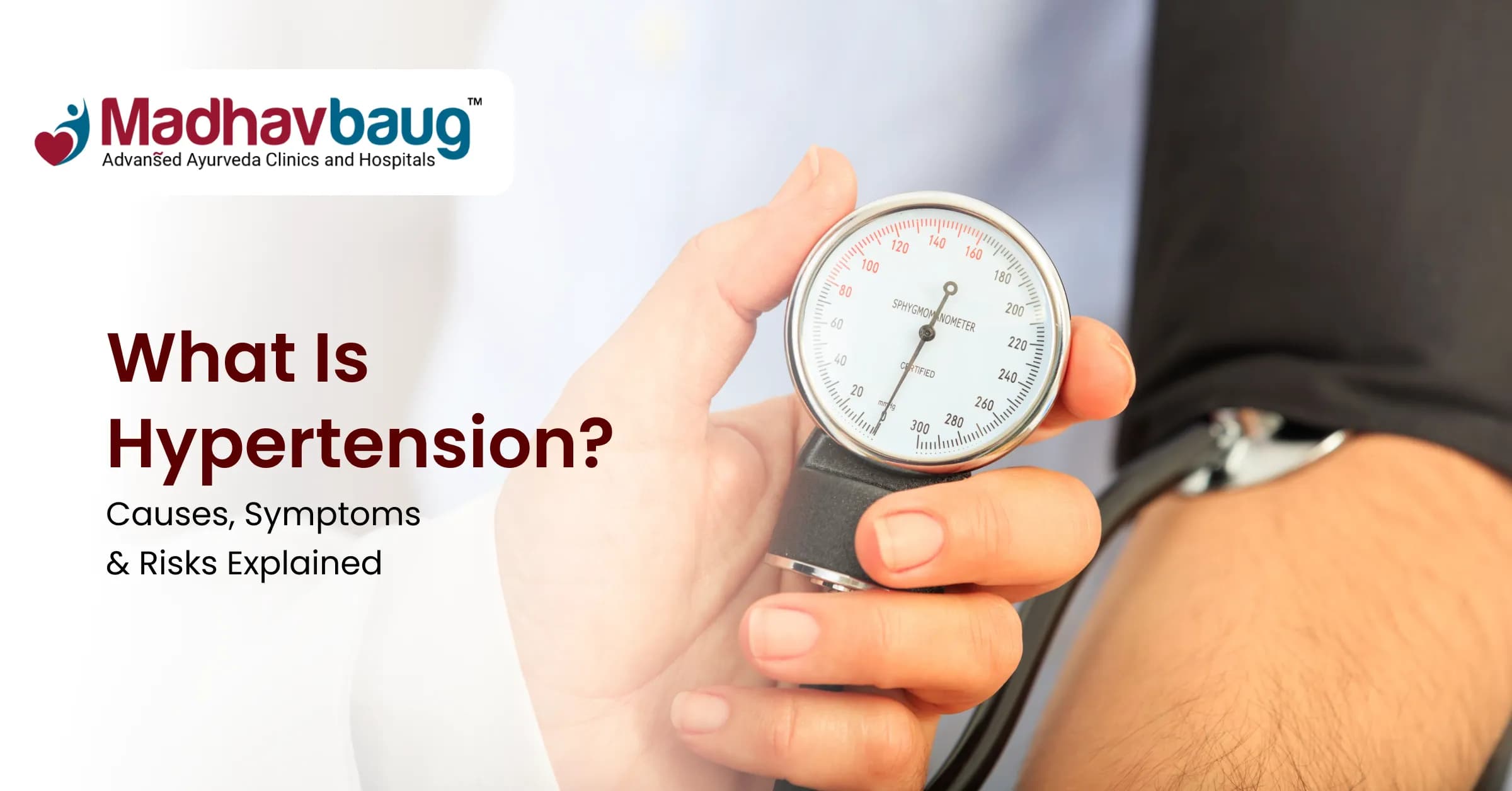
Your heart pushes blood through your arteries to reach every organ, tissue, and cell in your body. The force of that movement is your blood pressure. When it stays persistently too high, that is hypertension.
Here is what makes it genuinely dangerous: no pain, no obvious symptoms, no warning. Yet silently, over months and years, it damages the heart, kidneys, brain, and blood vessels. In India, one in three adults has it. A large proportion have no idea.
Concerned about your blood pressure? Book a consultation with Madhavbaug today for a comprehensive evaluation and a personalised plan.
What Is Hypertension and What Is the Normal Range?
Blood pressure is two numbers. Systolic on top, pressure when the heart beats. Diastolic below, pressure when it rests.
- Normal: below 120/80
- Elevated: systolic 120 to 129, diastolic below 80
- Stage 1: 130 to 139 systolic or 80 to 89 diastolic
- Stage 2: 140 or higher systolic, 90 or higher diastolic
- Crisis: above 180/120, needs emergency care immediately
Worth knowing the other end too. Symptoms of hypotension, or low blood pressure, appear below 90/60 mmHg. Sudden dizziness, fainting, fatigue, blurred vision on standing. Both extremes cause problems. The goal is a stable, healthy range sustained over time.
What Causes Hypertension?
No single cause. Usually a combination building over years.
The most common reasons for high blood pressure:
- High sodium, processed food, saturated fat diet
- Physical inactivity
- Abdominal obesity
- Chronic stress
- Smoking and excess alcohol
- Unmanaged diabetes damaging vessel walls
- Poor sleep
- Thyroid dysfunction
- Certain medications including NSAIDs
In Ayurveda, reasons for high BP centre on aggravated Vata and Pitta doshas combined with Ama accumulation in the blood vessels. Pitta creates excess heat and arterial tension. Vata increases constriction and irregular flow. Together they drive pressure up in ways lifestyle factors alone do not fully explain.
What Are the Symptoms of Hypertension?
Most people have none. That is the problem. When something does show up, pressure has usually been elevated for a while.
Headaches
Back of the head, worse in the morning. Caused by increased pressure on brain blood vessels.
Chest Pain
Chest pain and hypertension are closely linked. The heart works harder under sustained pressure. Tightness or discomfort during exertion is common. Chest pain at rest with breathlessness needs immediate attention.
Fatigue
Fatigue and high blood pressure go hand in hand. Chronic cardiovascular strain reduces blood flow to non-essential functions. The result is persistent tiredness that sleep does not fix.
Breathlessness
Difficulty breathing during light activity or lying flat. A sign that elevated pressure is beginning to affect the heart’s efficiency.
Dizziness and Blurred Vision
Pressure effects on vessels supplying the brain and eyes. Sudden onset alongside a very high reading is urgent.
Other signs worth knowing:
- Palpitations or irregular heartbeat
- Irritability and poor sleep
- Nosebleeds in severe cases
- Leg, foot, or abdominal swelling
Do not wait for symptoms. Regular screening is the only reliable way to catch hypertension early.
What Are the Risks of Untreated Hypertension?
Left unaddressed, elevated pressure quietly damages multiple systems:
- Heart attack: accelerated plaque formation and cardiac strain
- Stroke: damaged brain vessels prone to rupture or blockage
- Heart failure: heart muscle weakens over years of excess resistance
- Kidney damage: kidneys are highly sensitive to sustained pressure
- Vision loss: retinal blood vessels deteriorate
- Cognitive decline: vascular brain damage over time
Risk compounds sharply when hypertension sits alongside diabetes, obesity, or high cholesterol. In India, that combination is extremely common and often undetected until a cardiac event forces the issue.
How Madhavbaug Can Help
Most treatments lower blood pressure numbers through medication. That matters. But it does not touch the underlying fat and calcium deposits reducing vessel elasticity over time, which is why many people stay breathless and fatigued even when readings look controlled.
Madhavbaug goes further. The focus is restoring genuine vascular health through:
- Panchakarma targeting arterial health
- Personalised Ayurvedic herbal formulations
- Anti-inflammatory, low-sodium Indian diet plan
- Supervised Pranayama and yoga to reduce cortisol
- Real-time monitoring through the MIB Pulse App
The goal is not lifelong medication dependency. It is measurable, sustained improvement through actually reversing what is driving the pressure up.
Book your appointment at madhavbaug.org today.
Frequently Asked Questions
- What is the normal blood pressure range?
Normal blood pressure is below 120/80 mmHg. Readings consistently above 130/80 mmHg indicate hypertension and need medical attention. - What are the most common causes of hypertension?
High sodium diet, inactivity, obesity, chronic stress, smoking, alcohol, unmanaged diabetes, and family history are the leading reasons for high BP. - Can fatigue be a sign of high blood pressure?
Yes. Fatigue and high blood pressure are closely linked as the heart works harder under sustained pressure, causing persistent tiredness and reduced stamina. - What should I do when my blood pressure is high?
Rest quietly, avoid caffeine, recheck after 30 minutes, and contact your doctor. Above 180/120 mmHg with severe symptoms, seek emergency care immediately. - What is the difference between hypertension and hypotension?
Hypertension is high blood pressure above 130/80 mmHg. The symptoms of hypotension or low blood pressure occur below 90/60 mmHg and include dizziness, fainting, and weakness. Both require medical attention.
References:
- Stölting, G., Tran Vo, K.N., Haus, J. and Scholl, U.I., 2026. The genetics of hypertension. Nature Reviews Nephrology, 22(2), pp.137-151.



 Locate a Centre
