
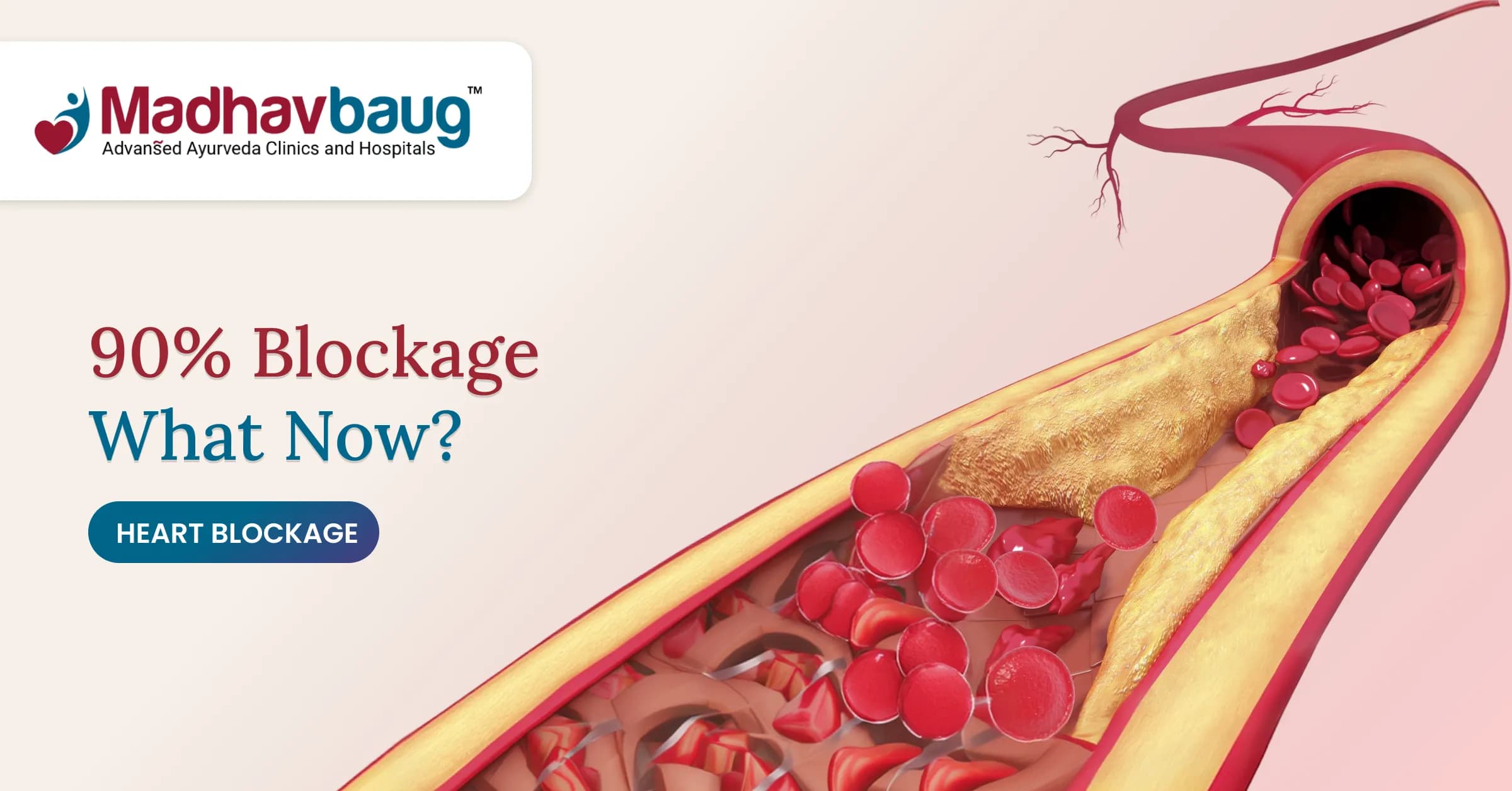
Imagine going for a regular health check-up and discovering a 90 per cent blockage in the heart in the report.
A 90% heart blockage is a serious condition involving the loss of blood flow to the heart since the coronary artery (artery supplying blood to the heart) is narrowed by 90%. It is a frightening number and feels threatening, but take a breath. A 90% blockage is serious and needs special medical attention, but the percentage alone doesn’t decide your 90 per cent heart blockage treatment.
Treatment usually involves surgical procedures such as angioplasty with stenting and bypass surgery (CABG), in addition to lifelong medications and lifestyle changes. However, Madhavbaug has a unique approach for which helps one go from 90% blockage to recovery. This article walks through exactly what a 90 per cent heart blockage treatment decision actually depends on, the emergency signs, and where a structured, doctor-supervised programme like Madhavbaug’s can genuinely support you.
Emergency Warning
If you or someone with you is currently experiencing any of the following symptoms:
- Chest pain or heaviness that doesn’t ease with rest
- Pain radiating to the jaw, arm, neck or back
- Sudden severe breathlessness
- Cold sweat, or fainting
Stop reading and seek emergency medical care immediately. These are the early signs or heart blockage. A severe blockage that is affecting the blood supply is a medical emergency, not something to research first. Everything below applies to a diagnosed, stable situation where you’re now trying to understand your treatment options. For seeking medical attention, consult your nearest Madhavbaug centre immediately.
What Does a 90 per cent Blockage in the Heart Actually Mean?
Before understanding what a 90 per cent blockage in the heart actually means, it is important to understand what the coronary artery is.
What is a coronary artery?
A coronary artery is a main blood vessel that surrounds the heart to give it fresh, oxygen-rich blood.
A 90 per cent blockage in the heart means the diameter of a coronary artery is narrowed by about 90% at that point, significantly decreasing the amount of the blood flow. Clinically, this is called a severe, high-grade stenosis.
According to research, a diameter narrowing greater than 90%, even without proof of reduced blood flow on a stress test, is considered high-risk (Haney et al., 2023).
This is exactly why 90 per cent blockage in heart readings is treated with urgency by cardiologists and why the right first step is always an in-person specialist evaluation and not a wait-and-watch approach at home.
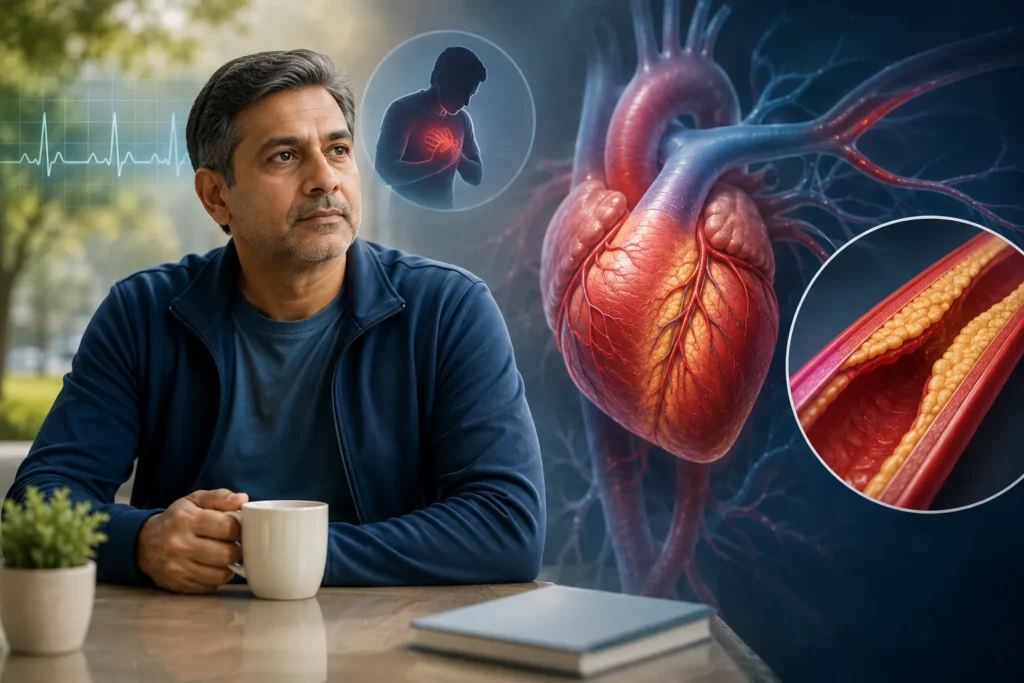
90% Heart-Blockage Symptoms
To your surprise, a blockage this severe doesn’t always come with obvious warning signs. Silent, or asymptomatic, myocardial ischaemia (meaning the heart muscle is short of blood flow without producing the classic chest pain) is a well-documented and clinically important phenomenon, and it carries the same risk of future heart problems as someone who experiences symptoms like chest pain, even if no symptoms are felt. (Conti, Bavry and Petersen, 2012).
Research shows that silent ischaemia happens because of the same heart and blood vessel problems that cause chest pain during a heart attack or angina. The difference is that the body doesn’t send a clear pain signal, so many people don’t realise anything is wrong until the condition is found during a test. (Theofilis et al., 2024).
Though they are asymptomatic at the start, the symptoms of 90% heart blockage may include:
- Chest discomfort, tightness or pressure with exertion or at rest
- Breathlessness on exertion, or unusually reduced exercise tolerance
- Unexplained fatigue
- Pain radiating to the jaw, arm, neck or back
- Palpitations, dizziness, or cold sweats
Severe heart blockage may not always cause clear symptoms. If you have breathlessness, unusual fatigue, chest discomfort or reduced exercise tolerance, a timely cardiac assessment can help you understand your heart health better.
Tests and Diagnosis for 90 per cent Blockage in Heart
It is important to undergo all the following heart blockage tests to understand if the heart blockage is dangerous and not just rely on the angiogram percentage alone:
- Coronary angiography or CT coronary angiography
To confirm the location and severity of narrowing
- Echocardiogram (2D Echo)
To assess how well your heart is currently pumping (ejection fraction)
To check heart rhythm and look for signs of prior or ongoing ischaemic changes
- Treadmill test (TMT) or stress imaging
To see how your heart responds under controlled exertion
- Blood tests
Including lipid profile, HbA1c and kidney function, which shape both risk assessment and treatment planning
At Madhavbaug, the diagnostic approach is built around 2D echo, ECG and treadmill test evaluation and is treated as the essential starting point for every patient because a blockage percentage on its own can’t tell the whole story. If you are feeling any of the above symptoms and want to receive a comprehensive diagnostic assessment, book a consultation at your nearest Madhavbaug centre today.
It’s this combined picture that a doctor uses to determine if the closely monitored medical and lifestyle-based approach is appropriate for your specific case.
Factors That Actually Determine Treatment
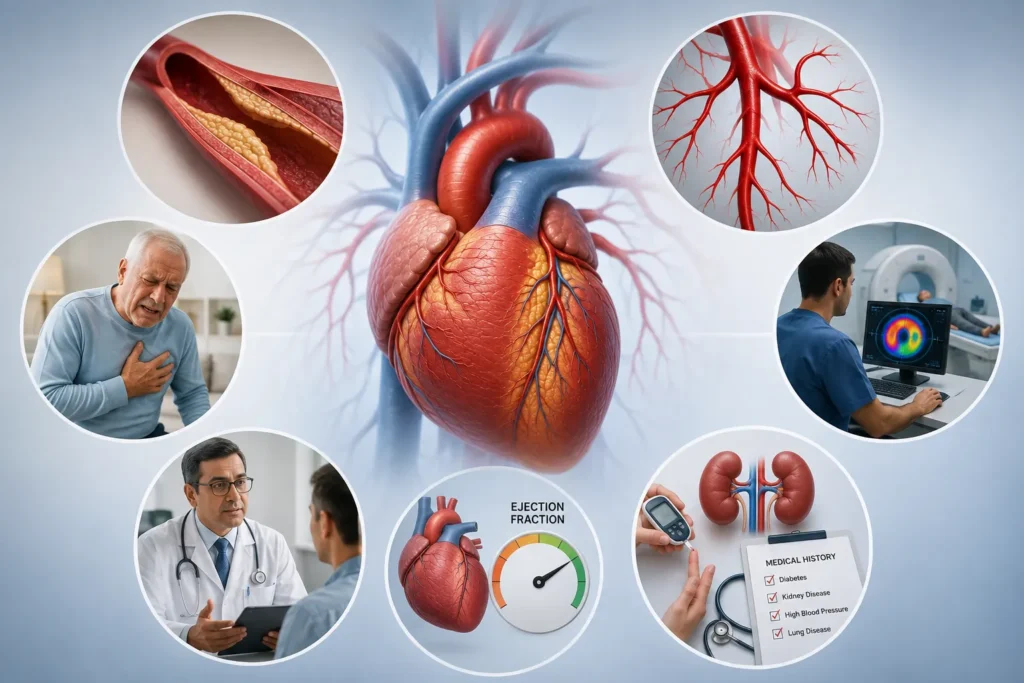
Two people with an identical “90 per cent Blockage in Heart” report can walk away with very different treatment plans, because the decision depends on:
| Factors | Effect |
| Which artery is affected | A 90% blockage in the left main artery is treated far more urgently than the same severity in a smaller branch vessel |
| Number of vessels involved | Single-vessel versus multi-vessel disease changes the risk calculation significantly |
| Left ventricular function (ejection fraction) | A weaker pumping heart raises the priority for intervention. |
| Presence and severity of symptoms | Stable, mild symptoms are approached differently from unstable or worsening angina |
| Evidence of ischaemia on functional testing | Even though guidelines note this isn’t strictly required at this severity level to recommend intervention (Haney et al., 2023) |
| Overall comorbidities | Diabetes, kidney function, and general surgical risk all factor into the final decision |
Treatment for Severe Heart Blockage at Madhavbaug
Severe heart blockage treatment at Madhavbaug focuses on integrating ayurvedic care along with modern diagnostics in order to address the root cause of the disease and prevent recurrence. Unlike conventional approaches that primarily manage symptoms, Madhavbaug’s ayurvedic treatment for heart disease focuses on:
- Eliminating Ama through detoxification
- Correcting metabolism
- Rejuvenating cardiac muscle tissue
- Restoring healthy circulation
This can be achieved through a holistic approach which not only includes medicines but also a combination of Panchakarma, diet, exercise and continuous monitoring systems which can help a person not only eliminate the disease from the root but also help build a sustainable lifestyle which can help you meet a healthier version of yourself. To read more about the treatment of heart blockage without surgery, read here.
A Real Patient Journey
To see how this can play out for a patient with a genuinely severe blockage, our detailed case study on a patient with a heart blockage walks through the diagnostic process, the treatment decisions involved, and what ongoing monitoring looks like. As always, individual outcomes vary, and this should be read as an illustration of the process rather than a guarantee for any other patient.
Get a Full, Personalised Assessment
A blockage report is the start of a conversation with a cardiac specialist, not the end of one. If you’ve received a severe blockage diagnosis, the most important next step is a complete evaluation of your artery location, heart function and symptoms.
To understand more about blockage severity and what it means at different stages, read our guide on 70–80% heart blockage and learn to recognise early signs of heart blockages.
If you’d like to know how Madhavbaug’s supportive, doctor-coordinated approach works, read more about our Ayurvedic reversal treatment for heart blockage.
When you’re ready, find your nearest Madhavbaug clinic and book a full cardiac assessment to understand exactly where you stand and what your safest next step is.
A blockage diagnosis is only the beginning. Understand your blockage, heart function and overall cardiac risk with a personalised assessment and doctor-guided care plan.
Frequently Asked Questions
- Can a 90 per cent heart blockage be stented?
Not always, but it very often does, especially if the artery involved is high-risk (like the left main), symptoms are present, or heart function is affected. Current guidance generally recommends revascularisation for blockages this severe (Haney et al., 2023), so a prompt specialist evaluation is essential before any decision is made.
- Can a 90 per cent blockage in the heart have no symptoms at all?
Yes, silent ischaemia, where significant blood flow restriction occurs without noticeable symptoms, is well documented and carries the same risk as symptomatic disease (Conti, Bavry and Petersen, 2012). This is exactly why the severity of a blockage should never be judged by symptoms alone.
- What tests confirm the right treatment for severe heart blockage?
Angiography, or CT angiography, confirms location and severity, while 2D echo, ECG and stress testing assess heart function and how the blockage is affecting blood flow together; these guide the treatment decision, not the blockage percentage alone.
- How urgently should I see a doctor after a 90% blockage report?
This finding warrants a specialist evaluation without delay and immediate emergency care if you have any chest pain, breathlessness, or other warning symptoms right now.
- What happens if your heart is 90% blocked?
A 90% blockage in a heart artery severely restricts blood flow, leading to a high risk of a heart attack, severe chest pain, and shortness of breath.
References
- Conti, C.R., Bavry, A.A. and Petersen, J.W. (2012) ‘Silent ischemia: clinical relevance’, Journal of the American College of Cardiology, 59(5), pp.435–441.
- Haney, A.C., Salatzki, J., Hund, H., Friedrich, M.G., Giannitsis, E., Frey, N., Steen, H., Loßnitzer, D., Riffel, J. and André, F. (2023) ‘Prognostic value of negative stress cardiac magnetic resonance imaging in patients with moderate-severe coronary artery stenosis’, Frontiers in Cardiovascular Medicine, 10, 1264374.
- Theofilis, P., Antonopoulos, A.S., Sagris, M., Papanikolaou, A., Oikonomou, E., Tsioufis, K. and Tousoulis, D. (2024) ‘Silent Myocardial Ischemia: From Pathophysiology to Diagnosis and Treatment’, Biomedicines, 12(2), 259.


 Locate a Centre
