

Key Takeaways
|
If your blood pressure reading is difficult to track and is sometimes normal at the clinic and sometimes high at home, ABPM is the tool designed to solve exactly that problem. This guide explains what ABPM is, how it compares to office and home readings, why nighttime blood pressure matters so much, the patterns it can reveal, how ABPM for high blood pressure treatment is important and how this 24-hour data can shape your treatment decisions and follow-up.
What Is Ambulatory Blood Pressure Monitoring (ABPM)?
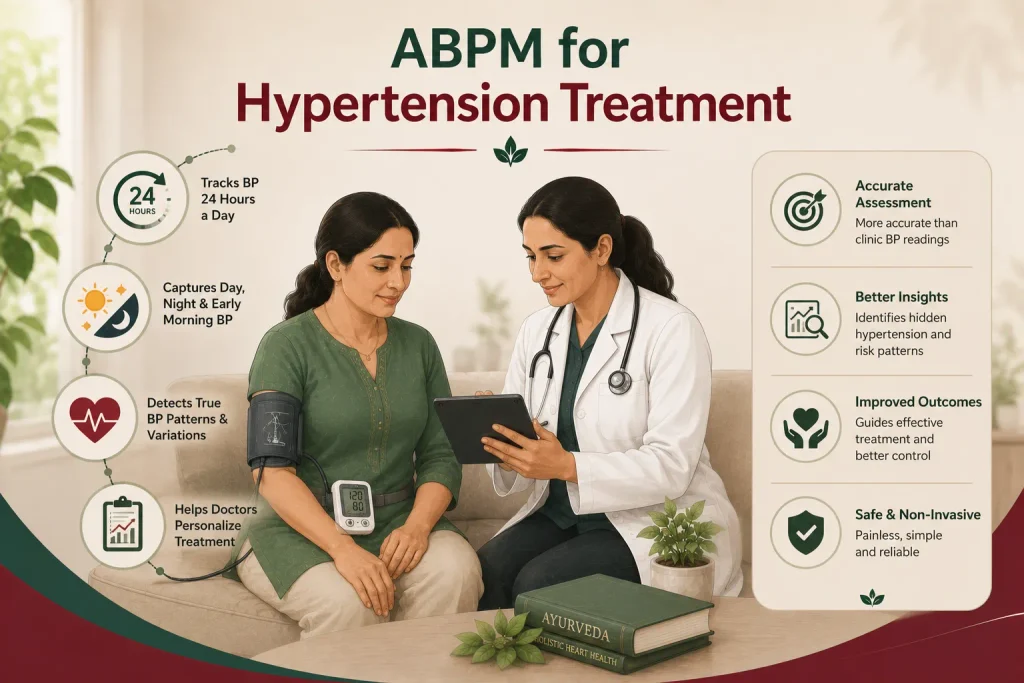
ABPM, or ambulatory blood pressure monitoring, is a small, wearable device that automatically records your blood pressure at set intervals over a full 24-hour period, including while you sleep. Unlike a single clinic reading, it builds a detailed picture of how your blood pressure actually behaves throughout your normal day.
The device typically takes a reading every 15 to 30 minutes during the day and slightly less often at night, then generates a full report your doctor can review. Because it captures readings during work, rest, activity, and sleep, ABPM often reveals patterns that a single office visit simply can’t, which is exactly why it’s considered a more complete diagnostic tool for hypertension.
“A clinic reading is only a glimpse. ABPM is a holistic data. For some patients, the clinic reading looks completely normal, but the ABPM shows their blood pressure spiking overnight or staying high all day at work. We can’t personalise treatment properly without seeing the whole picture.”
— Dr. Bipin Gond, Zonal Medical Head, Madhavbaug
If your blood pressure readings have been inconsistent or hard to pin down, a consultation can help determine whether 24-hour monitoring would give a clearer picture.
How Does 24-Hour Blood Pressure Monitoring Compare to Office or Home BP Readings?
24-Hour Blood Pressure Monitoring or ABPM, is generally considered the more accurate way to diagnose and manage hypertension, because office readings alone can significantly misclassify a patient’s actual blood pressure status. This isn’t a small margin of error but a well-documented, common problem.
A recent study comparing office blood pressure readings against same-day 24-hour ABPM found that roughly half of patients were misclassified when relying on office readings alone, some showing the “white coat” effect (high only in clinic) and others showing “masked” hypertension (normal in clinic but high the rest of the day) (Hundemer et al., 2025).
This matters because a patient wrongly classified without careful observation of high blood pressure symptoms can either way end up on the wrong treatment plan, either treated for hypertension they don’t consistently have or missed entirely because their clinic reading looked fine.
Why Does Nighttime Blood Pressure Matter So Much?
Nighttime blood pressure reading has been found to be one of the strongest predictors of cardiovascular risk, information that’s only available through 24-hour monitoring like ABPM. A daytime reading, however accurate, simply cannot capture this.
A large study following hypertensive patients over several years found that ambulatory blood pressure monitoring measurement predicted cardiovascular risk, for which nighttime blood pressure specifically was the strongest predictor of outcome, even stronger than daytime readings (Dolan et al., 2005).
Ideally, blood pressure should dip somewhat during sleep compared to the day. When it doesn’t, this “non-dipping” pattern is itself a meaningful finding which your doctor can only see with overnight data.
| Clinical Insight “Patients are often surprised to learn their nighttime numbers matter more than their daytime ones. We explain that the body is supposed to get a break overnight. When it doesn’t, that’s often the clearest early signal that something needs adjusting in the treatment plan.” Dr. Pravin Jayram Ghadigaonkar, BAMS, MD, PhD (Scholar) – Preventive Cardiology 20+ Years of Clinical Experience, Head Medical Operations & Patient Improvement, Madhavbaug |
What Patterns Can ABPM Reveal?
ABPM can reveal several distinct blood pressure patterns and how blood pressure changes through the day that a single reading cannot, including white coat hypertension, masked hypertension, and abnormal nighttime dipping. Each of these points to a different next step in your treatment.
| Pattern | What It Means |
| White-coat hypertension | High readings only in the clinic but normal the rest of the day |
| Masked hypertension | Normal readings in the clinic but high the rest of the day |
| Normal dipping | Blood pressure drops as expected during sleep. |
| Non-dipping | Blood pressure stays high or doesn’t drop enough overnight. |
Knowing which of these applies to you changes what your doctor recommends. A patient with white coat hypertension may not just need the preventive measures for high blood pressure. A patient with masked or non-dipping hypertension may need proper medicine for high blood pressure.
How Does ABPM Data Change Treatment Decisions?
ABPM data changes treatment decisions by showing your doctor whether your current plan is actually controlling your blood pressure across the full 24-hour cycle, not just at the moment you’re being measured in clinic. This applies whether your treatment is conventional, Ayurvedic medicine for high BP, or a combination of both.
For patients wanting sustainable relief from hypertension, this kind of detailed data is especially useful for tracking real progress.
A systematic review and meta-analysis of Ayurvedic interventions for essential hypertension found meaningful reductions in blood pressure across the studies reviewed (Deshmukh et al., 2025), and Madhavbaug’s own published research found significant improvement in blood pressure in patients with a known history of hypertension after a minimum of 7 sessions of a Panchakarma-based programme (Sane et al., 2018).
ABPM is exactly the kind of objective data that can confirm whether results like these are being achieved for you specifically.
What Does Follow-Up With ABPM Look Like?
Ambulatory Blood Pressure Monitoring (ABPM) gives your doctor a clearer picture of how your blood pressure is throughout the day and night and if there is any existing difference between morning and night blood pressure. Unlike a single clinic reading, ABPM records blood pressure at regular intervals over 24 hours. It can help identify patterns such as white coat hypertension, masked hypertension and changes in blood pressure during sleep.
Follow-up with ABPM is usually part of a wider blood pressure monitoring plan:
| Initial ABPM to establish your 24-hour blood pressure pattern ↓ Review of your medical history, medicines and relevant test results ↓ Personalised treatment plan based on your blood pressure pattern and overall health ↓ Regular clinic and home blood pressure monitoring ↓ Repeat ABPM when your doctor needs to reassess your 24-hour pattern. ↓ Treatment plan reviewed according to the updated results |
Madhavbaug’s Approach to Blood Pressure Monitoring
At Madhavbaug, blood pressure monitoring is considered as part of the overall hypertension treatment plan. During your consultation, the doctor reviews your blood pressure history, current medicines, lifestyle, symptoms and relevant diagnostic reports. Where appropriate, monitoring such as clinic readings, home blood pressure checks or ABPM can help provide a more complete picture of how your blood pressure behaves.
The Ayurvedic assessment also considers your Prakriti and current health status while planning your care. Depending on your individual requirements, the treatment plan may include personalised diet plans and lifestyle guides, Ayurvedic therapies like Panchakarma, herbal formulations, yoga and pranayama, along with regular monitoring of blood pressure and other relevant health markers.
Your treatment plan is reviewed during follow-up visits based on your response. If your blood pressure pattern changes or the expected improvement is not seen, your doctor can reassess the plan and determine whether further testing or treatment adjustments are needed. This structured approach is designed to make hypertension care more personalised and measurable.
For a detailed overview of the treatment approach, you can explore Madhavbaug’s hypertension treatment programme, which explains how Ayurvedic care, lifestyle changes and health monitoring are brought together for people managing high blood pressure.
Book a Consultation
If your blood pressure readings vary between home and clinic, remain high despite treatment, or your doctor has recommended 24-hour monitoring, a consultation can help determine what your readings mean and whether ABPM may be appropriate for you.
Madhavbaug provides doctor-supervised hypertension care across 350+ clinics and hospitals in India, combining Ayurvedic assessment with relevant diagnostic evaluation and structured follow-ups. Your existing medicines and health reports can be reviewed as part of the consultation, helping our doctors understand your current treatment and decide what additional monitoring or Ayurvedic care may be suitable.
If you are already taking blood pressure medicines, do not stop or change them based on an ABPM result or home reading without discussing it with your treating doctor.
Understanding your blood pressure pattern is an important part of managing hypertension naturally. Book a consultation at your nearest Madhavbaug clinic to have your readings, existing treatment and overall health reviewed and discuss the next steps in your care.
Get a clearer picture of your blood pressure pattern and discuss a personalised hypertension care plan with a Madhavbaug doctor.Right: Book Ayurvedic Consultation
Frequently Asked Questions
What is ABPM and why is it used for hypertension?
ABPM (ambulatory blood pressure monitoring) is a device that automatically records your blood pressure over a full 24-hour period, including while you sleep. It’s used because a single office reading can miss important patterns, like high nighttime blood pressure, that 24-hour data reveals.
How is 24-hour blood pressure monitoring different from a normal BP check?
A normal BP check captures a single moment, often in a clinic setting where readings can run higher due to the “white coat effect.” 24-hour monitoring records dozens of readings across your full day and night, showing your actual blood pressure pattern rather than one snapshot.
Why does nighttime blood pressure matter for hypertension treatment?
Research has found nighttime blood pressure to be one of the strongest predictors of cardiovascular risk, even stronger than daytime readings, and this information is only available through overnight monitoring like ABPM. Blood pressure that doesn’t dip normally during sleep is a meaningful finding your doctor can only see with this data.
Can ABPM detect white coat or masked hypertension?
Yes. ABPM is specifically able to distinguish white coat hypertension (high only in clinic) from masked hypertension (normal in clinic, high elsewhere), and studies have found that roughly half of patients may be misclassified when relying on office readings alone.
Is ABPM useful if I’m on Ayurvedic treatment for hypertension?
Yes. ABPM provides objective, detailed data on how your blood pressure behaves across a full day and night, which can help confirm whether a structured, doctor-supervised Ayurvedic treatment plan is genuinely working, rather than relying on a single office reading.
How often should ABPM be repeated during hypertension treatment?
This depends on your specific case, but it’s typically used to establish a baseline pattern and then repeated at a defined interval to confirm whether treatment is working as part of a broader monitoring schedule alongside regular office or home readings.
Related Reading
- Morning vs Night Blood Pressure: Why Timing Matters
- High Blood Pressure Treatment Without Lifelong Medication
- Smart BP Monitors and Ayurveda for Hypertension
References
Hundemer, G.L., Akbari, A., Buh, A., Biyani, N., Mahbub, S., Salman, M., Brown, P.A., Knoll, G.A., Sood, M.M., Hiremath, S. and Ruzicka, M. (2025) ‘Misclassification of hypertension status according to office blood pressure vs 24-hour ambulatory blood pressure monitoring‘, CJC Open, 7(4), pp. 508–515.
Dolan, E., Stanton, A., Thijs, L., Hinedi, K., Atkins, N., McClory, S., Den Hond, E., McCormack, P., Staessen, J.A. and O’Brien, E. (2005) ‘Superiority of ambulatory over clinic blood pressure measurement in predicting mortality: the Dublin outcome study‘, Hypertension, 46(1), pp. 156–161.
Deshmukh, S., Choudhary, K., Ahmad, A., Reddy, G., Rao, B.C.S., Srikanth, N. and Acharya, R. (2025) ‘Effectiveness and safety of Ayurvedic intervention in essential hypertension: a systematic review with meta-analysis‘, Frontiers in Pharmacology.
Sane, R., Gond, B., Raje, G., Walzade, K., Badre, A. and Mandole, R. (2018) ‘Ischemia Reversal Program (IRP) in patients suffering from ischemic heart disease (IHD) with known history of hypertension: a retrospective study‘, Journal of Ayurveda Medical Sciences, 3(2), pp. 377–383.




 Locate a Centre
