


Key Takeaways
|
If you’ve been told you have “metabolic syndrome” or that you’re at risk for it, it is important to understand the management of metabolic syndrome. Metabolic syndrome is not one condition but a group of related risk factors that raise your chances of type 2 diabetes, heart disease, and stroke. This guide breaks down what metabolic syndrome actually involves, how each of its four key risks develops, and how an Ayurvedic approach addresses them together rather than one at a time.
What Is Metabolic Syndrome?
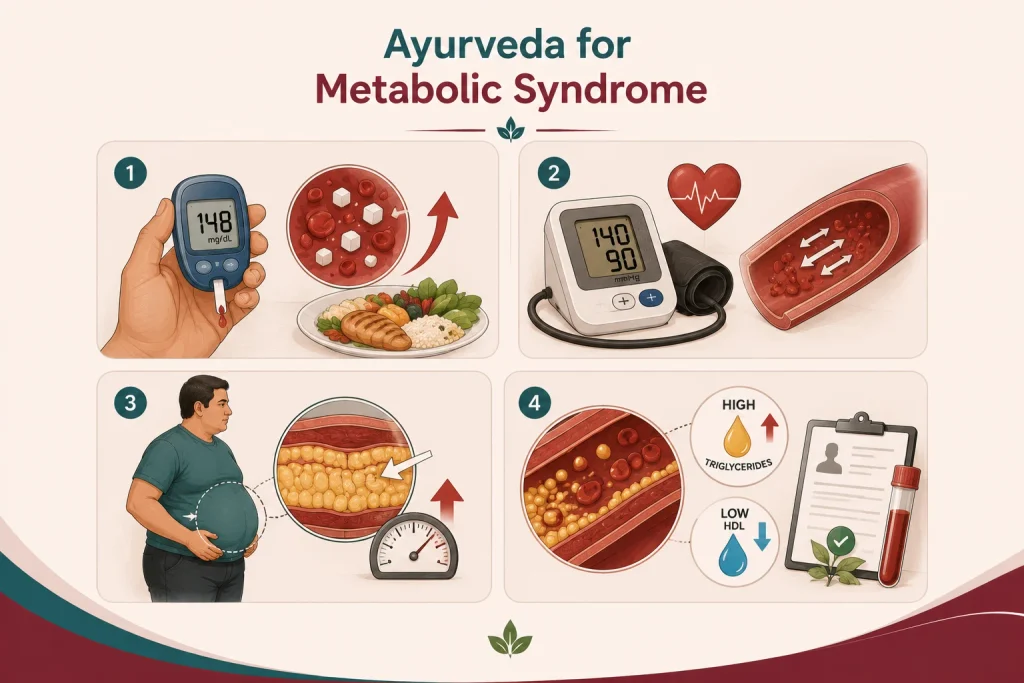
Metabolic syndrome is a diagnosis given when you have at least three of five specific risk factors at the same time that includes high blood sugar, high blood pressure, excess weight (dangerous belly fat) around your waist, high triglycerides, and low HDL (“good”) cholesterol. Individually, they are manageable, but together, they compound each other, which is why it is treated as a separate condition.
Following are the four risks of metabolic syndrome:
- High blood sugar makes it harder for your body to manage fat.
- High blood pressure
- Excess weight, especially around the abdomen, raises blood pressure.
- High triglycerides and low HDL
“Metabolic syndrome is best understood as a combination of health changes that often occur together. When blood sugar, blood pressure, abdominal weight or cholesterol levels start moving in the wrong direction, it is important to look at the overall metabolic picture instead of focusing on only one number. Ayurveda can provide a personalised framework for diet, daily routine and supportive therapies, while regular medical monitoring helps us track measurable changes over time.”
— Dr Priyadarshini Bhalekar, Zonal Medical Head, Madhavbaug
Understanding how they connect is the first step to understanding why they need to be treated together.
| Risk Factor | What It Means |
| High Blood Sugar | Often linked with insulin resistance |
| High Blood Pressure | Blood pressure remains higher than healthy levels. |
| Excess Weight | Especially excess fat around the waist |
| Abnormal Cholesterol | High triglycerides and/or low HDL cholesterol |
If you have two or more of these risk factors, an Ayurvedic consultation can help you understand how they connect and what to do about it.
Risk 1: Blood Sugar and Insulin Resistance
Blood sugar problems usually start before you’re diagnosed with diabetes. Insulin resistance (where your cells stop responding well to insulin) means your pancreas has to work harder to keep your blood sugar in a normal range. Over time, this strain is what leads to type 2 diabetes.
In Ayurveda, this stage is understood through the concept of Agni, or digestive fire. When Agni is weak or irregular, food isn’t converted into usable energy efficiently, and undigested by-products (called Ama) build up in the body. This is seen as an early driver of the imbalance that eventually shows up as high blood sugar.
Ayurveda for insulin resistance, and this risk typically includes:
- A diet built around foods that support steady digestion
- Herbal formulations traditionally used to support healthy blood sugar levels
- A daily routine (Dinacharya) that includes regular meal timing and physical activity, since irregular eating patterns are considered a direct contributor to Agni imbalance
Risk 2: Blood Pressure
High blood pressure often develops quietly, alongside the other three risks, which is part of why it’s included in the metabolic syndrome cluster. Stress, poor sleep, high sugar and salt intake, and excess weight all play a role, and they tend to reinforce each other.
Ayurveda approaches blood pressure through both diet and daily routine, with particular attention to sleep and stress, since these are commonly under-addressed even when diet has already been adjusted. Herbal formulations and specific therapies may be used depending on your Prakriti (body constitution) and current health status, alongside regular blood pressure monitoring.
Clinical evidence indicates that structured Ayurvedic interventions can meaningfully support blood pressure management, particularly when combined with lifestyle changes and consistent monitoring.
Risk 3: Excess Weight, Particularly Around the Abdomen
Not all excess weight carries the same risk. Weight stored around the abdomen is more closely linked to insulin resistance and heart disease than weight distributed elsewhere, which is why waist circumference (wiast to height ratio) is one of the five diagnostic markers for metabolic syndrome.
In Ayurveda, this pattern is associated with an imbalance in Meda Dhatu, the body tissue linked to fat metabolism. The approach to managing it usually goes beyond calorie counting and includes:
- Panchakarma therapies, which may include Virechana (a supervised purification therapy), depending on what’s appropriate for you
- A personalised diet plan based on your Prakriti, digestion, and current metabolic markers
- Herbal formulations aimed at supporting healthy metabolism
Risk 4: Cholesterol and Triglycerides
High triglycerides and low HDL cholesterol are often the least explicit of the four risks, since they don’t appear with obvious symptoms. They’re usually picked up through routine blood tests, which is why lipid testing is a standard part of a metabolic syndrome evaluation.
Ayurveda addresses cholesterol management primarily through diet and herbal formulations traditionally associated with lipid metabolism, used alongside regular blood tests to track whether your levels are actually improving.
How Ayurveda for Metabolic Syndrome Works?
The reason Ayurveda treats metabolic syndrome as one connected pattern comes down to how it understands the root cause. Instead of treating high blood sugar, high blood pressure, weight, and cholesterol as four different diagnoses, Ayurveda looks at the underlying imbalance in Agni (digestion) and dosha (constitution) that may be contributing to all four at once.
| Risk Factor | Ayurvedic View | What the Approach May Include |
| Blood sugar / insulin resistance | Weak or irregular Agni (digestive fire) leading to Ama build-up | Diet for steady digestion, herbal formulations, regular meal timing |
| Blood pressure | Imbalance linked to stress, sleep, and daily routine | Diet, stress and sleep-focused routine changes, herbal formulations, BP monitoring |
| Excess weight (especially abdominal) | Imbalance in Meda Dhatu (fat tissue) | Panchakarma (including Virechana where appropriate), personalised diet, herbal formulations |
| Cholesterol / triglycerides | Disturbed fat metabolism tied to the same Meda Dhatu imbalance | Diet, herbal formulations, regular lipid testing |
This is also why your Prakriti assessment matters here. Two people with the same three or four risk factors may have different underlying imbalances, which is why the specific combination of diet, herbs, and therapies is built around your individual constitution and current health status (Vikriti), not applied as a single fixed protocol for “metabolic syndrome” as a label.
Monitoring Your Progress
Because metabolic syndrome is defined by measurable markers, including blood sugar, blood pressure, waist circumference, triglycerides, and HDL, it is important to monitor the treatment. Follow-up visits typically involve rechecking these same markers, alongside a conversation about how the diet and routine changes are actually fitting into your daily life.
Madhavbaug includes continuous monitoring systems that help track your progress between visits, so your plan can be adjusted as your markers change instead of staying fixed for months at a time. What works in your first month may need adjusting by your third, once your body starts responding and your daily routine settles into the new pattern.
This is also a long-term process. Metabolic syndrome typically builds up over years, and reversing the four risk factors that make it up takes proper lifestyle changes.
| Clinical Insight “In clinical practice, we often see patients dealing with more than one metabolic concern at the same time. Someone may have increased waist circumference along with high blood sugar, raised blood pressure or an abnormal lipid profile. This is why assessment should go beyond a single parameter. Looking at these markers together, reviewing the patient’s existing medicines and monitoring changes over time gives us a more complete picture of metabolic health.” Dr. Gurudatta Amin, BAMS, MD, PGDEMS 19+ Years of Clinical Experience, CMO, Madhavbaug |
What Happens Next
Here’s what the process typically looks like, from your first visit onwards:
| Book a consultation ↓ Health history, blood tests, BP & waist measurement ↓ Prakriti (constitution) & Vikriti (current imbalance) assessment ↓ Personalised plan across all four risk areas(diet plans, Panchakarma, herbal formulations, lifestyle and exercise guide) ↓ Structured follow-ups with repeat testing ↓ Ongoing adjustment as your markers improve |
Your existing medical care remains important throughout this process. Ayurvedic care should be discussed with your treating doctor, particularly if you are taking medicines for diabetes, hypertension, cholesterol or heart disease. Any changes to prescribed medicines should be made only under appropriate medical supervision.
At Madhavbaug, Ayurvedic physicians use your clinical information and relevant diagnostic findings to understand your health more comprehensively. The approach may include diet and lifestyle guidance, Ayurvedic therapies and other personalised recommendations, depending on your assessment and health needs.
Book a Consultation at Madhavbaug
If you have high blood sugar, high blood pressure, excess weight or abnormal cholesterol, having these factors assessed together can help you understand your overall metabolic health. A Madhavbaug consultation allows the doctor to review your current health status, existing reports and Ayurvedic constitution before recommending the next steps.
With 350+ clinics and hospitals across India, Madhavbaug provides access to Ayurvedic consultations for people managing chronic health concerns.
Book an Ayurvedic consultation at your nearest Madhavbaug clinic to understand your metabolic health and discuss a personalised care approach.
If you’re managing more than one metabolic risk factor, a personalised consultation can help you understand how they’re connected and what an integrated treatment plan could look like.
Frequently Asked Questions
What exactly counts as metabolic syndrome?
You’re generally considered to have metabolic syndrome if you have at least three of the following five: high blood sugar, high blood pressure, a large waist circumference, high triglycerides, and low HDL cholesterol. Having one or two of these on their own doesn’t necessarily mean you have metabolic syndrome, but it does mean you’re worth monitoring.
How does Ayurveda treat metabolic syndrome differently from treating each condition separately?
Rather than addressing blood sugar, blood pressure, weight, and cholesterol as four unrelated issues, Ayurveda looks at the shared underlying imbalance. usually related to digestion (Agni) and fat metabolism (Meda Dhatu), which may be contributing to all four. Your treatment plan is then built around that shared root cause, alongside your individual Prakriti.
Can Ayurveda help with insulin resistance specifically?
Ayurvedic approaches to insulin resistance typically focus on diet, meal timing, and herbal formulations traditionally used to support healthy blood sugar metabolism, alongside monitoring of your blood sugar and HbA1c levels over time. It’s intended to be used alongside your existing diabetes care, not as a replacement for it.
Do I need to already be diagnosed with diabetes or hypertension to get evaluated for metabolic syndrome?
No. Metabolic syndrome is often identified before any single condition, like diabetes or hypertension, is formally diagnosed. Basic checks like waist circumference, blood pressure, and routine bloodwork can flag the risk earlier, which is when addressing it tends to be more effective.
How long does it take to see changes in these four markers?
This varies by individual and by which markers are involved, but because metabolic syndrome typically develops over years, meaningful improvement is usually measured over months, with follow-up visits used to track and adjust the plan.
Related Reading
- Fight Metabolic Syndrome: Symptoms, Causes and Why It Is Dangerous
- Evidence-Based Ayurveda: Metabolic Health Metrics
- Ayurvedic Treatment for Weight Loss
- Ayurvedic Diet Plan for Weight Loss and Blood Sugar Control
- Is Your Lifestyle Making You Sick?
References
Shukla, A., Dwivedi, R. and Singh, G. (2022) ‘Integrated approach of Ayurveda and modern medicine in management of metabolic syndrome: A narrative review‘, Ayu, 43, pp. 120–128.
Pandey, S., Rai, N. and Gupta, A. (2023) ‘Dietary and lifestyle interventions based on Ayurvedic principles for the management of metabolic syndrome: A systematic review and meta-analysis of randomized controlled trials‘, Phytomedicine Plus, 3, article 100511.
Deshmukh, S., Choudhary, K., Ahmad, A., Reddy, G., Rao, B.C.S., Srikanth, N. and Acharya, R. (2025) ‘Effectiveness and safety of Ayurvedic intervention in essential hypertension: a systematic review with meta-analysis‘, Frontiers in Pharmacology.
Chandake, S., Tubaki, B.R. and Gonugade, V. (2024) ‘Efficacy of tryushnadya churna in metabolic syndrome with obesity – a randomized double blind controlled clinical trial’, Journal of Ayurveda and Integrative Medicine, 15(4), article 100973.
Venkatesh, A., Johansson, L., Sivanandan, P.V., Gopakumar, S.P., Sankaranarayanan, K., Kessler, C.S., Ravani, S. and Puthiyedath, R. (2025) ‘Prakriti (constitutional typology) in Ayurveda: a critical review of Prakriti assessment tools and their scientific validity‘, Frontiers in Medicine, 12, article 1656249.





 Locate a Centre
