
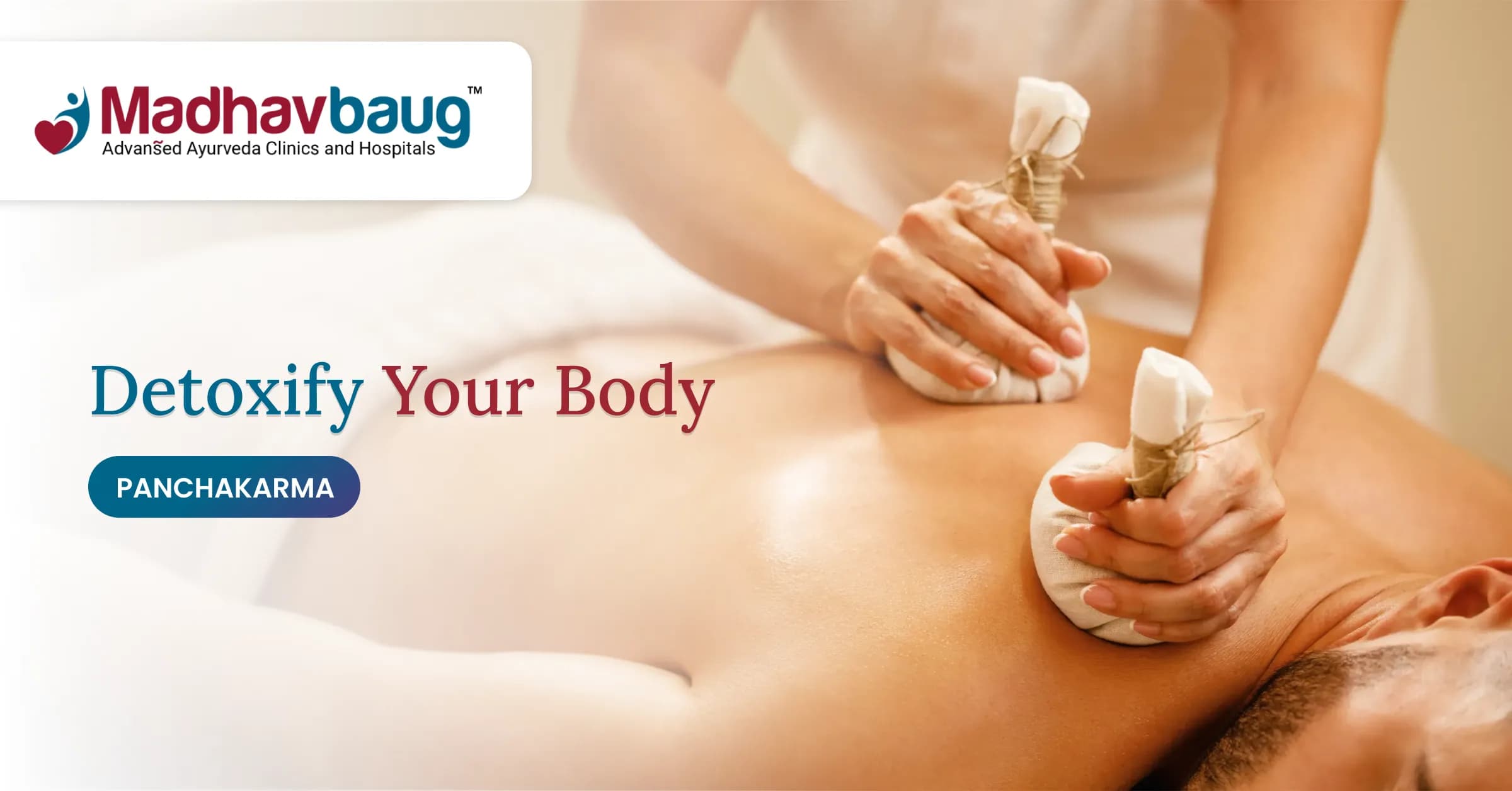
Ayurvedic detox therapy is a structured, physician-guided system built around the central idea of eliminating the toxins from the body, balancing the three doshas (Vata, Pitta, and Kapha), and restoring the body’s natural state of equilibrium. Ayurvedic detox therapy known as Panchakarma includes 5 procedures that help your body heal from the root cause and not just pacify the symptoms.
At Madhavbaug, we have spent years combining classical Panchakarma with modern clinical monitoring, including our research-backed approach on Ayurvedic detoxification (Vinjamury et al., 2012).
This guide walks you through what Ayurvedic detox therapy actually involves, how Panchakarma works, who it may help, and what to consider before you begin.
What is Ayurvedic Detox Therapy?
Ayurvedic detox therapy is a broad term for the cleansing procedures Ayurveda uses to clear accumulated toxins, restore digestive fire, and rebalance the body’s three doshas, Vata, Pitta, and Kapha. It majorly refers to the Panchakarma therapy, which includes 5 major procedures in order to detoxify the body. It is not a one-time process but a lifestyle modification that helps you build a healthy daily routine that can not only address the root cause of the current disease you are facing but also reduce the chances of its reoccurrence in the future.
What is Panchakarma Therapy?
Panchakarma literally means “five actions”. It refers to five classical procedures that help remove a particular type of accumulated toxin from a particular part of the body and so help the body detoxify and restore natural balance. The five procedures include Vamana (therapeutic emesis), Virechana (purgation), Basti (medicated enema), Nasya (nasal administration of herbal oils), and Raktamokshana (bloodletting, used rarely and only in specific cases).
Panchakarma detox at Madhavbaug is not a spa treatment. It is a clinical protocol, traditionally described in classical texts such as the Charaka Samhita, Sushruta Samhita, and Ashtanga Hridaya, and it remains one of the most studied areas of Ayurveda because of its measurable effects. (Rawal et al., 2010).
How Ayurvedic Detox and Panchakarma Therapy Work
Ayurvedic detox and Panchakarma therapy work by clearing deep-seated toxins (ama) and restoring the balance of the three body energies (doshas). It is a three-phase process that mainly includes the pre-procedure, the main procedure, and the post-procedure as follows:
| Phase | Description |
| Purvakarma (preparation) | Loosens the body toxins called “ama” from deep tissue and brings them toward the digestive tract, using Snehana, which is the internal oleation (drinking medicated ghee), and Svedana, which includes herbal steam. |
| Pradhankarma (the main procedure) | This helps remove those loosened toxins (ama) from the body through one of the five core actions, which is selected based upon the individual’s body imbalance. |
| Paschatkarma (post-procedure care) | Rebuilds digestive strength afterward through a graded diet and lifestyle plan, so the body does not simply reaccumulate what was just cleared. |
This staged approach is what separates Panchakarma from a typical detox diet, which may skip straight to restriction without ever preparing the tissues or rebuilding digestion afterwards.
Explore more about Madhavbaug’s Panchakarma Therapy at our renowned Khopoli Hospital.
Panchakarma in Khopoli | Neha Seth’s Stress Relief Experience at Madhavbaug
The Five Main Panchakarma Therapies
| Panchakarma Procedure | Description |
| Vamana (therapeutic emesis) | This helps clear excess Kapha and so is primarily done for respiratory and skin conditions. |
| Virechana (purgation) | This helps clear excess Pitta through the digestive tract and is often done for liver, skin, and metabolic disorders. (Kumari et al., 2010). |
| Basti (medicated enema) | Considered the most important of the five and is done for Vata disorders, addressing joint, nerve, and digestive issues. |
| Nasya (nasal administration) | Helps clear toxins accumulated in the head and neck region and is indicated for sinus, headache, and certain neurological complaints. |
| Raktamokshana (bloodletting) | A specialised procedure for specific skin and blood-related conditions that is only performed under strict medical supervision. This approach was majorly brought into practice by Acharya Sushruta. |
Your Ayurvedic physician selects one or a combination of these Panchakarma therapies based on your prakriti (constitution), your current imbalance, and your health history, and so this is always personalised and unique to an individual.
Preparation Before Panchakarma
Preparation, Purvakarma, is what makes the main procedure effective and safe. It typically includes:
Snehana (oleation)
Internal and external application of medicated oils or ghee, softening tissues and mobilising the deep-seated body toxins known as ama.
Swedana (sudation)
Herbal steam therapy that opens the channels and further loosens toxins.
Dietary adjustment
Simple, warm, easily digestible food in the initial days of the treatment.
Clinical assessment
A full evaluation of your body type, current health status, and any medical conditions, done by a qualified Ayurvedic physician before any procedure is scheduled.
What Happens During Treatment
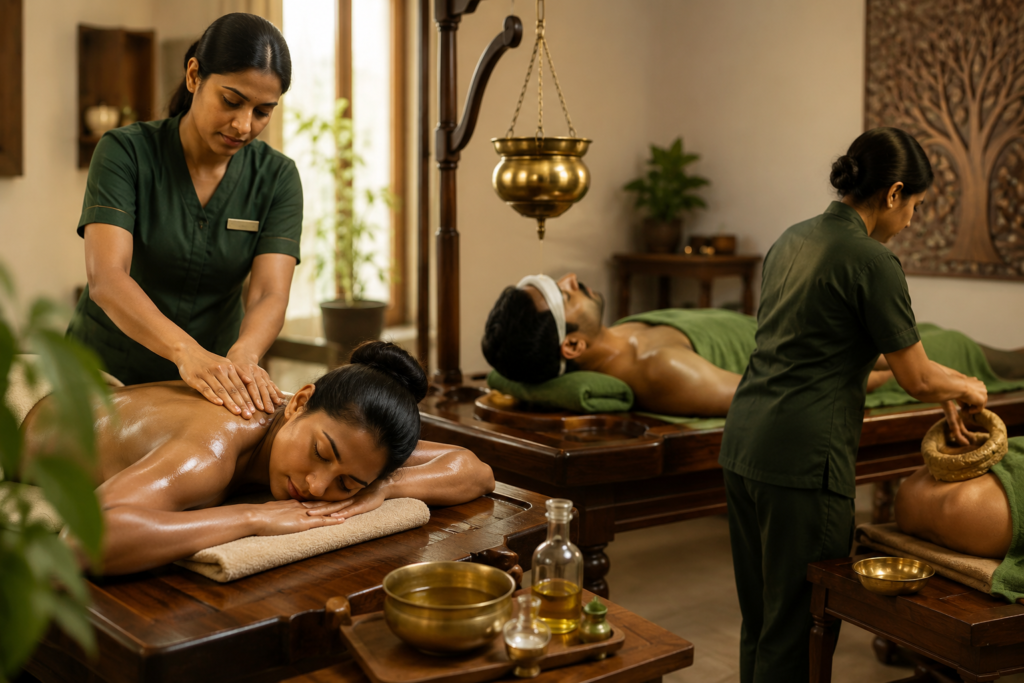
A typical Panchakarma programme is personalised and depends upon the disease and the deep-seated. Each day generally includes oil massage, heat therapy, and the specific procedure indicated for your condition, monitored throughout by clinical staff.
Vitals, digestion, and response to treatment are tracked at each stage, and the protocol is adjusted if needed. This is closer to a structured inpatient or outpatient clinical programme than a wellness retreat. This treatment leads to the following benefits:
- Improved digestion and metabolism by restoring Agni (responsible for the enzymatic reactions of the body)
- Reduced joint stiffness and improved mobility, particularly with Basti-based protocols
- Support for metabolic conditions, including blood sugar and weight management (Kumari et al., 2010)
- Improved cardiovascular endurance, shown by Madhavbaug’s own clinical research (Sane et al., 2018)
- Better sleep and reduced stress, linked to Basti and Nasya protocols
- Clearer skin and reduced inflammation markers, associated with Virechana
Note: Panchakarma is not a guaranteed cure for any disease, and results vary by individual, condition, and adherence to the full protocol, preparation, and post-care.
If your primary concern is weight or blood sugar management specifically, it is worth reading how Panchakarma-based detoxification fits into a broader plan on our obesity treatment programme and our diabetes treatment CDC care.
Diet and Lifestyle After Panchakarma
Your digestive fire (Agni) is sensitive and delicate after Panchakarma. Gradually shifting to a liquid diet followed by warm, freshly cooked simple foods like rice gruel and khichdi is recommended.
The aftercare is equally important since it is responsible for restoring the body’s natural balance and helps avoid the reoccurrence of the disease.
After the Panchakarma Therapy, a gradual, staged reintroduction of regular food (Samsarjana Krama) is prescribed. Along with this, it advised avoiding processed and heavy food. Also adapting daily routine practices (Dinacharya) to protect the digestive fire you have just restored is important.
Skipping this stage is one of the most common reasons people feel Panchakarma “did not work” because the procedure cleared the Ama, but poor follow-up habits allowed it to reaccumulate. Madhavbaug offers a personalised diet with the treatment, leading you towards a holistic transition rather than a standard diet plan.
Who May Consider Panchakarma
Panchakarma may be worth discussing with a physician if you experience:
- Persistent fatigue or low energy despite adequate sleep
- Sluggish digestion, bloating, or irregular bowel movements
- Skin conditions that flare with stress or diet
- Joint stiffness or recurring body ache
- Difficulty managing weight despite consistent effort
- Lifestyle and chronic disorders
- A general sense of feeling “unwell” without a clear diagnosis
If you are suffering from these symptoms, then a certified Ayurveda physician will confirm the panchakarma therapy after a proper and detailed consultation. Madhavbaug focuses on personalised care and holistically addressing the root cause. For a detailed consultation, book an appointment at your nearest clinic.
Who Should Avoid It
Panchakarma is not appropriate for everyone, and a responsible clinic like Madhavbaug will always screen for these before recommending treatment:
- Pregnancy
- Active infections or fever
- Severe anaemia or extreme physical weakness
- Recent major surgery
- Certain psychiatric conditions, without concurrent psychiatric care
- Children and elderly patients, without specific paediatric or geriatric modification
This is precisely why Panchakarma should never be self-administered or performed at an unsupervised wellness centre without a clinical evaluation first.
How Long Does Treatment Take?
Duration depends entirely on the condition being treated and the procedures selected. A focused digestive reset may take 7 to 10 days, whereas deeper, chronic condition-specific protocols, such as those used in Madhavbaug’s Heart Failure Reversal Therapy, typically run across a structured course of sessions over one to several weeks, with defined follow-up intervals (Sane et al., 2018).
Panchakarma vs Common Detox Diets and Cleanses
| Common Detox Diets and Cleanses | Panchakarma | |
| Basis | General | Individualised to your constitution and imbalance |
| Duration | Few days | Days to weeks which are physician supervised |
| Method | Restriction, juices, fasting | Preparation, targeted removal, structured rebuilding |
| Medical oversight | Usually none | Continuous clinical monitoring |
| Underlying goal | Short-term symptom relief | Root cause correction of digestion and metabolism |
| Evidence base | Largely anecdotal | Documented in classical texts and clinical studies (Vinjamury et al., 2012) |
Why Doctor Supervision Matters in Panchakarma
Doctor supervision is very important in Panchakarma since it is a serious clinical medical intervention and not a relaxing spa treatment. Incorrect self-administered panchakarma detox may affect internal organs and cause serious metabolic damage.
Think about where you are right now. You are dealing with symptoms that have not responded to generic advice, general fatigue, sluggish digestion, or a health marker your doctor has flagged as needing attention. If that goes unaddressed, Ayurveda’s own framework suggests it will not stay the same. Unmanaged Ama tends to deepen over time, contributing to the kind of chronic, low-grade inflammation now linked with metabolic and cardiovascular disease in the research cited above (Singh et al., 2026). That is the real cost of treating detox as a trend rather than a clinical process.
This is exactly why every Panchakarma protocol at Madhavbaug begins with a full clinical assessment by a qualified Ayurvedic physician, not a generic package. Your constitution, current medication, and health history determine which procedures are appropriate, at what intensity, and for how long, the same clinical rigour reflected in our own published outcome studies (Sane et al., 2018). For exploring more about our detailed Panchakamra detox therapy, talk to our expert Madhavbaug team today.
When to Consult a Doctor
Speak with a qualified Ayurvedic physician before starting any Panchakarma protocol if you:
- Have an existing diagnosed condition, particularly cardiac, metabolic, or autoimmune
- Are currently on prescription medication
- Are pregnant, trying to conceive, or breastfeeding
- Have had recent surgery or a recent major illness
- Are unsure whether your symptoms warrant detox therapy at all versus a different line of treatment
A proper consultation, not a generic online quiz, is the only reliable way to know whether Ayurvedic detox therapy is right for you and which of the five Panchakarma procedures fits your specific case. To know more, book a consultation at your nearest Madhavbuag clinic today.
Conclusion
Ayurvedic detox therapy, at its best, is not a weekend reset. It is a structured, physician-guided process built on a diagnosis, a plan, and follow-ups. Panchakarma sits at the centre of that process, addressing the deep-seated toxins (Ama) at its source through preparation, targeted removal, and careful rebuilding, rather than short-term restriction. The growing body of clinical research, including Madhavbaug’s own published studies, increasingly supports what classical Ayurveda described centuries ago, that consistent, monitored detoxification can produce measurable, lasting change (Vinjamury et al., 2012; Sane et al., 2018).
If persistent fatigue, sluggish digestion, or an unresolved health concern has brought you here, the next right step is a proper evaluation, not another self-directed cleanse. You can find your nearest centre through our clinic and hospital locator and speak directly with a Madhavbaug Ayurvedic physician about whether Panchakarma is right for you.
Frequently Asked Questions
- What is Panchakarma and how does it work?
Panchakarma is Ayurveda’s five-step detoxification protocol, including Vamana, Virechana, Basti, Nasya, and Raktamokshana, each targeting a different type of accumulated toxin. It works by loosening the deep-seated toxins, or Ama, from the tissues. The main procedure removes it from the body, and a follow-up diet and lifestyle plan rebuilds your digestive strength so the toxins do not simply come back. - Is Panchakarma safe?
Yes, when it is done under proper medical supervision. A qualified Ayurvedic physician assesses your constitution, current health, and any existing conditions before recommending which procedures, if any, are appropriate for you. Doing it unsupervised, or at a centre that skips this assessment, is where the real risk lies. - What are the side effects of Panchakarma?
Mild fatigue, occasional headaches, or a temporary feeling of being “under the weather” are common in the first few days. This is generally the body’s response as it clears out old toxins, not a sign that something has gone wrong. These effects are usually short-term and ease once your body moves into the rebuilding phase. Anything severe or lasting, such as intense pain, dizziness, or dehydration, should be reported to your physician right away. - How long does a Panchakarma detox take?
It depends on what is being treated. A simple digestive reset can take as little as seven to ten days, while a chronic, condition-specific programme may run across several weeks of structured sessions with defined follow-ups. Your physician will only confirm a timeline after evaluating your specific case. - Does Panchakarma help with weight loss?
It can support weight management as part of a broader plan, largely by restoring digestive fire and clearing the metabolic sluggishness Ayurveda attributes to Ama. It is not a standalone crash diet, and results are most meaningful when Panchakarma is combined with the dietary and lifestyle guidance that follows it.
References
- Kumari, J., Mehta, C.S., Shukla, V.D., Dave, A.R. and Shingala, T.M. (2010) ‘A comparative clinical study of Nyagrodhadi Ghanavati and Virechana Karma in the management of Madhumeha‘, AYU, 31(3), pp. 300–304.
- Rawal, M., Chudasma, K.M., Vyas, R.V. and Parmar, B.P. (2010) ‘Effect of vasantic vaman and other panchakarma procedures on disorders of various systems‘, AYU, 31(3), pp. 319–323.
- Sane, R., Mandole, R., Furia, H., Dhamne, R., Gharat, Y., Joshi, S. and Patil, S. (2018) ‘Efficacy of Heart Failure Reversal Therapy (HFRT) program in patients with preserved ejection fraction: An observational study‘, Journal of Ayurveda, III(4), pp. 1048–1052.
- Singh, N.P., Singh, S., Naik, S., Ratre, G., Shankarrao, K.P., Gendre, S.K. and Lemendra (2026) ‘Ayurvedic concept of Ama and its pathophysiological correlation with systemic inflammation: A comprehensive integrative review‘, International Journal of Drug Delivery Technology, 16(17s), pp. 827–832.
- Vinjamury, S.P., Vinjamury, M., Sucharitakul, S. and Ziegler, I. (2012) ‘Panchakarma: Ayurvedic detoxification and allied therapies, is there any evidence?‘, in Evidence-Based Practice in Complementary and Alternative Medicine. Berlin, Heidelberg: Springer.

 Locate a Centre
