
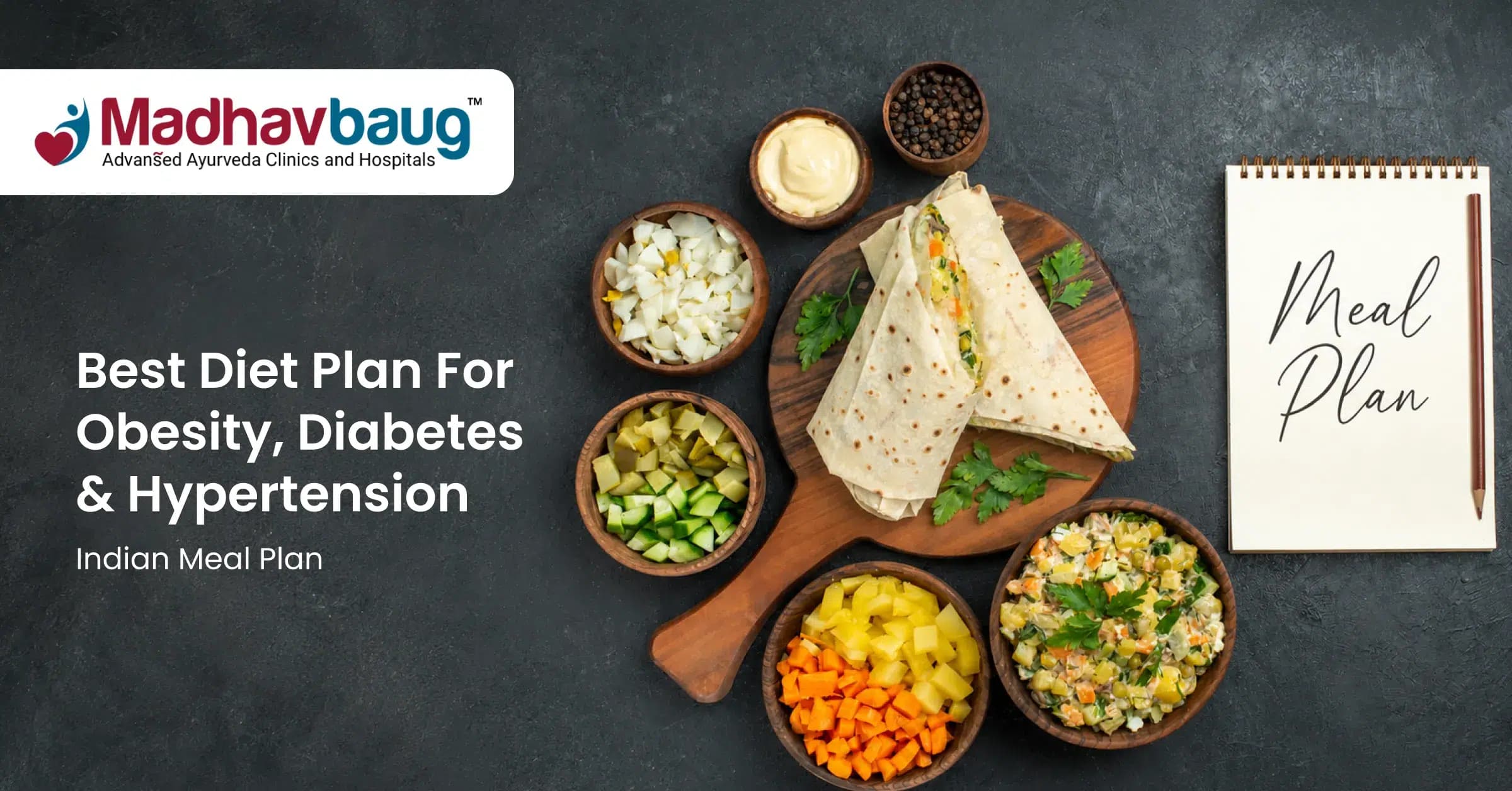

Managing obesity, diabetes, and high blood pressure through diet does not mean giving up flavour or resigning yourself to boiled vegetables every day. The right Indian diet for diabetes and hypertension is built around ingredients most Indian kitchens already have. The challenge is knowing how to structure them correctly, and that is exactly what this blog does.
Why Diet Is the Foundation, Not Just Support
For obesity, diabetes, and hypertension, food is not supportive care. It is a primary intervention. A well-structured meal plan for weight loss in India works by:
- Stabilising blood sugar
- Lowering BP naturally
- Burning visceral fat
- Reducing inflammation
No single medication addresses obesity, blood sugar, and blood pressure together as effectively as a well-structured diet does. That is not an exaggeration. It is consistently what the evidence shows.
Core Principles Before the Meal Plan
These apply across all three conditions and are non-negotiable:
Cut refined carbs: White rice, maida, white bread, and packaged snacks spike blood sugar and promote fat storage. They are the first thing to go.
Control portions: Even healthy foods cause weight gain and blood sugar elevation when eaten in excess. Quantity matters as much as quality.
Add fibre: Fibre slows glucose absorption, reduces cholesterol, and keeps you full longer. Every meal should have it.
Reduce sodium: High sodium directly raises blood pressure. Target below 2,000 mg per day. Cut added salt and avoid packaged foods.
Choose better fats: Replace saturated and trans fats with fats from nuts, seeds, and cold-pressed oils.
Eat consistently: Irregular meal timing worsens blood sugar control and promotes overeating. Fixed meal times are part of the treatment.
Stay hydrated: Water supports kidney function, blood pressure regulation, and metabolism. Do not underestimate it.
Full Day Indian Diet Chart for Diabetes, Hypertension and Obesity
| Time | What to Eat |
| On Waking (6:00 to 7:00 AM) | Warm water with half a lemon. One teaspoon of overnight-soaked methi seeds consumed whole. Optional: one teaspoon of amla powder in warm water. |
| Breakfast (8:00 to 9:00 AM) | Option 1: Vegetable oats upma with mixed vegetables, a teaspoon of ghee, and turmeric. Option 2: Two small ragi or jowar rotis with moong dal or sabzi and unsalted buttermilk. Option 3: Overnight oats with chia seeds, walnuts, and a small portion of guava or apple. Option 4: Madhavbaugs food rx jowar moong upma,chickpea dhokla,greengram paniyaram or sanrise breakfast kit |
| Mid-Morning (11:00 AM) | A small handful of soaked almonds and walnuts. Or one small guava or a few orange segments. Unsweetened green tea or herbal tea. |
| Lunch (1:00 to 2:00 PM) | One to two small whole wheat or bajra rotis. One bowl of dal such as moong, masoor, or toor. One portion of sabzi with non-starchy vegetables in minimal oil. Salad of cucumber, tomato, and onion with lemon dressing. |
| Evening Snack (4:00 to 5:00 PM) | Roasted chana or sprouts chaat with lemon and minimal salt. Or a cup of vegetable soup without cream or cornflour. Unsweetened green tea or tulsi tea. |
| Dinner (7:00 to 8:00 PM) | One to two small rotis of jowar, bajra, or whole wheat. One bowl of light dal or vegetable curry in minimal oil. A generous portion of sauteed or steamed vegetables. Keep dinner the lightest meal and eat at least two hours before sleeping. |
| Before Bed | Warm turmeric milk with skimmed milk and no sugar. Or a few soaked walnuts. |
Diet is one part of managing diabetes. See how your overall health profile may influence your scope for improvement with the Diabetes Reversal Score.
What Ayurveda Says About These Three Conditions
Ayurveda does not treat obesity, diabetes, and hypertension as three separate problems. It sees them as different expressions of the same underlying imbalance, which is part of why the dietary approach overlaps so naturally across all three.
The root imbalances involved:
- Kapha excess: slow metabolism, fat buildup
- Pitta aggravation: arterial inflammation, blood sugar issues
- Vata disturbance: erratic digestion, unstable BP
Correcting these through food is not a secondary strategy in Ayurveda. It is the primary one.
A few principles from Ayurvedic dietary practice that map directly onto this meal plan:
Eat warm, freshly cooked food. Leftover and cold food weakens digestive fire and leads to Ama, the metabolic waste that Ayurveda holds responsible for most chronic disease. This is not abstract. It translates to avoiding refrigerated meals, cold drinks with food, and raw-heavy eating patterns that do not suit every constitution.
Lean into bitter and astringent tastes. Karela, methi, and dark leafy greens are not just nutritionally sound choices. In Ayurvedic terms they actively reduce Kapha and help regulate blood sugar. The fact that modern research agrees is not a coincidence.
Use spices intentionally. Turmeric, ginger, cumin, and coriander are not just flavour. Used consistently at every meal they strengthen digestion and reduce the Ama load that drives metabolic dysfunction.
Eat the largest meal at midday. Digestive fire peaks around noon and weakens by evening. A heavy dinner sits undigested, contributes to Ama, and works directly against weight and blood sugar management.
Specific Ayurvedic additions worth discussing with your physician:
- Vijaysar: A wood infusion with a long history of use in blood sugar support
- Gurmar: Literally translates to sugar destroyer, used to reduce cravings and support the pancreas
- Arjuna: Prepared as Arjuna Ksheerapaka, used traditionally for heart muscle support and blood pressure
- Triphala: A bedtime preparation that supports digestion, cholesterol metabolism, and gentle overnight detoxification
Foods Worth Prioritising
For blood sugar:
- Methi seeds
- Karela
- Whole grains
- Legumes
- Leafy greens
For blood pressure:
- Potassium-rich vegetables
- Coconut water
- Low-sodium cooking
- Arjuna preparations
For weight:
- High fibre foods
- Lean protein
- Healthy fats
- Minimal oil
How Madhavbaug Can Help
A diet chart is a starting point, not a treatment plan. What works for one person managing all three conditions will not work exactly the same way for someone else, because the disease stage, digestive capacity, and body constitution are different in every case.
At Madhavbaug, dietary guidance is built around the individual. Evidence-based Indian meal planning is combined with Ayurvedic recommendations specific to each patient’s Prakriti and metabolic profile. The team working on each case includes Ayurvedic physicians, cardiologists, and nutrition specialists, not one or the other.
If you have been following general diet advice and not seeing results, the issue is usually specificity. A particular 800 kcal diet kit such as Prameh diet kit,swasthyam diet kit and Gobipi diet kit is recommended as per patient disease.
Book your consultation at madhavbaug.org.
Frequently Asked Questions
Q1. What is the best diet plan for diabetes and high blood pressure in India?
A diet built around whole grains like ragi and jowar, dal, non-starchy vegetables, and low-fat dairy while eliminating refined carbs and excess salt works best for managing both conditions.
Q2. Can an Indian diet help with weight loss and blood sugar control together?
Yes, a structured low-glycaemic Indian meal plan that controls portions, increases fibre, and eliminates sugar effectively supports both weight loss and blood sugar management simultaneously.
Q3. What foods should a diabetic and hypertensive patient avoid completely?
White rice, maida, pickles, packaged snacks, sugary drinks, fried foods, and excess salt should be avoided entirely by anyone managing diabetes and high blood pressure.
Q4. How many rotis can a diabetic patient eat in a day?
Two to three small rotis made from whole wheat, jowar, or bajra spread across meals is a safe and effective portion for most diabetic patients.
Q5. Is an Ayurvedic diet effective for managing obesity, diabetes, and hypertension?
Yes, Ayurvedic dietary principles including warm freshly cooked meals, digestive spices, and herbs like Vijaysar and Gurmar complement medical treatment and support long-term metabolic health.
References
Ley, S.H., Hamdy, O., Mohan, V. and Hu, F.B. (2014). Prevention and management of type 2 diabetes: dietary components and nutritional strategies. The Lancet, 383(9933), pp.1999-2007. Available at: https://pmc.ncbi.nlm.nih.gov/articles/PMC5439361/



 Locate a Centre
