
It was not one bad meal or one lazy month. It was years of eating on the go, sitting at desks, sleeping poorly, and managing stress with whatever was convenient. For millions of people in India right now, the result is a body that feels unfamiliar and a weight problem that does not respond to half-measures.
Surgery is not always the answer. Medication is not always the answer. What works, and what has worked for thousands of Madhavbaug patients, is addressing the actual root cause: the diet, the habits, the metabolic imbalance underneath it all.
What Is Obesity?
A BMI of 30 or above puts you in the obese category. But the number is less important than what is happening inside. Obesity is not just stored fat. It is the body’s response to a prolonged imbalance between how much energy is coming in and how much is going out, often made worse by hormones, genetics, and years of lifestyle patterns that nobody flagged as a problem until the damage was done.
What Are The Causes of Obesity?
There is rarely one single cause. Most people dealing with obesity are dealing with several of these at once:
- Eating habits built around processed, packaged, or fried food
- Very little physical movement through the day
- Stress that leads to eating for comfort rather than hunger
- Hormonal issues like thyroid dysfunction or insulin resistance
- Family history and genetic tendency to gain weight
- Medications that quietly cause weight gain as a side effect
The reason generic advice fails so often is because it does not account for this overlap. Treating just one factor while ignoring the rest does not get very far.
How Do You Control Obesity Naturally?
Dietary Management
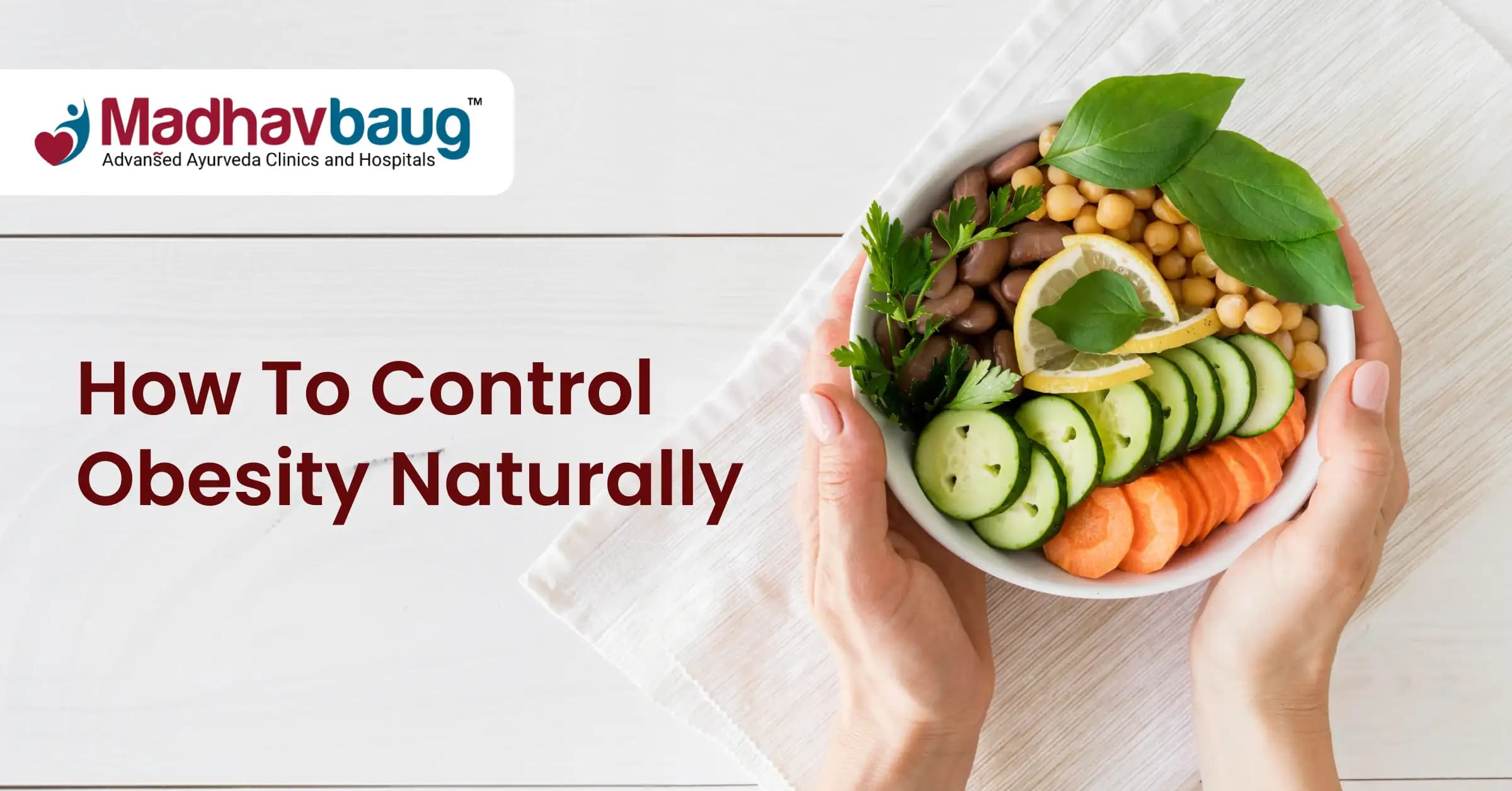
The dietary management of obesity does not mean eating less of everything. It means eating differently. Research consistently shows that losing even 5 to 10 percent of body weight brings real improvements in blood sugar, blood pressure, and cholesterol levels. That kind of result is achievable without surgery, given the right guidance and the right food choices.
What to stop eating so much of:
- Sugary drinks, including the ones marketed as healthy juices
- Anything deep-fried or heavily processed
- White bread, maida-based foods, refined carbohydrates
- Packaged and ready-to-eat meals
What to actually eat more of:
- Vegetables and fresh fruit
- Millets, oats, brown rice, and other whole grains
- Dal, rajma, chana, and other legumes
- Low-fat dairy and lean protein sources
Portion size matters too. Smaller meals spread across the day keep blood sugar stable and reduce the urge to overeat at the next sitting.
Exercise
150 minutes of moderate activity per week is the standard recommendation. That breaks down to about 20 to 25 minutes a day, which is not that much once you stop thinking of it as a gym commitment.
Brisk walking works. Surya Namaskar works. Cycling works. So does just choosing stairs over the lift and walking to the shop instead of calling for delivery. Consistency over intensity, especially in the beginning.
Sleep
This one gets ignored constantly. Poor sleep raises ghrelin, the hormone that makes you hungry, and suppresses leptin, the hormone that tells you to stop eating. The result is increased appetite and stronger cravings, particularly for high-calorie foods.
Seven to eight hours of proper sleep is one of the most underrated healthy weight management tips there is. It costs nothing and most people are not getting enough of it.
Role of Chronic Stress
Cortisol, the primary stress hormone, tells the body to store fat. Specifically around the abdomen. People under sustained stress often find that even when their diet is reasonable, the weight around the middle does not shift.
Simple things that help:
- Ten to fifteen minutes of meditation or mindfulness daily
- Pranayama breathing exercises in the morning
- A short walk in the evening, without a phone
- Writing things down before bed to clear mental clutter
Home Remedies for Obesity Worth Actually Trying
These are not magic solutions. But used consistently alongside proper diet and movement, they can support the process in a real way.
- Warm water with lemon and honey first thing in the morning
- A small amount of diluted apple cider vinegar before meals
- Jeera water, soaked overnight and drunk in the morning
- Triphala powder with warm water before bed
- Turmeric and ginger regularly in cooking
- Replacing refined cooking oil with cold-pressed coconut or mustard oil
Small changes, done daily, add up.
How Madhavbaug Approaches Obesity Treatment Through Ayurveda
Obesity treatment in Ayurveda starts from a different place than conventional medicine. The focus is on Kapha dosha, which governs metabolism, fluid balance, and fat storage in the body. When Kapha is out of balance, digestion slows, energy drops, and fat accumulates. Correcting that imbalance is where treatment begins.
At Madhavbaug, specific therapies are used based on individual assessment:
- Udwarthanam: A herbal powder massage done against the grain of hair follicles, used to stimulate fat metabolism and lymphatic drainage
- Panchakarma: A structured detox protocol that clears accumulated metabolic waste from the body
- Customised herbal formulations: Prepared individually to support digestion and metabolic regulation
Herbs that are commonly part of the treatment plan:
- Triphala: For digestion support and gentle detoxification
- Guggul: Traditionally used for its fat-regulating effects
- Methi (Fenugreek): Helps manage blood sugar and reduce appetite
- Vijaysar: Used in Ayurvedic practice for metabolic support
What makes Madhavbaug different is that this is not pure Ayurveda in isolation. Classical protocols are combined with modern cardiac and metabolic science. Cardiologists, Ayurvedic physicians, and wellness specialists work together. The result is care that is both evidence-informed and genuinely holistic.
Ready To Start Your Weight Loss Journey?
If you have been trying to lose weight and keep hitting the same wall, it is worth looking at what you have not addressed yet. Diet alone. Exercise alone. Neither one tends to be enough.
Madhavbaug offers a consultation-first approach. You come in, your condition is assessed properly, and a plan is built around you, not around a template. No surgery. No side effects. Just a structured, supervised path toward a weight your body can actually maintain.
Book your consultation at madhavbaug.org.
Frequently Asked Questions
1. What is the fastest natural way to reduce obesity?
Combining a calorie-controlled diet with daily physical activity and Ayurvedic therapies offers the fastest sustainable natural results.
2. Which Ayurvedic herb is best for weight loss?
Triphala and Guggul are among the most effective herbs used in obesity treatment in Ayurveda.
3. How much weight can I lose in a month naturally?
A safe and sustainable rate is 0.5 to 1 kg per week, meaning around 2 to 4 kg per month.
4. Is dietary management of obesity enough without exercise?
Diet plays the primary role, but combining it with regular physical activity significantly improves and sustains results.
5. Can obesity be permanently cured without surgery?
Yes, with consistent dietary management, lifestyle changes, and holistic therapies, long-term obesity control without surgery is absolutely achievable.
References
- World Health Organization (2025) Obesity and overweight. Available at: https://www.who.int/news-room/fact-sheets/detail/obesity-and-overweight
- Hwalla, N. and Jaafar, Z. (2021) Dietary management of obesity: a review of the evidence. Diagnostics, 11(1), p.24. Available at: https://www.ncbi.nlm.nih.gov/pmc/articles/PMC7823549/
- Barber, T.M., Kabisch, S., Pfeiffer, A.F.H. and Weickert, M.O. (2024) Dietary and lifestyle strategies for obesity. Nutrients, 16(16), p.2714. Available at: https://www.ncbi.nlm.nih.gov/pmc/articles/PMC11356871/
- Giri, S.K., Vedi, S.K., Doddamani, S. et al. (2025) Clinical safety and efficacy of Ayurveda multi-herbal formulation in the management of obesity. Integrative Medicine Research. Available at: https://journals.sagepub.com/doi/10.1177/27536130251356447



 Locate a Centre
