
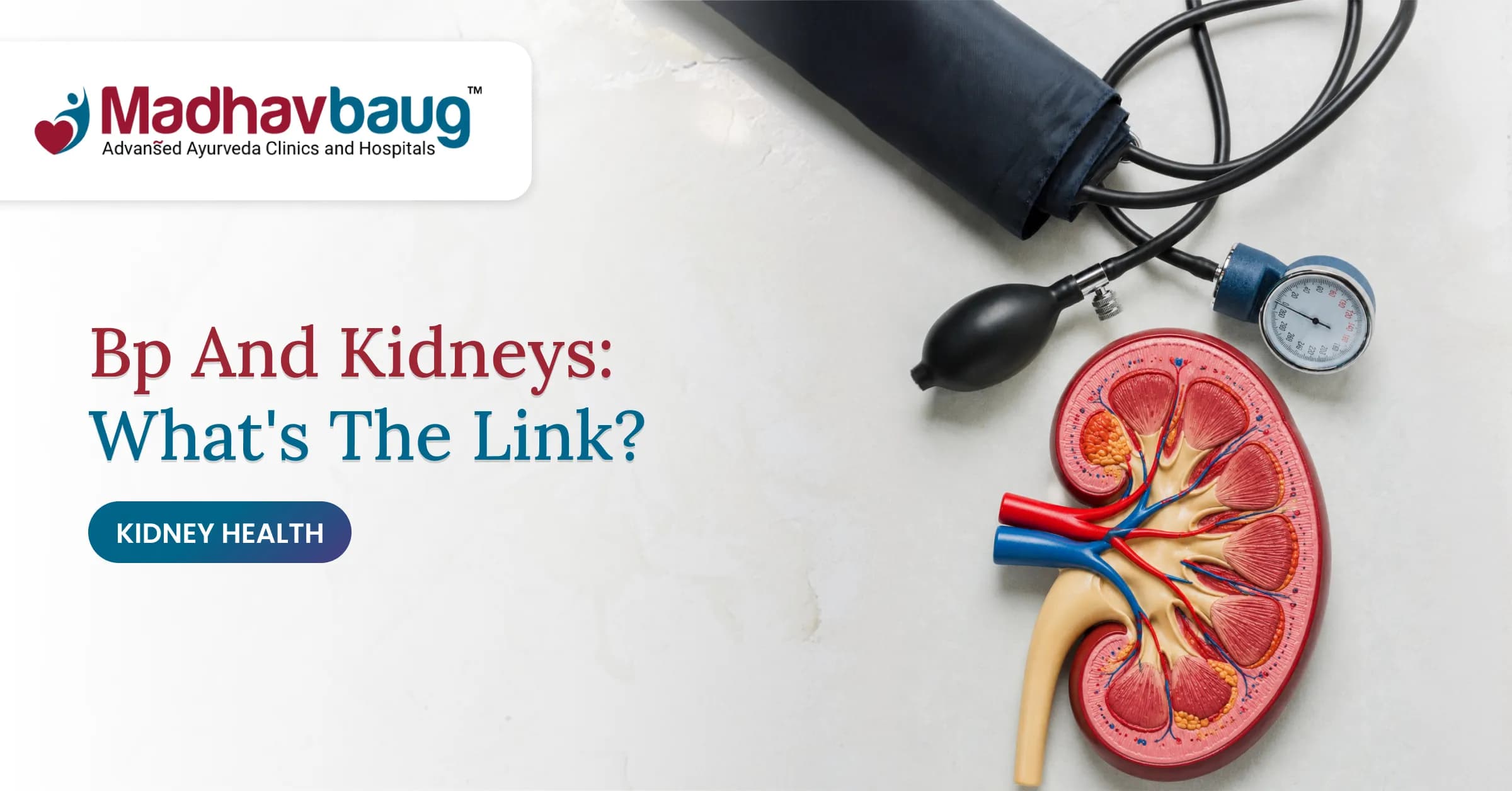

You have been living with high blood pressure for years, taking your medicines, cutting back on salt, doing everything right. Then a routine blood or urine test shows signs of a kidney problem.
Sometimes it happens the other way around instead. A kidney issue is diagnosed first, and soon after, your blood pressure readings start rising too.
This article explains how hypertension and kidney disease connect, who faces higher risk, which tests catch problems early, and how Madhavbaug’s integrated approach can support each condition.
How Are High Blood Pressure And Kidney Disease Connected?
Doctors often describe this as a two-way relationship. High blood pressure can damage the kidneys over time. Damaged kidneys, in turn, can raise blood pressure. Each condition can make the other worse, which is why doctors manage them together (Ku et al., 2019; Hebert and Ibrahim, 2022).
How Do The Kidneys Help Regulate Blood Pressure?
Kidneys are best known for filtering waste from the blood. But they play another important role too: helping control blood pressure.
They do this by managing how much salt and water stays in your body. If the kidneys hold on to more, blood pressure rises, and if they flush out the extra, it goes back down.
There is a second way they help too. When blood pressure drops too low, the kidneys release a hormone called renin. Renin narrows the blood vessels and signals the body to retain salt and water, both of which raise the blood pressure.
It is known as the renin-angiotensin-aldosterone system, and is one of the body’s main tools for keeping blood pressure stable (Ku et al., 2019; Hebert and Ibrahim, 2022).
But when the kidneys are damaged, this balance also shifts. Salt and water stop clearing out the way they should, and the renin system can stay switched on for longer than it should.
Damaged kidneys can also affect substances that normally keep blood vessels relaxed, so the vessels themselves become stiffer. All of this can raise blood pressure, sometimes even before any other sign of kidney trouble shows up.
How Does High Blood Pressure Damage The Kidneys?
Every time blood pushes through your vessels under high pressure, it damages vessel walls, including the small ones inside the kidneys. This is where high blood pressure kidney damage begins, slowly, over years.
Kidneys filter through a network of tiny blood vessels called nephrons, and sustained high pressure stiffens and narrows them. It reduces the blood flow to the filtering units, and some nephrons even stop working.
The damage tends to happen quietly over many years. Kidney function tests do not show any problem until a fair amount of damage has already happened. This is why doctors recommend regular kidney checks for anyone with long-standing high blood pressure, even if they feel fine.
If left unchecked, this can progress to chronic kidney disease, and in more severe cases, kidney failure.
Who Is At Risk?
A few factors increase the risk of developing both hypertension and kidney disease.
- The longer the blood pressure stays high, the more time it has to damage blood vessels in the kidneys.
- Kidney function naturally slows down with age, leaving less room to handle the additional strain high blood pressure adds.
- Diabetes also damages the blood vessels, which can accelerate kidney disease.
- A family history of kidney disease or hypertension can also increase your risk.
- Being overweight adds load to both kidneys and heart, and might increase blood pressure along with it.
- Smoking harms blood vessels throughout the body, including kidneys.
If several of these apply to you, remember kidney disease and hypertension often develop together silently, so ask your doctor about kidney function tests even if your blood pressure currently feels well managed.
If you have one or more of these risk factors, a personalised health assessment can help you understand your kidney and cardiovascular health better.
Can This Happen Without Any Symptoms?
Yes. In fact, both high blood pressure and early kidney damage can develop for years without causing noticeable symptoms (KDIGO, 2024).
High blood pressure is often called a silent condition for exactly this reason. Most people feel completely normal even when their readings are well above the healthy range. The same is true for early kidney damage. The kidneys have a large reserve capacity, so their function can decline significantly before you notice any changes.
When renal hypertension symptoms do appear, they tend to show up only after kidney function has dropped considerably. These can include swelling in the legs or ankles, unusual tiredness, needing to urinate more often at night, urine that looks foamy, or a drop in appetite.
What Tests Check For Kidney And Blood Pressure Problems?
A few simple tests can catch problems long before symptoms show up, and doctors often recommend them for anyone at higher risk.
- Serum creatinine: A blood test that helps doctors calculate eGFR, which is estimated glomerular filtration rate and shows how well the kidneys are filtering blood.
- Urine albumin test: Checks albumin levels in the urine, which is usually an early sign of kidney trouble (KDIGO, 2024).
- Tracking blood pressure: Doctors prefer multiple readings to track blood pressure over time.
- 24-hour ambulatory BP test: Done when doctors feel the need to track blood pressure during different times of the day.
How To Monitor Blood Pressure At Home
Checking your blood pressure at home helps show how well it is controlled over time, as blood pressure can change depending on stress, activity, or even the anxiety of being at a doctor’s office.
Understanding a few basics can make home readings reliable.
- Use a proper upper-arm cuff device
- Sit quietly for a few minutes before measuring
- Keep your feet flat on the floor
- Rest your arm at heart level
- Avoid caffeine, exercise, or smoking 30 minutes beforehand
- Take two readings, a minute or two apart, at roughly the same times each day, once in the morning and once in the evening
Keep a log so that doctors can look at patterns over days and weeks. If you are managing both high blood pressure and kidney concerns, share this log at every appointment.
What Medicines and Salt Cautions Should You Know About?
Small daily choices matter a lot here. When you are managing both high blood pressure and kidney disease, doctors watch two things closely: your medicines and how much salt you are eating.
Stick to your blood pressure medicines exactly as prescribed, even once your readings start looking better. Stopping on your own can raise blood pressure again, and that adds strain to kidneys.
Over-the-counter painkillers need to be used with caution too. If used for a long period, they can cut down blood flow to the kidneys and worsen existing damage, especially if kidney disease is already present. Check with your doctor before adding any new medicine or supplement, even if it seems like a normal thing to add.
Salt plays its own role. Too much of it makes the body hold onto extra water, which can impact the blood pressure control and puts more workload onto the heart and kidneys over time. Choosing freshly prepared meals, limiting packaged foods and checking food labels for sodium content can help keep your blood pressure under control.
Our guide on hydration for diabetes, BP, and heart patients in humid weather covers this in more detail.
How Does Diabetes Affect This Relationship?
Diabetes can also show up along with high blood pressure and kidney concerns, and each one makes the others harder to manage.
High blood sugar also damages blood vessels in a similar way as high blood pressure. This damage adds to what high blood pressure is already doing, and the two together speed up kidney decline faster than just one condition can on its own. This is part of why diabetes is one of the leading causes of kidney disease worldwide (Wang et al., 2020).
The relationship works both ways here too. Kidney damage can make blood sugar harder to control, partly because the kidneys play a role in clearing some diabetes medicines from the body, and reduced kidney function changes how those medicines behave.
For anyone managing both diabetes and high blood pressure, keeping both under control matters more than focusing on just one. Kidney function tests are important here, since the two together can speed up damage that would otherwise take much longer to show up.
Questions to Ask Your Doctor
Having a handy list of questions can help you get the most from the appointment and even more if you are handling two conditions together.
- Which blood and urine tests do I need, and how often should they be repeated?
- Are my current blood pressure medicines affecting my kidneys, and do any doses need adjusting?
- What is a safe blood pressure target for me, given my kidney function?
- How much salt and fluid should I be having each day?
- Are there any over-the-counter medicines or supplements I should avoid?
Bringing a home BP log and a list of your current medicines to each appointment helps your doctor answer these questions more accurately. Our detailed guide on understanding blood pressure readings covers this in more depth.
Red Flags: When Should You Seek Immediate Medical Attention?
High blood pressure and kidney disease tend to progress quietly, but a few symptoms should never be ignored.
They may signal that your blood pressure has become dangerously high or that your kidneys are no longer functioning as they should.
Seek medical attention immediately if you notice:
- Severe chest pain or sudden shortness of breath.
- A severe headache, blurred vision, confusion or difficulty speaking, especially if your blood pressure is very high.
- Sudden swelling in your legs, ankles, feet or around your eyes.
- A sharp decline in the amount of urine you pass, or if you stop passing urine altogether.
- Blood in your urine or urine that remains dark or tea-coloured.
- Persistent nausea, vomiting, extreme tiredness or drowsiness that cannot be explained by another illness.
Even if you do not have any of these warning signs, continue attending your regular follow-up appointments.
How Does Ayurveda Support Hypertension and Kidney Health?
Managing high blood pressure and kidney disease is not just about lowering blood pressure readings. At Madhavbaug, the focus is on improving overall health, supporting healthy circulation and reducing the factors that place long-term strain on both the heart and kidneys.
For people who also have diabetes, our diabetes reversal programme takes an integrated approach to managing blood sugar while supporting heart and kidney health. This personalised approach combines Ayurvedic therapies, lifestyle modification and continuous medical supervision.
Final Thoughts
Kidney disease and hypertension can quietly affect each other for years before causing symptoms. Regular check-ups, blood pressure monitoring and kidney function tests can help detect problems early and reduce the risk of complications.
If you are managing either condition, or both, a coordinated approach with your doctor is the most reliable way to protect your long-term kidney and heart health.
Book a consultation with a Madhavbaug specialist to understand how an integrated Ayurvedic approach can support your health.
Regular BP monitoring, appropriate kidney tests and doctor-guided care can help identify concerns early and support better long-term health.
Frequently Asked Questions (FAQs)
1. Does high blood pressure cause kidney damage?
Yes. High blood pressure that stays uncontrolled for years slowly damages the small blood vessels inside the kidneys, which reduces how well they filter waste from the blood.
2. What are the warning signs of high blood pressure kidney damage?Early on, there are usually no signs at all. When symptoms do appear, they can include swelling in the legs or ankles, feeling unusually tired, foamy urine, or needing to urinate more at night.
3. How do I know if my BP is affecting my kidneys?The only reliable way is through blood and urine tests, specifically a creatinine-based eGFR test and a urine albumin test. Symptoms alone cannot tell you this.
4. Is kidney damage from high blood pressure permanent?Some of it can be, but not all. Catching it early and keeping both blood pressure and blood sugar well controlled can slow or stop further damage, even if some past damage can’t be undone.
5. Can I take painkillers if I have high BP and kidney issues?Not all painkillers are safe. Common options like ibuprofen can reduce blood flow to the kidneys and worsen existing damage, so it’s best to check with your doctor before taking any, even over-the-counter ones.
References
- Ku E, Lee BJ, Wei J, Weir MR. Hypertension in CKD: Core Curriculum 2019. Am J Kidney Dis. 2019;74(1):120-131. https://pubmed.ncbi.nlm.nih.gov/30898362/
- Hebert SA, Ibrahim HN. Hypertension Management in Patients with Chronic Kidney Disease. Methodist Debakey Cardiovasc J. 2022;18(4):41-49.https://pmc.ncbi.nlm.nih.gov/articles/PMC9461694/
- Kidney Disease: Improving Global Outcomes (KDIGO) CKD Work Group. KDIGO 2024 Clinical Practice Guideline for the Evaluation and Management of Chronic Kidney Disease. Kidney Int. 2024;105(4S):S117-S314. https://pubmed.ncbi.nlm.nih.gov/38490803/
- Wang M, Li J, Li Y, Yao S, Zhao M, Wang C, Wu S, Xue H. The effects of hypertension and diabetes on new-onset chronic kidney disease: a prospective cohort study. J Clin Hypertens (Greenwich). 2020;22(1):39-46. https://pmc.ncbi.nlm.nih.gov/articles/PMC8030069/





 Locate a Centre
