

Key Takeaways
|
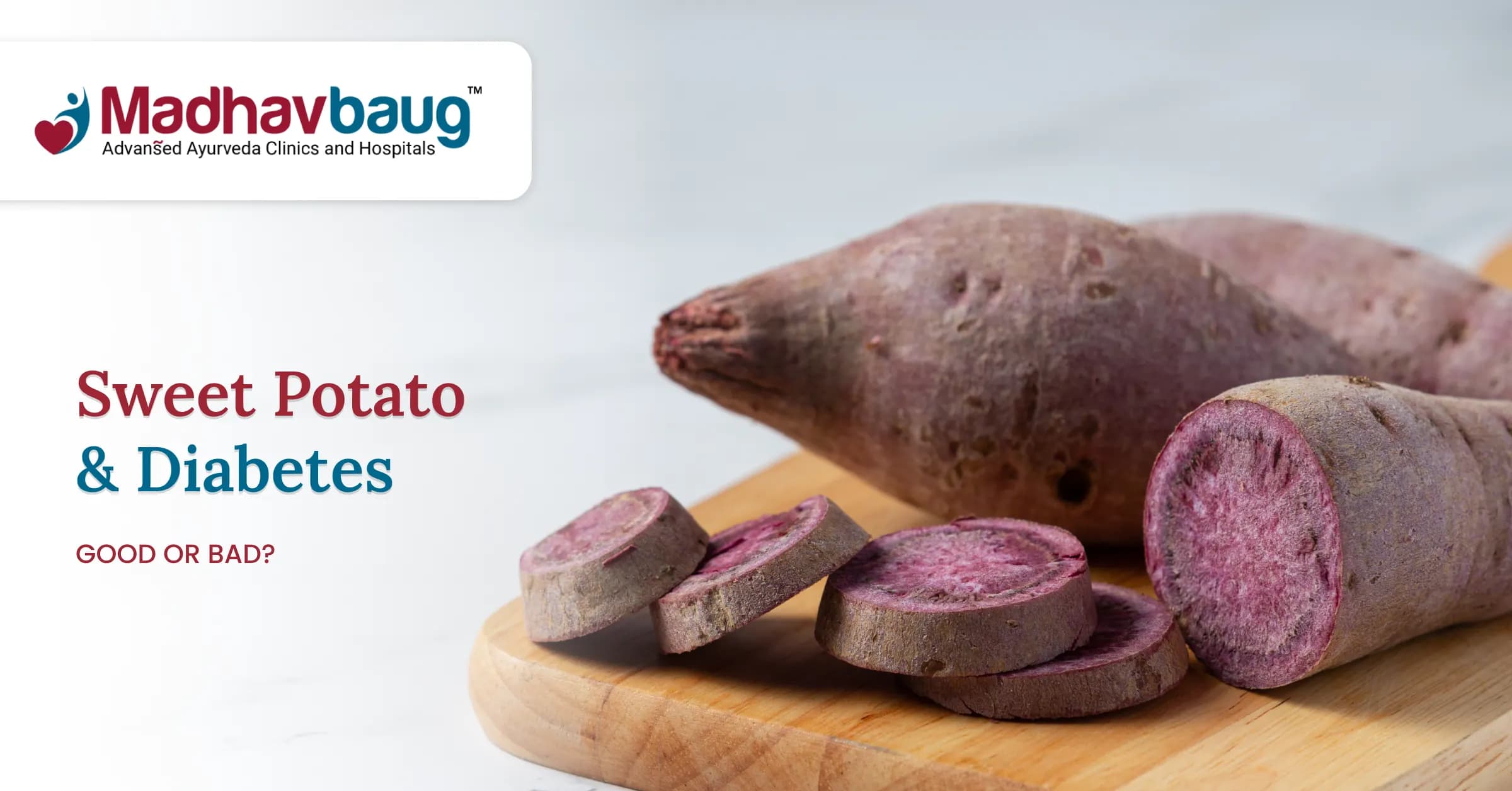
Sweet potato, or shakarkandi, can be included in a diabetes-friendly diet. What matters most is how much you eat, how it is prepared and what you eat with it.
Shakarkandi can raise blood glucose because it contains carbohydrates. The aim is not to avoid it completely but to fit an appropriate portion into a balanced diabetes diet.
Is Sweet Potato Good for Diabetes?
If you have diabetes, you do not necessarily need to avoid sweet potatoes. Shakarkandi can fit into your meals, but how much you eat and what you eat it with matters.
It contains fibre, beta-carotene and other nutrients, but it is still a starchy carbohydrate. So, just like rice, roti or potato, it contributes carbohydrate to the meal and can affect your blood glucose.
For example, a small portion of shakarkandi eaten with vegetables and dal, paneer, curd or eggs is very different from having a large serving along with rice, rotis and sweet chutney.
So, instead of asking whether sweet potato is simply “good” or “bad” for diabetes, it is more useful to see where it fits into your overall diabetes diet and meal portions.
Wondering how foods like shakarkandi can fit into your diabetes meals?
What Is the Glycemic Index of Sweet Potato?
Sweet potato does not have one fixed glycemic index. Its GI can vary depending on the variety and how it is prepared.
The glycaemic index, or GI, simply tells us how quickly a carbohydrate-containing food may raise blood glucose.
| GI value | What it means |
| 55 or below | Low GI |
| 56–69 | Medium GI |
| 70 or above | High GI |
International GI data show that sweet potato can fall into different GI ranges rather than fitting neatly into one category (Atkinson et al., 2021). This explains why you may see different numbers when you search for the sweet potato glycemic index.
Cooking method is one reason GI values can differ (Bahado-Singh et al., 2011).
| Remember A food having a lower GI does not mean you can eat an unlimited amount of it. The portion still matters. |
What Is the Best Way to Cook Sweet Potato for Diabetes?
Boiling can be a practical way to prepare shakarkandi when blood glucose is a concern.
In a human study comparing different cooking methods, boiled sweet potato had a lower glycaemic index than baked or roasted versions (Bahado-Singh et al., 2011).
That does not mean roasted shakarkandi is completely off the menu. The portion and what you eat with it still matter.
| How Different Shakarkandi Preparations Compare Boiled: A simple option that may produce a lower glycaemic response. Roasted or baked: Can still be included, but portion size becomes important. Fried: Adds extra fat and calories, so it is better kept for occasional eating. Halwa or sweet preparations: Sugar, jaggery or sweet chutneys add extra carbohydrate, making these very different from eating plain shakarkandi. |
How Much Sweet Potato Can Someone With Diabetes Eat?
There is no single portion of sweet potato that suits everyone with diabetes. The amount that fits depends on your overall carbohydrate needs, the rest of the meal and your individual blood glucose response.
As an example, about ½ cup of plain cooked sweet potato can be considered one carbohydrate serving. The American Diabetes Association lists ½ cup of plain sweet potato as providing roughly 15 g of carbohydrate.
The important part is what happens around that serving. If your meal already contains rice, roti, potatoes or another starchy food, adding shakarkandi increases the total carbohydrate in the meal. If sweet potato is being used as the main starch, it can take the place of some of those foods instead.
This is also why portion matters even when a food has a lower GI. A larger serving still gives you more carbohydrate than a smaller one.
| Portion Perspective Instead of thinking only in grams, look at where shakarkandi sits on your plate. A balanced meal could look like this: ½ plate: non-starchy vegetables ¼ plate: dal, paneer, eggs, fish or another protein source ¼ plate: sweet potato or another carbohydrate food So, if shakarkandi is already filling the carbohydrate quarter of your plate, you may not need the same amount of rice or roti you would usually have with that meal. Your ideal portion can still vary, especially if you count carbohydrates, use insulin, are trying to lose weight or follow an individual meal plan. |
What Should You Eat With Sweet Potato if You Have Diabetes?
Pair sweet potato with a protein source and non-starchy vegetables rather than eating a large portion on its own.
A simple way to build the meal is to pair shakarkandi with a protein source and plenty of non-starchy vegetables. The American Diabetes Association recommends a similar plate pattern: half the plate with non-starchy vegetables, one-quarter with protein and one-quarter with carbohydrate foods such as starchy vegetables. It also notes that eating protein with carbohydrate foods can slow carbohydrate digestion (American Diabetes Association, 2025).
Here are a few practical combinations:
| Instead of this | Try this |
| Large bowl of shakarkandi on its own | Smaller portion with paneer or curd and a vegetable salad |
| Shakarkandi + full serving of rice or rotis | Shakarkandi as the main starch with vegetables and protein |
| Shakarkandi chaat with sweet chutney | Shakarkandi with lemon, spices, cucumber and a protein-rich accompaniment |
| Sweet potato fries | Boiled or simply cooked shakarkandi with the rest of the meal |
This same whole-meal approach is useful when planning an overall diet for diabetes, rather than judging foods only by their individual GI.
Is Shakarkandi Chaat Good for Diabetes?
Shakarkandi chaat can fit into a diabetes-friendly diet, but the portion and toppings matter.
Sweet potato already contributes carbohydrate, so adding sweet chutney, extra potato or other sugary toppings can increase the total carbohydrate in the snack.
A better option is to keep the serving modest and use ingredients such as lemon, coriander, cucumber, tomato and spices for flavour.
A Better Shakarkandi Chaat
- Keep the portion moderate.
- Skip or limit sweet chutney.
- Add cucumber, tomato, coriander and lemon.
- Avoid adding extra potato or other starchy ingredients.
- Pair it with curd or a small portion of sprouts if you want to make it more balanced.
The same shakarkandi can fit very differently depending on how the chaat is prepared and how much you eat.
Is Sweet Potato Better Than Regular Potato for Diabetes?
Sweet potato is not automatically a better choice than regular potato just because it tastes sweeter or is often described as a “healthier” potato. Both are starchy carbohydrate foods, and either can affect blood glucose depending on the variety, cooking method, and portion size.
International GI data show considerable variation within both potatoes and sweet potatoes, which means it is difficult to give either food one fixed GI value (Atkinson et al., 2021).
There are nutritional differences too. Orange-fleshed sweet potatoes are particularly rich in beta-carotene, which the body can convert to vitamin A, while regular potatoes provide nutrients including potassium and vitamin C (USDA FoodData Central).
| What to compare | Sweet potato | Regular potato |
| Carbohydrate | Starchy carbohydrate | Starchy carbohydrate |
| Glycemic index | Can vary with variety and cooking | Can vary with variety and cooking |
| Nutrient highlight | Orange varieties are rich in beta-carotene | Good source of potassium and vitamin C |
| What matters for diabetes | Portion, preparation and the rest of the meal | Portion, preparation and the rest of the meal |
“Changing potato to sweet potato does not automatically make a meal diabetes-friendly. A modest portion of either food alongside vegetables and protein may fit better than a large portion of sweet potato simply because it is perceived as the “healthier” option.” Dr. Bipin Gond, Zonal Medical Head, Madhavbaug |
Can Sweet Potato Help Lower Blood Sugar?
Sweet potato can be part of a balanced diabetes diet, but it should not be treated as a food that lowers blood sugar or treats diabetes.
Its value comes from how it fits into your overall meal plan. A sensible portion, suitable preparation, and a balanced plate are more important than expecting one food to improve glucose levels on its own.
So, shakarkandi can be included as one of your carbohydrate choices, but diabetes management still depends on your overall diet, activity, medicines when prescribed and regular monitoring.
| Keep in Mind A nutritious food can support a healthy diet without being a treatment for diabetes. |
How Can You Tell If Sweet Potato Suits Your Blood Sugar?
People can respond differently to the same food. The portion of shakarkandi, how it is cooked and what you eat with it can all affect your blood glucose.
If you already check your blood sugar, see how your readings respond when you eat sweet potato as part of your usual meal. If you repeatedly notice higher-than-expected readings, the portion or meal combination may need adjusting.
One reading does not tell the whole story. It is more useful to look for a pattern and follow the glucose targets recommended for you.
For better overall glucose control, it also helps to understand how diet, activity and treatment work together in diabetes.
| Clinical Insight “A standard portion guide does not apply equally to everyone with diabetes. Someone using insulin, experiencing large post-meal glucose rises, trying to lose weight or managing another condition such as kidney disease may need a different carbohydrate portion or meal plan. This is why the response to shakarkandi should be judged in the context of the complete meal, glucose pattern, medicines and overall health, rather than from its GI alone. ” Dr. Pravin Jayram Ghadigaonkar, BAMS, MD, PhD (Scholar) – Preventive Cardiology 20+ Years of Clinical Experience, Head Medical Operations & Patient Improvement, Madhavbaug |
How Madhavbaug Can Help With Diabetes Diet Planning
Knowing that you can eat shakarkandi is only one small part of managing diabetes. The bigger challenge is understanding how different foods, portions and meal combinations fit into your everyday diet.
At Madhavbaug, diabetes care can take into account your blood glucose levels, current medicines, food habits, activity and other health factors. Dietary guidance can then be planned around your individual needs rather than relying on a fixed list of foods to eat or avoid.
Food is only one part of diabetes management. Understanding how to control diabetes can help you see how diet, physical activity, monitoring and treatment work together. If you are tracking your long-term glucose control, the HbA1c test guide also explains what your result means and why it needs to be understood in the context of your overall health.
Need help planning meals around your blood sugar and health needs?
Frequently Asked Questions
Can people with diabetes eat sweet potato every day?
Sweet potato can be included regularly, but whether it suits you every day depends on the portion, your overall carbohydrate intake and your blood glucose response. It is also useful to include variety across your carbohydrate and vegetable choices.
Is sweet potato good for prediabetes?
Sweet potatoes can fit into a balanced diet for prediabetes. Since it is a starchy carbohydrate, the portion, cooking method and rest of the meal still matter.
Can I eat sweet potato at night if I have diabetes?
Yes, sweet potato can be eaten at night. The time alone does not determine its effect on blood glucose. Your portion size, the total carbohydrate in the meal, your medicines, and your individual glucose response are more important.
Can I eat sweet potato with roti?
Yes, but both contribute carbohydrates to the meal. If you are having shakarkandi with roti, you may need to adjust the portions rather than having your usual quantity of both.
Is sweet potato better than rice for diabetes?
Neither is automatically better for everyone. The type and portion of rice, the way sweet potato is prepared and what else is included in the meal all influence the overall glucose response.
Does the colour of sweet potato matter?
Different sweet potato varieties have different nutrient and starch profiles. For example, orange-fleshed varieties are particularly rich in beta-carotene. For diabetes, however, portion size and preparation are still more useful considerations than colour alone.
Should you avoid sweet potatoes if your blood sugar is high?
Not necessarily, but consistently high glucose readings need to be looked at in the context of your overall diet, medicines, activity and diabetes management plan. Your doctor or dietitian can help decide whether your carbohydrate portions need adjustment.
References
American Diabetes Association (2025) Plan Your Diabetes Plate. American Diabetes Association.
American Diabetes Association Professional Practice Committee (2026) ‘5. Facilitating Positive Health Behaviors and Well-being to Improve Health Outcomes: Standards of Care in Diabetes—2026’, Diabetes Care, 49(Suppl. 1), pp. S89–S128.
Atkinson, F.S., Brand-Miller, J.C., Foster-Powell, K., Buyken, A.E. and Goletzke, J. (2021) ‘International tables of glycemic index and glycemic load values 2021: a systematic review’, American Journal of Clinical Nutrition, 114(5), pp. 1625–1632.
Bahado-Singh, P.S., Riley, C.K., Wheatley, A.O. and Lowe, H.I.C. (2011) ‘Relationship between processing method and the glycemic indices of ten sweet potato (Ipomoea batatas) cultivars commonly consumed in Jamaica’, Journal of Nutrition and Metabolism, 2011, 584832.
US Department of Agriculture (USDA) (n.d.) FoodData Central. Agricultural Research Service.




 Locate a Centre

