
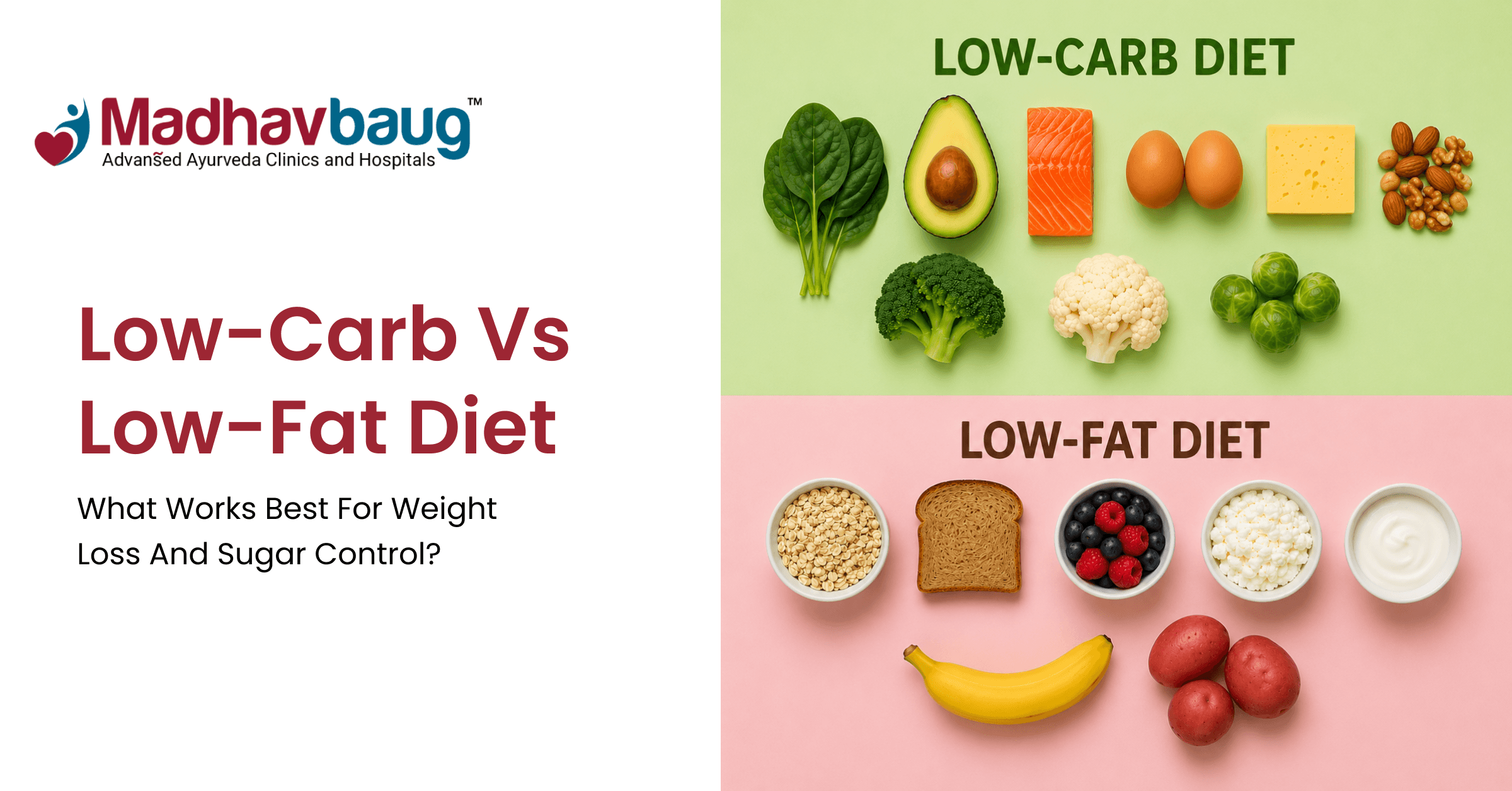

The low-carb vs low-fat debate has been running for decades. Cut the rice and bread, says one side. Ditch the oil and butter, says the other. Both claim results. Both have research behind them.
So which diet is actually better for weight loss?
Here is a clear breakdown so you can make an informed decision for your specific situation.
What Is the Difference Between a Low-Carb Diet And Low-Fat Diet?
These two approaches work through opposite mechanisms and suit different health goals.
Low-carb diet: Restricts carbohydrate intake to below 100 to 150 grams per day, with stricter versions going below 50 grams.
Foods reduced:
- White rice, bread
- Sugar, sweets
- Starchy vegetables
- Packaged snacks
Replaced with proteins and healthy fats from eggs, fish, nuts, seeds, dairy, and non-starchy vegetables.
Low-fat diet: Restricts total fat to below 30 percent of daily calories.
Foods reduced:
- Oils, butter, ghee
- Full-fat dairy
- Fatty meats
- Fried food
Replaced with whole grains, legumes, fruits, vegetables, and lean proteins.
Which One Is Better for Weight Loss?
Both work. The difference is in speed and mechanism.
Short-term:
Low-carb diets produce faster weight loss in the first three to six months due to:
- Glycogen water loss
- Reduced calorie intake
- Higher satiety from protein and fat
Long-term:
Over a year and beyond, the gap narrows considerably. Research consistently shows that adherence matters far more than the specific macronutrient ratio of the diet.
The key distinction in this weight loss diet comparison is visceral fat. Some studies suggest that low carbohydrate diets may help reduce abdominal fat, particularly in individuals struggling with are overweight, obesity or insulin resistance; however, overall fat loss depends on multiple factors, including calorie intake, physical activity and long-term adherence. .This makes them especially valuable for people with abdominal obesity, metabolic syndrome, or insulin resistance.
The best diet for weight loss is ultimately the one you can follow consistently without feeling deprived.
What Are The Benefits Of A Low-Carb Diet?
Low carb diet benefits go well beyond weight loss, particularly for people managing blood sugar:
- Less post-meal spiking
- Lower insulin demand
- Faster belly fat loss
- Better triglycerides
- Reduced hunger
- Improved insulin sensitivity
- Strong diabetes outcomes
For people with insulin resistance or existing diabetes, a low carb diet for diabetes management is one of the most evidence-backed dietary interventions available today.
What Are The Benefits Of A Low-Fat Diet?
Low fat diet benefits are most significant when the diet is built around whole unprocessed foods rather than fat-free packaged products:
- Lower cholesterol
- Gradual weight loss
- High fibre intake
- Culturally sustainable
- Supports heart health
- Suits healthy insulin sensitivity
Within Indian food culture where carbohydrate-rich meals are the norm, a well-constructed low-fat diet built around legumes, vegetables, and whole grains is often easier to maintain long-term.
Which Diet Controls Blood Sugar Better?
Several studies show that reducing carbohydrate intake may improve blood glucose control, particularly in individuals with insulin resistance, prediabetes or type 2 diabetes. Carbohydrates are the primary macronutrient that raises blood glucose after meals. Reducing carbohydrate intake directly reduces the glucose load entering the bloodstream, meaning lower post-meal spikes and reduced insulin demand on an already stressed pancreas.
Potential benefits of a low-carbohydrate approach for blood sugar management:
- Lower fasting glucose
- Less medication needed
- Faster insulin sensitivity
- Better triglycerides
Where low-fat still helps:
A well-constructed low-fat diet built around legumes, vegetables, and fibre-rich whole grains does support blood sugar gradually. The catch is that it requires careful food selection to avoid high-glycaemic carbohydrates that spike blood sugar even within a low-fat framework.
Reducing refined carbohydrates may help improve blood sugar management as part of a balanced dietary approach.
Low Fat vs Low Carb Results: Quick Comparison
| Factor | Low-Carb Diet | Low-Fat Diet |
| Blood sugar control | Faster, more direct | Gradual, food-quality dependent |
| Weight loss speed | Faster short-term | Slower but steady |
| Long-term weight loss | Comparable with adherence | Comparable with adherence |
| Hunger management | Better, protein and fat satiety | Variable |
| Cholesterol impact | Raises HDL, reduces triglycerides | Can reduce LDL if whole food focused |
| Sustainability in India | Culturally challenging | Easier culturally |
| Best for diabetes | Strong evidence | Moderate evidence |
| Best for heart health | Good if food quality is high | Good if whole foods focused |
How Madhavbaug Can Help
At Madhavbaug, dietary guidance is built around the individual. The right approach depends on current blood sugar levels, weight, digestive strength, constitution, and lifestyle. That said, certain principles apply regardless of which dietary framework is followed:
- Cut refined carbs first
- Increase fibre
- Choose quality fats
- Prioritise protein
- Eat warm, fresh food
- Avoid packaged diet foods
A moderately low-carbohydrate approach that reduces refined carbs while retaining fibre-rich whole foods, combined with moderate healthy fat intake, consistently produces the best outcomes for both weight loss and blood sugar control together.
If you have been going back and forth between approaches without sustained results, the issue is usually that the plan is not built around your specific metabolic profile. That is exactly what the team at Madhavbaug is here to work out with you.
Book your consultation at madhavbaug.org.
Frequently Asked Questions
- Which is better for weight loss: low-carb or low-fat?
Both can support weight loss, but low-carb diets may lead to faster short-term results, while long-term success depends on consistency. - Does a low-carb diet help control blood sugar better?
Yes, reducing carbohydrate intake can help stabilise blood sugar levels, especially in people with insulin resistance. - Is a low-fat diet still effective for weight loss?
Yes, a balanced low-fat diet can promote gradual, sustainable weight loss when combined with portion control and activity. - Which diet is easier to follow long term?
The best diet is the one you can maintain consistently, as adherence matters more than the specific approach. - Can I combine low-carb and low-fat principles?
Yes, focusing on whole foods, balanced nutrition, and controlled portions can give benefits of both approaches.




 Locate a Centre
