
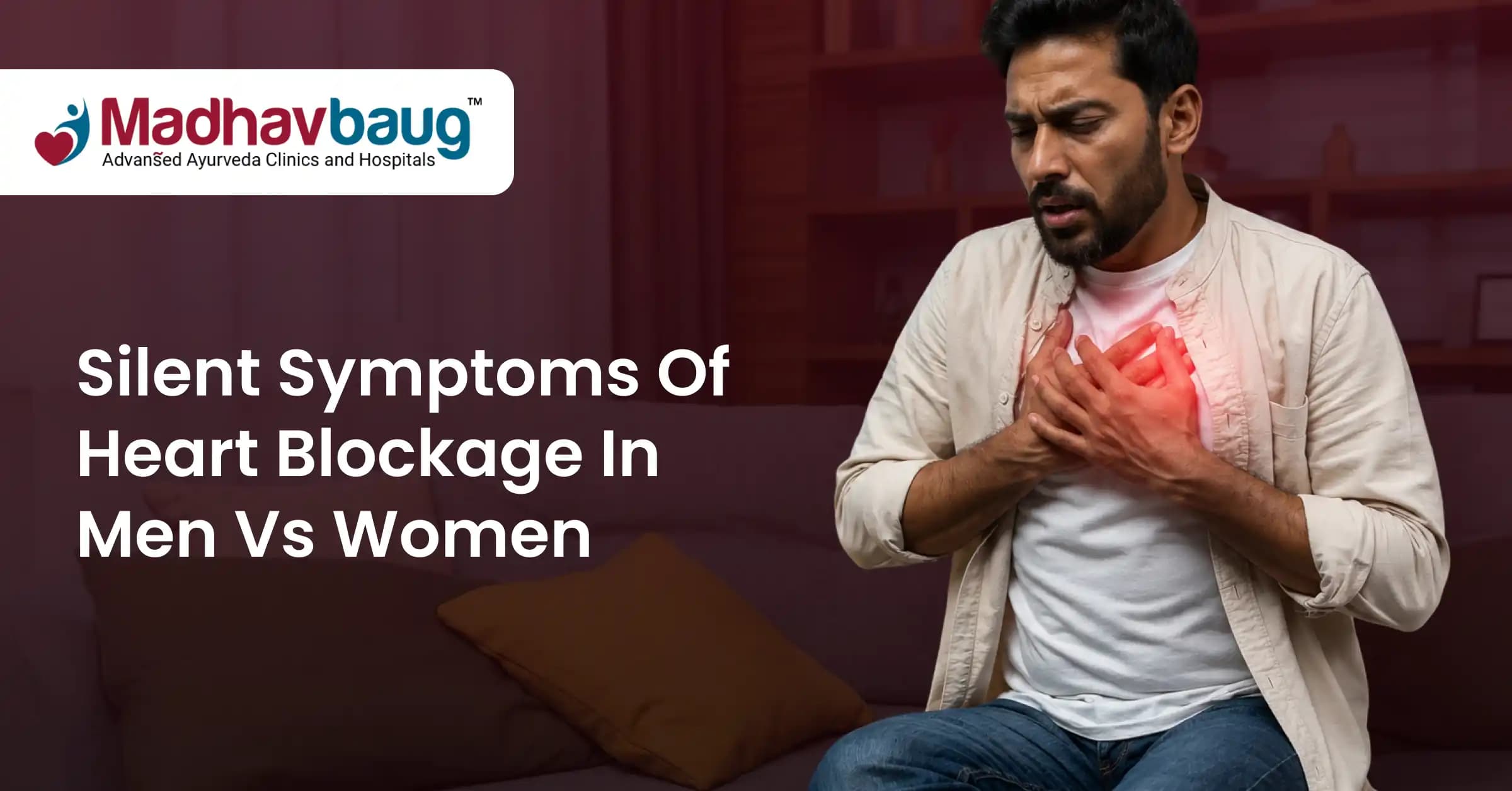

Heart blockage is one of the most dangerous conditions you can have without knowing it. Unlike a sudden dramatic event, blockages in the coronary arteries build up silently over years, gradually restricting blood flow before any obvious symptoms appear. What makes this even harder to navigate is that the symptoms of heart blockage in men and the symptoms of heart blockage in women look completely different from each other.
This difference has led to decades of misdiagnosis, delayed treatment, and preventable deaths, particularly in women. Knowing what to look for in your own body, and understanding how the experience differs between men and women, could be one of the most important things you read.
Worried about your heart? Do not wait for symptoms to become serious. Book a cardiac assessment at Madhavbaug today.
What Is Heart Blockage?
Heart blockage, medically known as coronary artery disease, occurs when fatty deposits called plaque build up inside the walls of the coronary arteries. Over time this narrows the arteries and reduces oxygen-rich blood flow to the heart muscle.
This process can lead to:
- Stable angina: chest discomfort that occurs predictably during exertion
- Unstable angina: chest pain that appears unpredictably, even at rest
- Heart attack: when blood flow is completely cut off to part of the heart
- Heart failure: the heart becomes too weak to pump effectively over time
- Sudden cardiac arrest in severe cases
The most alarming aspect is that blockage can progress for years with no obvious symptoms at all. This is why understanding the silent and atypical warning signs matters so much.
Symptoms of Heart Blockage in Men
Men tend to experience more textbook cardiac symptoms, which makes recognition somewhat easier but also creates a false sense of security. Many men dismiss what they feel as heartburn, muscle strain, or stress until the situation becomes serious.
Classic symptoms in men:
- Chest pain or pressure: a heavy, squeezing, or tightening feeling in the centre or left side of the chest
- Pain radiating down the left arm, into the jaw, or up into the neck
- Shortness of breath during physical activity or at rest
- Cold sweats appearing suddenly without exertion
- Nausea or lightheadedness alongside chest discomfort
- Rapid or irregular heartbeat during episodes of reduced blood flow
Silent symptoms men often ignore:
- Recurring indigestion or heartburn that does not respond to antacids
- Unexplained drop in stamina during activities previously managed easily
- Snoring or sleep apnoea, strongly linked to cardiovascular disease
- Erectile dysfunction, which can be an early sign that blood vessel health is compromised
- Mild jaw or shoulder pain that comes and goes without a clear muscular cause
Men are more likely to have a heart attack at a younger age and more likely to show the classic presentation. They are also more likely to delay seeking help. Many who have had a heart attack report having felt vague warning signs for weeks beforehand that they chose to ignore.
Symptoms of Heart Blockage in Women
The symptoms of heart disease in women are far more varied and far less obvious. This is precisely why heart disease remains chronically underdiagnosed in female patients despite being the leading cause of death in women globally.
Common symptoms in women:
- Extreme and unexplained fatigue that persists for days or weeks, often described as bone-deep exhaustion that sleep does not fix
- Shortness of breath even without physical exertion
- Chest pressure or tightness that feels mild and is frequently mistaken for anxiety
- Nausea, vomiting, or stomach pain without an obvious digestive cause
- Pain or discomfort in the upper back, between the shoulder blades, or in the jaw and neck
- Dizziness, lightheadedness, or a sudden feeling of being unwell
- Sleep disturbances and unusual anxiety in the weeks leading up to a cardiac event
Silent Heart Attack Symptoms in Women
A significant number of women have heart attacks without ever experiencing chest pain. Research has shown that women are more likely to have a heart attack that goes unrecognised because the symptoms resemble other conditions entirely.
Signs a woman may be having a silent heart attack:
- Sudden overwhelming fatigue with no physical explanation
- Flu-like symptoms: sweating, nausea, general malaise
- Jaw pain or toothache-like discomfort with no dental cause
- Upper back pressure between the shoulder blades
- A feeling of doom or intense anxiety appearing suddenly
- Mild chest pressure that feels more like fullness than pain
These symptoms are so nonspecific that women frequently attribute them to stress, menopause, or digestive problems. Healthcare providers have historically been slower to investigate cardiac causes when women present this way, though awareness is improving.
Heart Failure Symptoms to Know
Heart failure can develop as a result of a heart attack. Symptoms include persistent breathlessness, swelling in the legs and ankles, unexplained weight gain from fluid retention, reduced ability to exercise, and a persistent cough that worsens when lying down.
Men vs Women: Symptoms at a Glance
| Symptom | Men | Women |
| Chest pain | Common, often intense | Often mild or absent |
| Fatigue | Present | Prominent, often the main symptom |
| Shortness of breath | Common | Common, even without exertion |
| Jaw or back pain | Less common | More common |
| Nausea | Occasional | Frequent |
| Cold sweats | Common | Common |
| Silent heart attack | Less likely | More likely |
| Seeking help promptly | Less likely | More likely to be dismissed by others |
Ayurvedic and Herbal Treatment for Heart Blockage
Alongside conventional medical care, Ayurvedic treatment for heart blockage offers a complementary approach to supporting heart health and slowing the progression of arterial disease.
Commonly used herbs and formulations:
- Arjuna (Terminalia arjuna): strengthens the heart muscle, supports healthy blood pressure, and improves circulation. One of the most respected cardiac herbs in Ayurveda with modern research validating its traditional use
- Guggul: extensively studied for cholesterol-lowering properties, reduces LDL and raises HDL, and addresses inflammation in arterial walls
- Triphala: supports digestion, reduces oxidative stress, and helps clear metabolic waste from the body’s channels
- Ashwagandha: manages chronic stress, lowers cortisol, and supports healthy blood pressure
- Garlic (Lasuna): associated with reduced cholesterol, decreased platelet aggregation, and improved circulation
These herbs are typically prescribed in personalised formulations by a qualified Ayurvedic physician based on individual constitution and the specific imbalance involved. Herbal treatment for heart blockage works best when integrated with dietary correction and lifestyle changes rather than used as a standalone fix.
How Madhavbaug Can Help
At Madhavbaug, heart blockage is approached as both a cardiac and metabolic health concern. The team does not just treat numbers. They investigate the root cause and build a plan around it.
The team works with you to:
- Run full cardiac diagnostics including ECG, lipid profile, and cardiac markers
- Identify metabolic contributors: insulin resistance, inflammation, hormonal imbalances
- Build a personalised plan combining Ayurvedic Panchakarma therapies, dietary correction, and physiotherapy
- Use non-invasive protocols to support arterial health and reduce visceral fat
- Monitor progress regularly and adjust treatment as your body responds
Whether you are experiencing symptoms or simply want to understand your cardiac risk, early assessment is always better than waiting.
Book your cardiac consultation at madhavbaug.org today.
Frequently Asked Questions
- What are the early signs of heart blockage?
Fatigue, shortness of breath, chest discomfort, indigestion, and reduced stamina are common early signs. - Are women more likely to have a silent heart attack?
Yes, women more often experience atypical or silent symptoms without classic chest pain. - Can a person survive with a 100% blocked artery?
Rarely, if collateral circulation develops, but it is high risk and requires urgent medical care. - How to check heart blockage without angiography?
Tests like ECG, stress test, echocardiography, and CT angiography can help detect blockage. - What are silent symptoms of heart blockage in women?
Fatigue, breathlessness, nausea, back or jaw pain, and anxiety are common silent symptoms in women.





 Locate a Centre
