
 Add to Preferred Sources
Key Takeaways
|
Angioplasty is a procedure that helps open narrow or blocked arteries that supply blood to the heart. A tiny balloon is used to widen the artery and a stent is often put in to help keep it open.
After an angioplasty you may be wondering what changes you need to make to your diet. The good news is that most people can go back to eating their usual home cooked meals such as dal, rice, roti and sabzi once their doctor has given them the green light. You may need to make some changes to how you cook your food, how much you eat and how often you eat certain foods. The first 3 months are a good time to get into healthy eating habits that you can keep for life.
Can I Eat Normally After Angioplasty?
Yes, most people can return to eating normally.
As angioplasty doesn’t involve the stomach or bowel there is generally no need to eat liquid or soft foods. If you feel nauseous or have little appetite then eating light meals such as khichdi, dal rice or idlis may be easier for the first couple of days. Follow the advice you are given when you are discharged.
The stent will have opened your narrowed artery but it won’t stop new fatty build up from forming. This is why your diet still matters after angioplasty.
Diet During the First 3 Months After Angioplasty
There isn’t a specific diet for each month. You will want to eat a healthy heart focussed diet throughout, but your exercise and follow ups will change as you recover.
| Time frame | Diet/Nutritional focus | Important considerations |
| First few days | Eat light home cooked meals to help with low appetite. Ensure you’re drinking enough fluids as advised. | Rest as advised. Monitor the site of the catheter. Take medication as instructed. |
| Rest of first month | Eat regular meals with lots of vegetables, dal and whole grains. Start reducing oil, salt and fried snacks. | Gradually increase light exercise as advised. Attend first follow up. Ask if you can attend cardiac rehab. |
| Second Month | Try to make healthy cooking the norm for your family. Be mindful with portion sizes (especially rice, roti and sweets). | Continue cardiac rehab or supervised exercise plan if referred. Continue with medication. |
| Third Month | Continue with healthy habits. Plan meals for festivals, travelling and eating out. | May have follow up tests such as cholesterol, blood sugar and blood pressure. Talk to your cardiologist about any concerns regarding medication. |
If you’ve had a heart attack or complications then your recovery time may be longer. Follow your individual medical advice and the general steps in our post angioplasty recovery guide.
Best Foods to Eat After Angioplasty
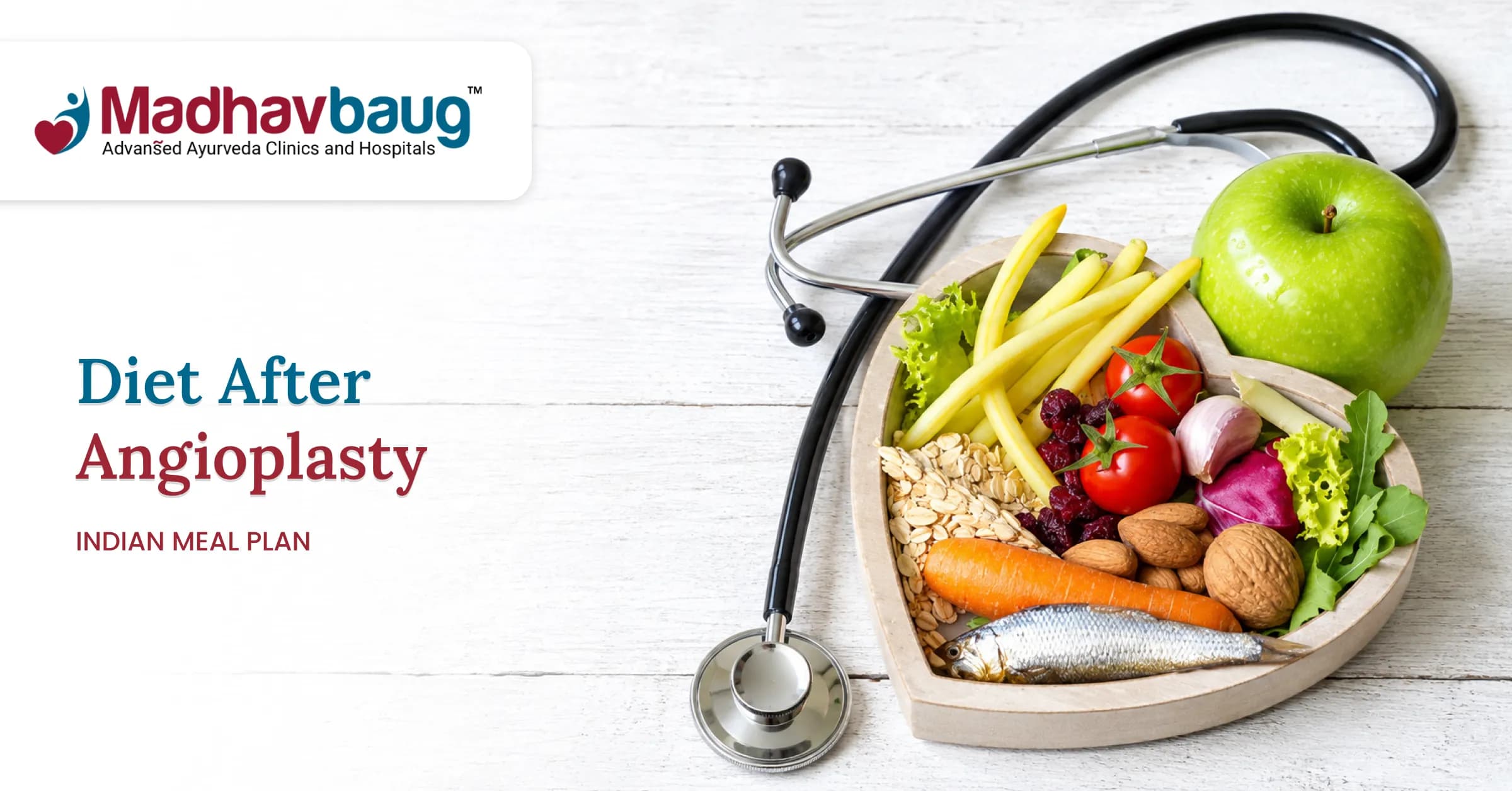
You can eat many Indian foods to create a healthy heart focussed diet. Try to increase the amount of vegetables, fruit, wholegrains, lean protein and liquid plant oils you eat. Reduce salt, added sugar and highly processed foods, according to the American Heart Association.
| Food Group | Examples of Indian foods | Benefits |
| Vegetables | Palak, Methi, Lauki, Bhindi, Beans, Carrots | Provide fibre, vitamins and minerals. |
| Fruit | Guava, Apple, Orange, Papaya, Pear | Provide fibre and nutrients. More filling than juice. |
| Grains | Whole wheat, Jowar/Bajra Roti, Oats, Brown Rice | Provide fibre. Be mindful with portion sizes. |
| Pulses | Moong, Masoor, Rajma, Chole, Chana | Provide plant based protein and fibre. |
| Lean Protein | Fish, Eggs, Skinless Chicken | Provides protein without heavy gravies or frying. |
| Dairy | Low fat Milk, Curd, Small amounts of Paneer | Provides protein and calcium. |
| Nuts/Seeds | Almonds, Walnuts, Peanuts, Flaxseed | Provide unsaturated fats. Should be eaten in small amounts. |
| Oils | Mustard, Groundnut, Rice Bran, Sunflower, Olive Oils | Try to cook with small amounts of oil instead of butter or Vanaspati. |
Fibre will help you feel fuller and manage your cholesterol. Protein will aid your recovery. Try to include foods such as dal, curd, eggs, fish or paneer. Try to replace some of the ghee or butter with measured amounts of plant oils. No food or oil will unblock your artery or keep your stent open.
7 Day Indian Diet Chart After Angioplasty
Below is an example of a 7 day diet containing common Indian foods.
| Day | Breakfast | Lunch | Snack | Dinner |
| Day 1 | Vegetable Poha with peanuts and small bowl of curd | 2 Wholewheat Rotis, Moong Dal, Lauki Sabzi and Cucumber Salad | Guava and a few unsalted Almonds | Vegetable Khichdi with curd |
| Day 2 | Vegetable Oats Upma and small bowl of plain curd | Rajma with small amount of rice and Mixed Salad | Roasted Chana | Wholewheat Roti with Paneer Bhurji and Vegetable Sabzi |
| Day 3 | Idli with Dal rich Sambar | Wholewheat Roti with Masoor Dal and Bhindi Sabzi or Grilled Fish with Vegetables | Buttermilk and Apple | Vegetable Pulao with Dal and Raita |
| Day 4 | Moong Dal Chilla with Mint Chutney | Chole with Wholewheat Roti and Salad | Sprouts Chaat with Tomato and Onion | Bajra Roti with Palak Dal and Vegetable Sabzi |
| Day 5 | Besan Chilla with Vegetables and Curd | Dal with small amount of rice, Cabbage Sabzi and Salad. Non-veg option is Home cooked Chicken Curry with little oil | Papaya and a few Walnuts | Moong Dal and Vegetable Daliya Khichdi with Curd |
| Day 6 | Vegetable Upma and glass of low fat milk | Wholewheat Roti with Mixed Dal and Methi Sabzi | Roasted Chana and Pear | Wholewheat Roti with Lightly cooked Fish Curry or Tofu Bhurji and Sabzi |
| Day 7 | 2 Boiled eggs/Paneer with Wholewheat Toast and Vegetables | Vegetable Khichdi with Curd and Salad | Orange and a few unsalted Peanuts | Jowar Roti with Moong Dal and Vegetable Sabzi |
This is just an example. Portion sizes will vary depending on your appetite, body size, activity, medications and other health conditions. If you have had a heart attack you may need different nutritional support. Please follow individual advice from your doctor/dietician.
Foods to Avoid or Limit After Angioplasty
Try to limit foods which add extra salt, saturated fat or sugar.
- Fried foods – Limit samosas, chips, foods fried in reused oil, excessive ghee, butter, cream, vanaspati and rich bakery items.
- Processed meats – Sausages, salami and ham are often high in sodium and saturated fat.
- Salty processed foods – Pickles, Papads, Namkeen, Instant Noodles and Ready meals can all increase sodium intake.
- Sugary foods/drinks – Minimise having soft drinks, sugary juices and frequent mithai.
- Alcohol and smoking – Please ask your doctor if it’s safe to have alcohol whilst on medication. Avoid smoking.
If you have heart failure or kidney disease your doctor may give you more specific advice regarding salt and fluids.
| Study Highlight In the CORDIOPREV Trial 1002 patients with Coronary Heart Disease followed either a Mediterranean style diet or low fat diet for approximately 7 years. The primary cardiac outcome occurred in 87 patients who followed the Mediterranean diet and 111 who followed the low fat diet. Overall patients following the Mediterranean style diet had more positive outcomes, according to Delgado-Lista and colleagues (2022). |
This study looked at long term cardiac outcomes for patients with existing Coronary Heart Disease. It doesn’t show evidence of following an Indian diet in the first 3 months after an angioplasty. Most patients were male so it wasn’t clearly demonstrated to benefit women. It does show that your overall diet does matter. You don’t need to eat Mediterranean foods. The same principles can be applied to Indian foods with increased vegetables, pulses, wholegrains and healthy oils.
Can I Eat Rice, Roti, Eggs and Dairy After Angioplasty?
You can eat these foods but be mindful of how they are cooked and how much you have.
Rice/Roti – Include a balanced meal with dal, rice and sabzi. Have suitable portion sizes of grains. Choose wholewheat, jowar or bajra rotis often. Don’t add ghee or butter regularly.
Eggs – Boiled or lightly cooked eggs can be included in many healthy heart diets. Speak to your clinician about how often you should have them if required.
Paneer/Curd/Milk – Choose plain curds or low fat milk. Have paneer in moderation.
Chicken/Fish – Choose skinless chicken or fish. Grilled or cooked in light curries.
“ Generally your family won’t need to make a completely separate meal plan. Simply make small changes to the meals you are already eating. Reduce the amount of oil you use for tadka, reduce the amount of salt you’re using and leave the pickle jar out. Add an extra bowl of salad/sabzi to your lunch and dinner. This will help the whole family and makes it easier for the patient to stick to a healthy heart diet.”
– Dr. Bipin Gond, Zonal Medical Head, Madhavbaug
Need advice on how to recover after an angioplasty?
Important Precautions After Angioplasty
Take your heart medications
After having a stent inserted during your angioplasty you will usually be prescribed antiplatelet medications. This helps to reduce the risk of dangerous blood clots forming in your stent. You may also be prescribed a statin and other medications to help with your blood pressure or heart.
The length of time you take these will depend on why you had your angioplasty and your risk of bleeding. Often patients without a high risk of bleeding will be put on two antiplatelet medications for at least 12 months after a heart attack or other acute coronary syndrome. Some patients will need a shorter or modified course of medication, according to Rao and colleagues (2025).
Never stop or alter your medications without speaking to your prescribing cardiologist.
Walking/Exercise
Most patients will be encouraged to start moving as soon as possible following their angioplasty. Often patients will start with gentle walking. How quickly you increase your activity will depend on where the catheter was inserted, your heart function and if you had a heart attack. Follow the advice you are given when you are discharged.
Cardiac rehab is a supervised programme to help you gradually increase activity, adapt your lifestyle and return to normal. Ask your cardiologist if you should attend.
Signs requiring immediate medical attention
If you have any new or ongoing chest pain, severe breathlessness, fainting, uncontrolled bleeding or rapid swelling/pain at the catheter site seek emergency care.
If you are experiencing severe or ongoing chest pain (especially if you’re sweaty, feeling nauseous or short of breath) seek emergency help.
When Your Diet Needs Extra Care
- Diabetes – Work with your care team to plan your carbohydrate portions. An Indian diabetes diet chart can give you meal ideas.
- Kidney disease – You may need to adjust how much sodium, potassium, protein or fluids you have depending on your tests.
- Heart failure – Your doctor may advise you to have specific restrictions on salt/fluids.
- Poor appetite – You may need assistance with getting enough energy and protein.
Don’t reduce potassium or fluids unless advised by your clinician.
| Clinical Insight “Patients with Coronary Stents can require very different meal plans. One may have diabetes and need careful management of their carbohydrates. Another may have kidney dysfunction or be on a medication affecting their potassium. Another may have heart failure and need careful salt and fluid management. Your doctor will consider your medications, kidney function, blood sugar, heart function and how well you are recovering when advising what is best for you.” Dr. Pravin Jayram Ghadigaonkar, BAMS, MD, PhD (Scholar) – Preventive Cardiology 20+ Years of Clinical Experience, Head Medical Operations & Patient Improvement, Madhavbaug |
Healthy Habits for Life After Angioplasty
Your lifestyle after your angioplasty will depend on what healthy habits you create. A healthy heart focussed diet, appropriate exercise, not smoking and medications will all help to reduce your future cardiac risk, according to the 2023 chronic coronary disease guideline.
Continue to attend follow up appointments. Your doctor may check your blood pressure, glucose and cholesterol. Understanding your lipid profile can help you make sense of your results.
How Madhavbaug Can Support You After Angioplasty
At Madhavbaug we will assess and review your medical reports as part of post angioplasty care. Depending on your health and available services we can provide individualised dietary advice, lifestyle advice, appropriate rehab and ongoing monitoring. We may also offer Ayurvedic care under doctor supervision.
This will be alongside your cardiologist’s plan and does not replace your antiplatelet medications, statins or other medications.
Need an individualised plan to help improve your heart health based on your medical reports?
Frequently Asked Questions
What should I eat in the first week after angioplasty?
Once you have been given the green light you can usually return to eating your home cooked meals. If you are feeling nauseous or have a poor appetite then try eating khichdi, dal rice or idlis. Follow your discharge advice.
Can I have tea or coffee after angioplasty?
You can have moderate amounts of tea or coffee. Try to limit how much sugar and cream you use. If you notice palpitations or your doctor has advised you to limit caffeine then follow their advice. Avoid energy drinks.
Can I eat chicken or fish after angioplasty?
Yes! Skinless chicken or fish can provide you with protein. Try to eat grilled, baked or lightly cooked foods.
How much salt can I have after angioplasty?
Avoid adding too much salt, pickles, papads or salty snacks. If you have heart failure, high blood pressure or kidney disease your doctor may advise you to have a specific sodium intake.
Can I climb stairs after angioplasty?
Many people can climb stairs after a short recovery. It will depend on the procedure and whether your catheter was inserted in your wrist/groin. Follow your discharge advice. Don’t rush.
How long should I eat a heart focussed diet after angioplasty?
For the rest of your life! Eating a healthy diet, taking your prescribed medications, exercising and attending follow ups will help reduce your future cardiac risk.
Can I live a normal life after angioplasty?
Many people will return to work, family and normal life after an angioplasty. Some people will take longer to recover. Follow your cardiologist’s advice regarding your medications, exercise and follow up care.
Which fruits are good after angioplasty?
Whole fruits such as guava, apple, orange, papaya and pear are good choices as they provide fibre and nutrients. Choose whole fruit instead of juice as it is more filling. If you have diabetes, keep to suitable portions. If you have kidney disease or have been told to limit potassium, ask your doctor which fruits are suitable for you.
References
American Heart Association (2026) 2026 Dietary Guidance to Improve Cardiovascular Health: Top Things to Know.
Delgado-Lista, J. et al. (2022) ‘Long-term secondary prevention of cardiovascular disease with a Mediterranean diet and a low-fat diet (CORDIOPREV): a randomised controlled trial’, The Lancet, 399(10338), pp. 1876–1885.
Rao, S.V. et al. (2025) ‘2025 ACC/AHA/ACEP/NAEMSP/SCAI guideline for the management of patients with acute coronary syndromes’, Circulation, 151(13), pp. e771–e862.
Virani, S.S. et al. (2023) ‘2023 AHA/ACC/ACCP/ASPC/NLA/PCNA guideline for the management of patients with chronic coronary disease’, Journal of the American College of Cardiology, 82(9), pp. 833–955.

 Locate a Centre

