
 Add to Preferred Sources
Key Takeaways
|
Panchakarma is recognised as a separate area of Ayurveda practice and the World Health Organization has even described the training of panchakarma therapists in its benchmarks for training in Ayurveda (WHO, 2022) but for most people the word still means a spa package or a detox massage that they see on social media.
Many patients get confused when the Ayurvedic doctor suggests panchakarma because nobody explains clearly what the therapies are, how long they take, whether they are painful and whether they are suitable for people who already take tablets for sugar, blood pressure or the heart. Terms like udvartana, basti and vamana also sound heavy to someone who hears them for the first time.
In this blog we explain what is panchakarma treatment, the panchakarma benefits that are described in Ayurveda and seen in studies, the key therapies along with udvartana and udvartana benefits, who panchakarma suits and how Madhavbaug plans it along with diet and lifestyle.
Curious about panchakarma?
What Is Panchakarma?
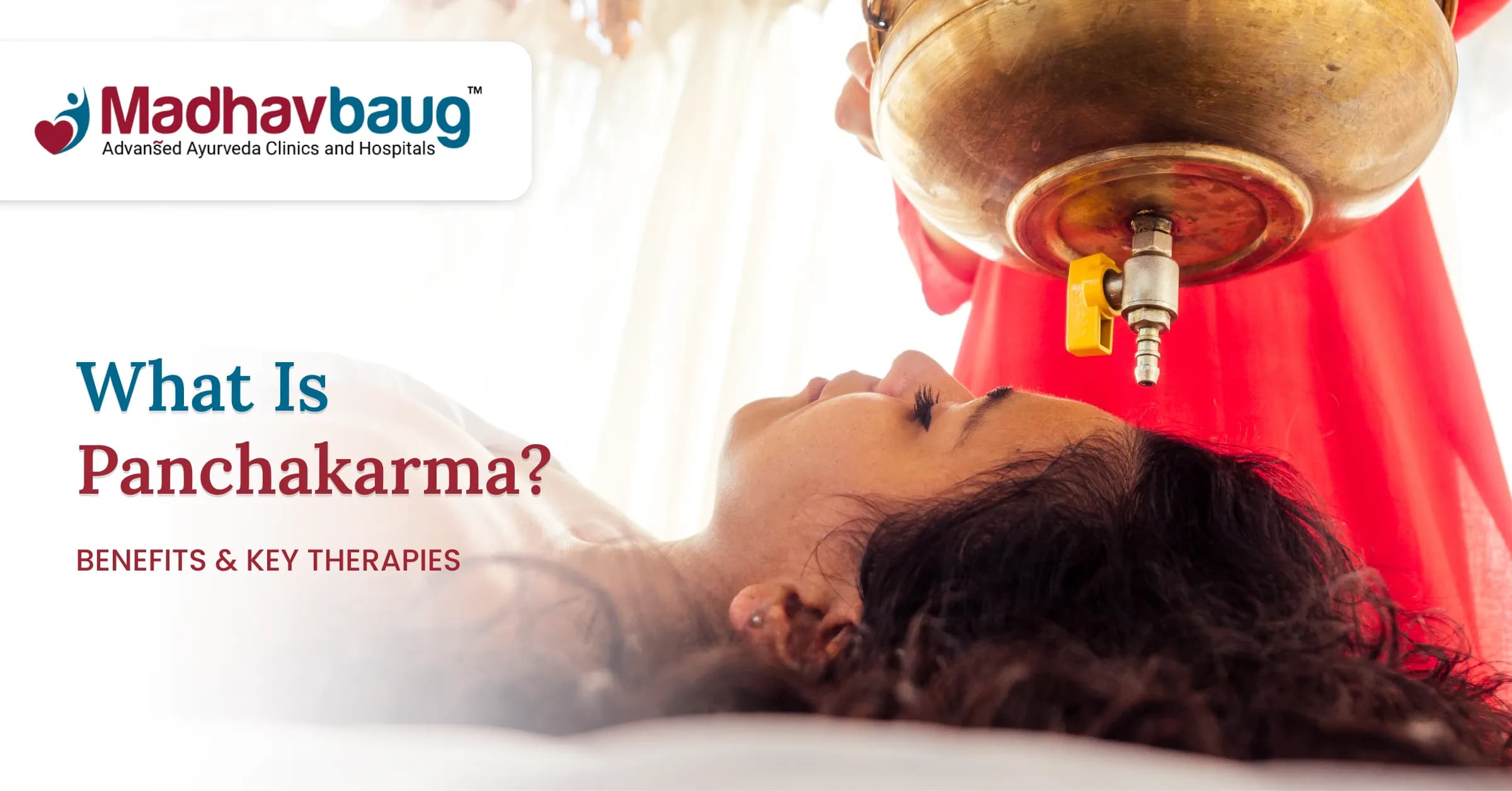
Panchakarma is an Ayurvedic treatment programme in which the body is cleansed and brought back to balance through five main therapies and the word panchakarma itself means five actions in Sanskrit.
According to Ayurveda, unhealthy food, an irregular routine, stress and poor digestion make a waste material called ama that builds up in the body and disturbs the three doshas which are vata, pitta and kapha. Panchakarma is meant to remove this load through the natural routes of the body and this process is called as shodhana or purification.
Panchakarma is not a spa massage or a quick detox. It is planned by an Ayurvedic doctor after checking your prakriti, digestion, strength, age, the season and your medical condition.
The Key Therapies in Panchakarma
The key therapies in panchakarma are done in three stages which are purvakarma or the preparation, pradhana karma or the main therapies and paschat karma or the care after the therapies.
First, the body is prepared with snehana (an oil therapy that is applied from the outside or taken inside as medicated ghee) and swedana (a mild herbal steam or sweating therapy). These two steps soften the built-up stuff and move it towards the gut so that it can be easily excreted and the body can be cleansed.
Now the five main therapies are chosen according to the dosha which is involved. Vamana is a controlled therapeutic vomiting that is mostly advised in kapha disorders and virechana is a controlled purgation with herbs that is mostly advised in pitta disorders. Basti is a medicated enema that is mostly advised in vata disorders and it is considered as the most important therapy of panchakarma. Nasya means herbal oil or powder given through the nose for the head and neck concerns and raktamokshana means removal of a small amount of blood which is done rarely and only by a qualified doctor for selected skin and blood related conditions.
After the main therapies you are advised a light and graded diet called samsarjana krama so that the digestion gets strong again slowly. Along with these, many allied therapies such as abhyanga, shirodhara, hridayadhara and udvartana are also used depending on the concern.
“Patients often ask me if panchakarma means they can stop their tablets. The answer is no. Panchakarma supports the treatment and it never replaces the medicines that your physician or cardiologist has prescribed. What I always tell them is to follow the diet after the therapy as carefully as the therapy itself because that is where most people go wrong.”
– Dr. Priyadarshini Bhalekar, Zonal Medical Head, Madhavbaug
What Is Udvartana?
Udvartana is an Ayurvedic massage in which a dry herbal powder or a herbal paste is rubbed on the body with firm pressure in an upward direction which is against the direction of the hair growth.
It is one of the allied therapies of panchakarma and it is mainly planned in kapha and meda which means fat related concerns. The powders such as triphala, horse gram flour or other herbs are chosen by the doctor according to your condition and a session usually takes around half an hour to 45 minutes. After the massage you may be given a warm steam or a warm water bath to remove the powder.
Udvartana Benefits
Udvartana benefits described in Ayurveda include reduction of excess kapha and fat, better circulation, firmer and cleaner skin, less itching, less heaviness and less stiffness in the body (Jaseena and Anjana, 2020).
Studies say that in people with obesity udvartana along with other measures like yoga and diet has shown reduction in body weight, BMI, and other body measurements (Singh et al., 2019). Nevertheless, these studies are small and use different herbs and methods so udvartana should not be seen as a quick method of weight loss. You should still follow your diet and exercise for any real change.
Udvartana is not done if you have a skin infection, rash, open wound or fever or if you are very weak and in pregnancy it is avoided. If you have varicose veins, a bleeding problem or you take blood thinners make sure you ask your doctor first because the massage is done with pressure.
Benefits Of Panchakarma
Panchakarma benefits are described in Ayurveda as removal of ama, better digestion and metabolism, a lighter body, better sleep, less stress and a better response to the medicines and diet that follow the therapies (Charaka Samhita). Many people also feel relief from stiffness in the joints and the neck and a better skin texture after a proper course.
The research on panchakarma is growing but most of the studies are small and have different methods so no result can be promised. The benefits are seen better when panchakarma is combined with medicines, a proper diet and regular exercise.
Who Is Panchakarma Suitable For?
Panchakarma is suitable for people who have lifestyle-related problems such as weight gain, high cholesterol, high blood sugar, high blood pressure, stress, poor digestion, joint stiffness or skin problems and also for healthy people who want to follow a seasonal cleansing routine under an Ayurvedic doctor.
The therapies are chosen according to your prakriti, the dosha which is involved, your strength and the season so no two persons get exactly the same plan. You should also tell your doctor about your reports, your medicines and any surgery that you have had so that the plan is made safely.
Panchakarma is not advised in pregnancy, severe weakness, acute fever or infection and bleeding disorders. In people with uncontrolled blood pressure or diabetes and in those with heart, kidney or liver disease the plan may be changed or avoided so make sure you do it only under proper medical supervision and never as a do it yourself detox at home.
How Madhavbaug Can Help You With Panchakarma
Many people take panchakarma as a one-time cleansing but the real benefit comes when it is planned along with the right diet, medicines and lifestyle changes.
| Clinical Insight “In my experience, many patients think of panchakarma only as a detox or a massage and they come once and then go back to the same routine. At Madhavbaug, we look at the patient’s prakriti, digestion, reports and overall health before planning any therapy. Panchakarma works best when it is given along with a proper diet, medicines and lifestyle changes and under the supervision of a doctor. If you take medicines for the heart, sugar or blood pressure, do not stop them and tell your Ayurvedic doctor before starting any therapy.” Dr. Pravin Jayram Ghadigaonkar, BAMS, MD, PhD (Scholar) Preventive Cardiology 20+ Years of Clinical Experience, Head Medical Operations & Patient Improvement, Madhavbaug |
Madhavbaug offers comprehensive treatments for chronic diseases which focuses on addressing the root cause of the disease. This approach includes understanding your prakriti and then planning Panchakarma and other ayurvedic therapies that shall be needed according to the individual’s body needs and their own personalised dosha equilibrium.
If you want to know whether panchakarma is right for you, you can visit your nearest Madhavbaug clinic and get your care planned in a proper and organised way.
Looking for guidance on panchakarma?
Frequently Asked Questions
What is panchakarma?
Panchakarma is an Ayurvedic programme in which the body is cleansed and balanced through five main therapies after preparation with snehana and swedana. It is planned by an Ayurvedic doctor according to your prakriti and your health.
What are the five therapies of panchakarma?
The five therapies are vamana, virechana, basti, nasya and raktamokshana. Your doctor chooses the ones that suit your condition and not everyone needs all five.
What are the benefits of the panchakarma process?
The panchakarma benefits described in Ayurveda are better digestion, a lighter body, less stiffness, less stress and better sleep. The studies are small so the results are not guaranteed.
What is udvartana?
Udvartana is a dry herbal powder massage done with firm pressure in an upward direction against the hair growth and it is mainly used for kapha and fat related concerns.
What are the udvartana benefits?
Udvartana benefits include better circulation, smoother skin and less heaviness in the body and small studies show reduction in weight and body measurements when it is combined with diet and exercise.
Is udvartana good for weight loss?
It may help along with a proper diet and exercise but it is not a standalone method of weight loss. Your doctor will tell you what to expect.
How long does panchakarma take?
It is commonly planned for around 7 to 21 days or longer but the exact time depends on your condition and the therapies chosen by your doctor.
Who should not take panchakarma?
Pregnant women, very weak people, those with acute fever or infection and those with bleeding disorders should avoid it and in other medical conditions your doctor will decide whether it is safe.
Can I do panchakarma at home?
No. It should be done only under the supervision of a qualified Ayurvedic doctor and trained therapists in a clinic or a hospital.
Can I stop my medicines during panchakarma?
No, not on your own. It is important to consult your doctor who will decide whether any change is needed in your medicines.
Can I experience weakness after Panchakarma? Are there any risks?
Some people may experience temporary weakness or fatigue after Panchakarma. Before recommending any procedure, an Ayurvedic doctor takes a detailed medical history and assesses your Prakriti, physical strength (Bal Parikshan), bowel habits (Koshtha Parikshan), existing health conditions and any contraindications. Based on this assessment, the doctor suggests a suitable Panchakarma procedure. All Panchakarma procedures are not suitable for everyone. The procedure should be selected according to your health condition and individual needs.
Is Panchakarma performed in every season?
For people with an existing health condition, Panchakarma may be performed in different seasons depending on the disease, the patient’s condition and the doctor’s assessment. For healthy individuals, certain Panchakarma procedures are traditionally recommended during specific seasons (Rutu):
– Vaman: Vasant Rutu (Spring)
– Virechan: Sharad Rutu (Autumn)
– Basti: Varsha Rutu (Monsoon)
References
Agnivesha. Charaka Samhita, Siddhisthana and Sutrasthana, classical Ayurvedic text.
Jaseena C and Anjana R. (2020). Clinical understanding of udvarthana (massage with powdered herbs) and its medohara (anti-obesity) property. International Journal of Health Sciences and Research, 10(4).
Singh S, et al. (2019). A comparative clinical study on udvartana with Shaileyadi Churna and yoga asanas in Sthaulya. Journal of Ayurveda and Integrated Medical Sciences, 4(5).
World Health Organization. (2022). WHO benchmarks for the training of Ayurveda. Geneva, WHO.

 Locate a Centre

