

Key Takeaways
|
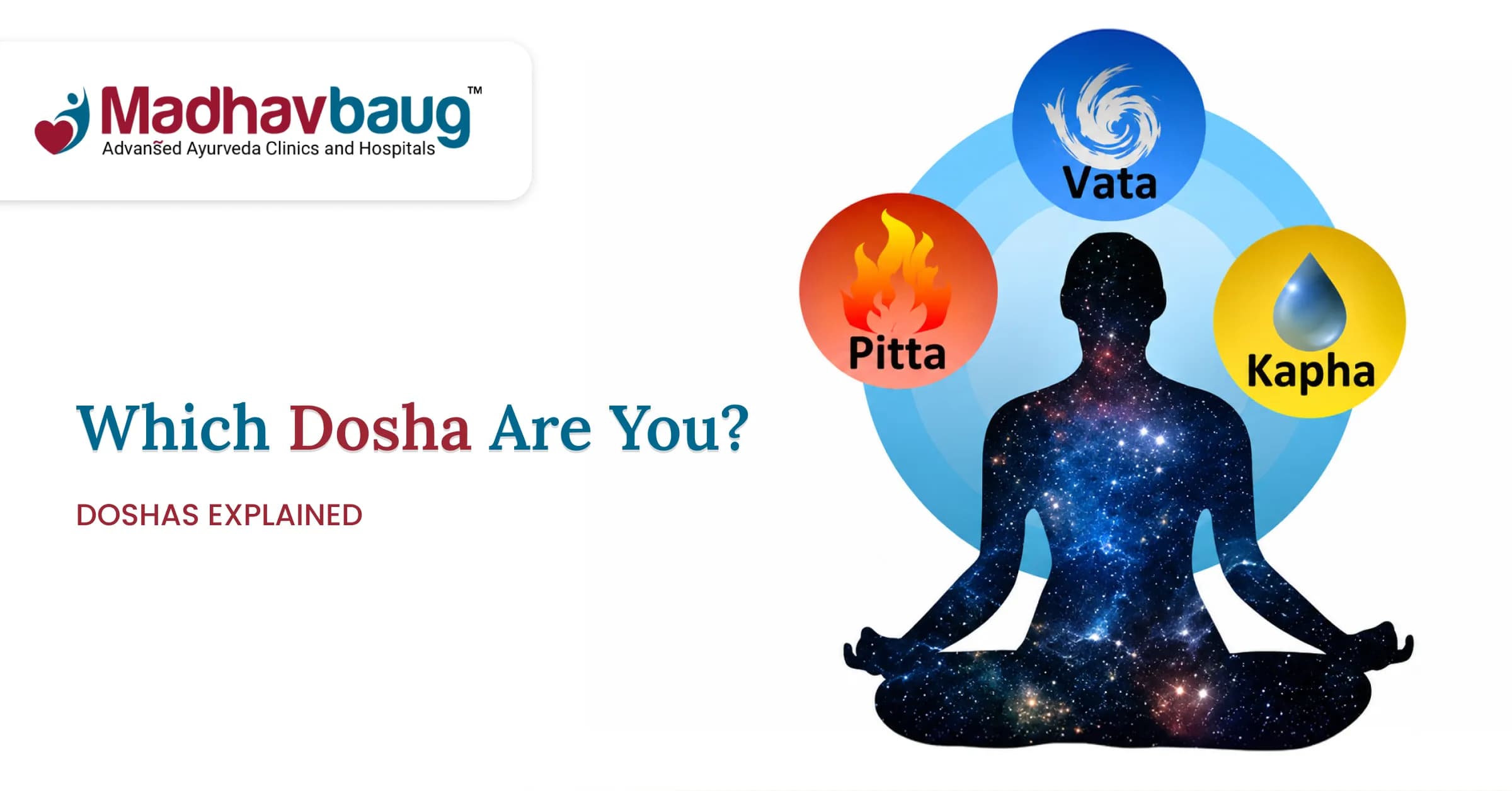
Vata, Pitta and Kapha are the three Doshas described in Ayurveda. Vata is linked to movement in the body. Pitta relates to digestion and heat. Kapha is associated with strength and stability.
Ayurveda uses these three Doshas to understand Prakriti and why people have different physical traits and daily patterns. Your appetite may be strong and regular. You may feel cold easily or struggle with sluggishness after a heavy meal. Ayurveda looks at such patterns when assessing your Prakriti, the constitution you are born with.
You don’t have to be a perfect fit for one category. Everyone has Vata, Pitta and Kapha but the amount differs from person to person. So when Ayurveda looks at your eating habits, sleep patterns and digestion, it takes into account this unique combination. As you learn what each Dosha represents, you can better understand how Ayurvedic practitioners approach your health and daily routine.
What Are Vata, Pitta and Kapha in Ayurveda?
Ayurveda describes three Doshas called Vata, Pitta and Kapha. Together they form the Tridosha concept. Each Dosha has its own qualities and role in the body. Ayurveda explains these qualities through five elements known as Panchamahabhuta. These are Akasha (space), Vayu (air), Agni (fire), Jala (water) and Prithvi (earth).
Vata combines space and air. Pitta combines fire and water. Kapha combines earth and water. These associations help explain how each Dosha functions within the Ayurvedic system.
| Dosha | Associated elements | Role in Ayurveda |
| Vata | Space and air | Movement and communication |
| Pitta | Fire and water | Digestion and transformation |
| Kapha | Earth and water | Structure and stability |
Ayurveda looks at such differences when assessing your Prakriti, or natural constitution. Your habits alone cannot determine your Prakriti. An Ayurvedic practitioner considers your overall pattern before assessing your constitution and possible imbalances.
Vata, Pitta and Kapha are principles used in Ayurveda to interpret bodily functions and health patterns so they cannot be measured through a blood test like glucose or cholesterol.
| What does this mean for you? Ayurveda considers all three Doshas when understanding your natural constitution. You may have a strong appetite but find it difficult to maintain a regular sleep routine. Someone else may sleep well but often feel heavy after meals. |
Researchers have explored whether the Tridosha concept can be studied through modern scientific models. Hankey (2005) examined using systems analysis and proposed possible links between Ayurvedic concepts and functions in living systems. This work offers one way to investigate the theory.
Want to understand your Tridosha body constitution and what it means for your health?
What Is Vata Dosha?
Vata Dosha is the Ayurvedic principle of movement. It is associated with breathing and blood circulation. It also governs bowel movements and the movement of thoughts and sensory information.
Ayurveda describes Vata as dry and light. It is also cold and constantly moving. These qualities help explain how Vata is understood in your body and what an imbalance may look like.
If Vata is dominant in your Prakriti (natural constitution) you may be described as active and quick to respond. But when Vata is considered aggravated you may notice changes in your usual routine. Your appetite may become irregular. You may have trouble sleeping or experience constipation and dry skin.
| How do you know if these changes point to a Vata imbalance? You cannot tell from one symptom alone. Constipation may be linked to low fibre intake or not drinking enough water. Certain medicines and health conditions can cause it too. |
An Ayurvedic practitioner looks at your overall health and symptoms before assessing a possible imbalance.
If Vata is found to be aggravated your practitioner may suggest regular meal times and a more consistent sleep routine. Warm foods and adequate rest may also be recommended based on your needs. The aim is to bring more regularity to your daily habits in a way that suits your health.
What Is Pitta Dosha?
Pitta Dosha governs digestion and transformation in the body according to Ayurveda. In the Charaka Samhita Pitta is associated with digestion, hunger, thirst, body temperature, vision and intellect (Charaka Samhita, Sutra Sthana 18.50 and 12.11).
Pitta is described through qualities such as heat and sharpness. Its role goes beyond digestion alone. Ayurveda also connects Pitta with how you perceive things and how clearly you understand them.
Think about your own appetite. Do you feel hungry at fairly regular times? Do you feel uncomfortable when a meal gets delayed? Ayurveda considers these patterns when assessing your constitution. They are not enough on their own to determine whether Pitta is dominant or aggravated.
The Charaka Samhita also describes Pitta in relation to normal body functions. When Pitta becomes imbalanced within the Ayurvedic framework it may be associated with changes in digestion and heat. If you often experience acidity or a burning sensation you should not assume that Pitta is the cause. These symptoms can have other explanations and may need medical assessment.
What Is Kapha Dosha?
Kapha Dosha is associated with the body’s strength and the way its tissues hold together. In the Charaka Samhita Sutra Sthana 18.51, Acharya Charaka describes Kapha through qualities such as firmness, cohesion, strength and patience. It also supports lubrication within the body.
Kapha is made up of earth and water. In Ayurveda these elements help explain its heavy and stable qualities. You may recognise this idea in the way your body feels after a long period of inactivity or how easily you settle into a familiar routine. These experiences alone do not establish your Kapha constitution.
When Kapha is considered aggravated, Ayurveda looks for an increase in its usual qualities. You may experience a sense of heaviness or notice more sluggishness than usual. Such changes can also have other causes, so they need to be considered alongside your overall health.
Your daily habits are one part of the picture. If you spend most of the day sitting, adding movement that suits your fitness level may be a useful change. An Ayurvedic practitioner can help you decide what else may suit your constitution and health needs. Persistent fatigue or unexplained weight gain should also be assessed by a healthcare professional.
“Kapha is often associated with heaviness, but that does not mean every person who feels heavy has a Kapha imbalance. I pay attention to the pattern behind the complaint, including appetite, activity levels, digestion and changes in body weight. In Ayurveda, these details matter because the same symptom can have different causes in different people.”
– Dr. Cinni Vijay Pandey, Regional Medical Head, Madhavbaug
How Do Vata, Pitta and Kapha Differ From One Another?
Vata, Pitta and Kapha have different roles in Ayurveda. Vata is linked to movement. Pitta governs transformation and digestion. Kapha provides structure and stability. Together they form the Tridosha framework used to understand your constitution and changes in your health.
Ayurveda considers all three in your body. One may be more prominent in your natural constitution while the others continue to perform their own functions. This is why your body type or appetite alone cannot tell you which Dosha predominates.
Vata, Pitta and Kapha Compared
| Dosha | What Ayurveda associates it with |
| Vata | Movement, dryness and lightness |
| Pitta | Digestion, heat and transformation |
| Kapha | Strength, stability and lubrication |
These are traditional Ayurvedic descriptions. They are not medical tests and should not be used on their own to diagnose a health condition.
Tridosha and Their Locations in the Body
In the Ashtanga Hridaya, Sutrasthana 1.7, Vagbhata explains that the three Doshas are present throughout the body but have particular sites of predominance. Vata is associated with the region below the navel. Pitta is associated with the middle region between the heart and navel. Kapha is associated with the upper region above the heart (Vagbhata, Ashtanga Hridaya, Sutrasthana 1.7).
This distinction matters within Ayurvedic assessment. The text does not suggest that each Dosha exists only in one part of the body. Instead it identifies regions where each is considered predominant.
Tridosha by Age, Time of Day and Digestion
One of the useful explanations in the first chapter of the Ashtanga Hridaya is that the Doshas are also associated with different stages of life and different periods of the day and digestion.
The Sanskrit verse states:
Vayo-‘horatri-bhuktanam te ‘nta-madhyadi-gah kramat (Vagbhata, Ashtanga Hridaya, Sutrasthana 1.8).
The verse describes a sequence. Kapha predominates in the beginning phase. Pitta in the middle phase. Vata in the final phase. This pattern is applied to age, the day and night cycle and the process of digestion.
| Context | Kapha | Pitta | Vata |
| Stages of life | Childhood | Adulthood | Old age |
| Time of day | Morning | Midday | Evening |
| Time of night | Early night | Midnight | Late night |
| Stages of digestion | Beginning of digestion | Middle of digestion | End of digestion |
These are the traditional associations described in the text. They are not a way to diagnose an imbalance simply from your age or the time you eat.
What Does Vayohoratribhuktanam Mean?
Vayohoratribhuktanam refers to three contexts in which the Doshas show a pattern of predominance.
- Vaya refers to the stages of life.
- Ahoratra refers to the cycle of day and night.
- Bhuktanam refers to the stages of digestion after eating.
The verse helps explain why Ayurvedic assessment considers more than a single symptom. Your age and daily routine are part of the context. So is the stage of digestion being discussed. In this classical framework the Doshas are understood in relation to one another and to changing conditions (Vagbhata, Ashtanga Hridaya, Sutrasthana 1.8).
| How the Three Doshas Work Together Sage Vagbhata introduces the three Doshas in Sutrasthana 1.6 and explains that they can support the body when in their normal state but cause harm when disturbed. This is the basis of the Ayurvedic distinction between balanced and aggravated Doshas (Vagbhata, Ashtanga Hridaya, Sutrasthana 1.6–7). |
This means Ayurveda does not assess Vata, Pitta and Kapha as three unrelated categories. Your constitution may reflect a combination of all three. The assessment looks at their relative predominance and the pattern of changes in your health.
For example, having a light body build does not by itself establish Vata dominance. Likewise, a strong appetite does not prove Pitta predominance and feeling heavy does not confirm a Kapha imbalance. An Ayurvedic practitioner considers a wider range of features before drawing conclusions about your Prakriti or a possible Dosha imbalance.
What Is Prakriti in Ayurveda?
Prakriti means the natural constitution of a person. Classical Ayurveda holds it to be established at conception and relatively stable throughout life. It is described in terms of the relative predominance of the Vata, Pitta and Kapha.
Prakriti is a combination of features such as body type, eating habits, sleeping habits, skin and hair, heat and cold tolerance and behaviour tendencies. No characteristic alone is sufficient to determine the constitution of a person.
The Ayurveda says there are seven general physical constitutional patterns. They are Vata, Pitta, Kapha, Vata-Pitta, Pitta-Kapha, Vata-Kapha and Sama Prakriti where the three Doshas are described as relatively balanced.
| Clinical Insight “In my 20 years of practice, I have seen that no two people are exactly alike. Even when two people have similar health complaints, their appetite, digestion, sleep and response to food can differ. Ayurveda considers these differences when assessing a person’s Prakriti. This helps us understand the individual better and suggest dietary and lifestyle changes suited to their needs.” Dr. Pravin Jayram Ghadigaonkar, BAMS, MD, PhD (Scholar) – Preventive Cardiology 20+ Years of Clinical Experience, Head Medical Operations & Patient Improvement, Madhavbaug |
How Does Jatharagni Relate to the Three Doshas?
Jatharagni refers to the digestive fire in Ayurveda. Its state is understood in relation to Vata, Pitta and Kapha. In Ashtanga Hridaya, Sutrasthana Chapter 1, Verse 8, Vagbhata describes how the Doshas influence Agni.
The verse reads:
तैर्भवेद्विषमस्तीक्ष्णो मन्दश्चाग्निः समैः समः ॥ ८ ॥
The verse describes four states of Agni. Vata is associated with Vishamagni, Pitta with Tikshnagni and Kapha with Mandagni. When the Doshas are balanced, Agni is described as Samagni (Vagbhata, Ashtanga Hridaya, Sutrasthana 1.8).
Your digestion gives you everyday clues about these patterns. You may notice that your hunger comes at different times or that your appetite changes from one day to the next. Ayurveda associates this kind of irregularity with Vishamagni. If you feel intense hunger and find it difficult to delay a meal, the pattern may be considered in relation to Tikshnagni. If you often feel heavy after eating and have little appetite for your next meal, Ayurveda may assess signs of Mandagni. Samagni describes a more balanced digestive pattern.
These experiences help you understand the Ayurvedic descriptions, but they cannot confirm your Agni type by themselves. Your practitioner will consider your Prakriti, food habits and overall health to understand your digestive pattern.
Understanding Vata, Pita and Kapha Is Only the Starting Point
Vata, Pitta and Kapha offer a traditional Ayurvedic way of interpreting individual differences in body functions and constitution. Prakriti describes the natural constitutional pattern, Vikriti considers the current Dosha state, and Jatharagni adds another perspective on digestion.
If you are living with a chronic health concern and want to explore Ayurvedic care, a consultation can help you discuss your symptoms, health history and treatment needs with a qualified practitioner. At Madhavbaug, a doctor-led assessment can help you understand appropriate care options alongside relevant medical investigations.
Visit your nearest Madhavbaug clinic to discuss your health concerns and receive guidance suited to your individual needs.
Want to understand how Vata, Pitta and Kapha influence your health?
Frequently Asked Questions
What are Vata, Pitta and Kapha in Ayurveda?
Vata, Pitta and Kapha are the three Doshas in Ayurveda. They are associated with movement, transformation, and structure and stability, respectively. Together, they form the Tridosha framework used to understand constitution and health patterns.
Can a person have all three Doshas?
Yes. Ayurveda describes all three Doshas as present in every individual, although their relative proportions differ. The combination is used to describe the person’s Prakriti.
What is the difference between Prakriti and Vikriti?
Prakriti refers to a person’s natural Ayurvedic constitution, while Vikriti describes the current Dosha state in relation to that constitution. Prakriti is considered relatively stable, whereas Vikriti may change over time.
How can I identify my dominant Dosha?
An Ayurvedic practitioner assesses a combination of physical characteristics, digestion, sleep, habits and other individual features. A single symptom or online questionnaire cannot reliably establish your constitution or diagnose a health problem.
What is Jatharagni in Ayurveda?
Jatharagni is the Ayurvedic concept of digestive fire. It is used to understand how food is digested and transformed. Ayurveda describes four broad Agni patterns: Samagni, Vishamagni, Tikshnagni and Mandagni.
Does scientific research support the Tridosha theory?
Research has explored possible relationships between Prakriti classifications and genetic or other measurable characteristics. A 2015 study reported genetic associations in selected Prakriti groups, while a 2025 review identified significant gaps in the validation of assessment tools. More research is needed before the framework can be considered a clinically validated measurement system.
Can Dosha imbalance cause disease?
Ayurveda uses Dosha imbalance to interpret health and disease patterns. However, symptoms such as fatigue, digestive discomfort and unexplained weight changes can have several causes. Appropriate medical evaluation is necessary to identify the cause.
Can I balance my Doshas through food alone?
Diet is one part of Ayurvedic care. Sleep, physical activity, daily routine and individual health needs may also influence recommendations. The appropriate approach depends on the person and should not replace necessary medical treatment.
Should I stop prescribed medicines if my Dosha is imbalanced?
No. Do not stop or change prescribed medicines based on a Dosha assessment. Discuss complementary care with your treating doctor, particularly if you have a chronic medical condition.
References
Vagbhata. Ashtanga Hridaya, Sutrasthana 1.6–8. Classical reference for the Doshas, their predominant locations, their sequence across life, day and digestion, and the four states of Agni. Verse numbering may vary by edition.
Charaka. Charaka Samhita, Sutrasthana 12.11 and 18.49–51. Classical references for the functions of Vata, Pitta and Kapha. Use the edition and translator followed by your editorial team for the final publication.
Hankey, A. (2005). A test of the systems analysis underlying the scientific theory of Ayurveda’s Tridosha. The Journal of Alternative and Complementary Medicine, 11(3), 385–390.
Govindaraj, P., Nizamuddin, S., Sharath, A. et al. (2015). Genome-wide analysis correlates Ayurveda Prakriti. Scientific Reports, 5, 15786.
Venkatesh, A., Johansson, L., Sivanandan, P. V. et al. (2025). Prakriti (constitutional typology) in Ayurveda: a critical review of Prakriti assessment tools and their scientific validity. Frontiers in Medicine, 12, 1656249.



 Locate a Centre

