
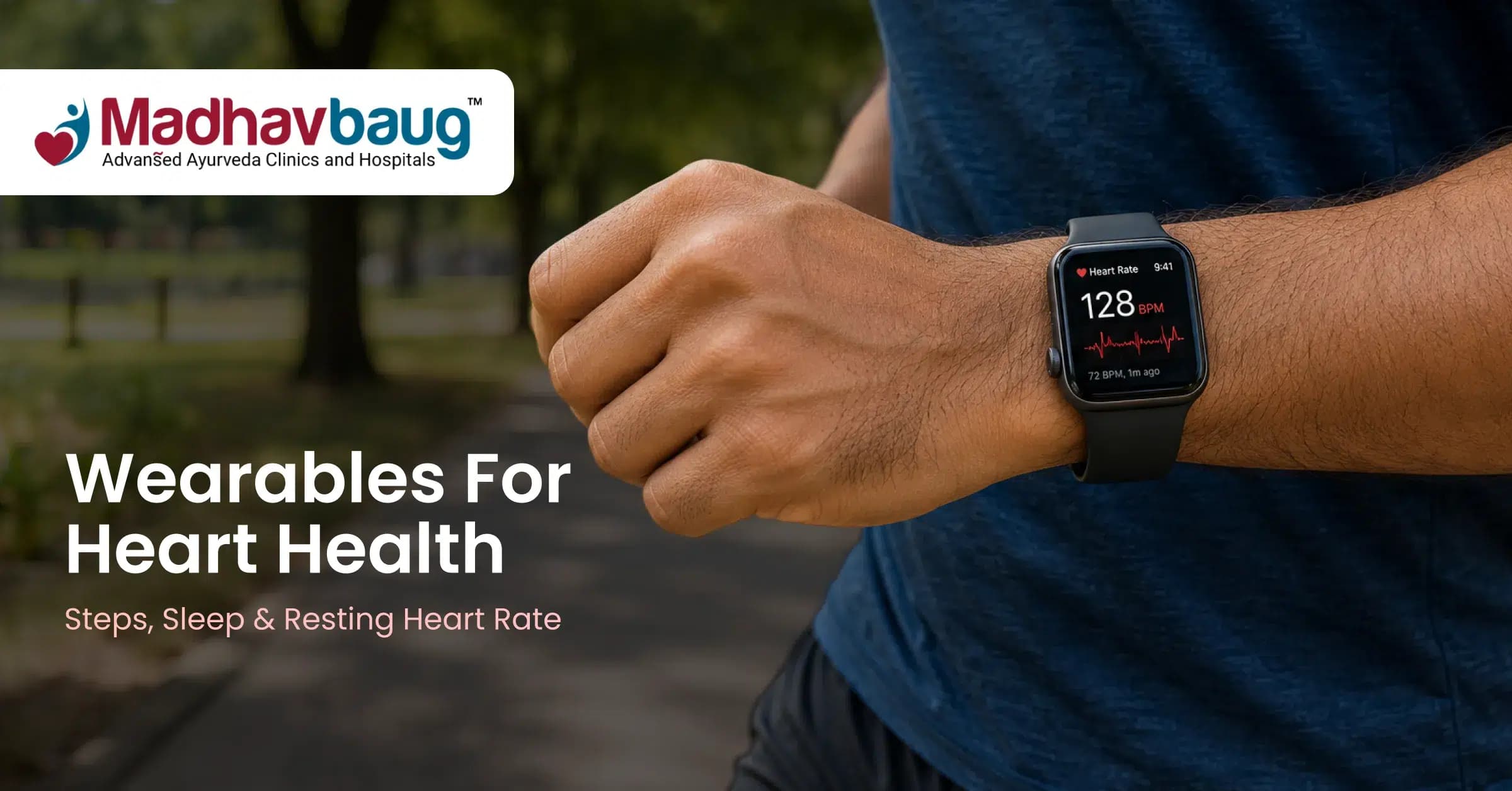

Heart rate (HR) is an important reading which indicates that the heart is functioning properly and may provide an early warning for certain abnormal conditions.
The simplicity of ambulatory heart rate measurement by consumer-grade technology increased interest in heart rate monitoring also in non-clinical applications. Today many regularly used devices have developed this technology, such as Apple watch, Fitbit, Oura Ring, etc. As the use of these devices continues to increase, it is important to understand the physiological and technical aspects, together with the evidence supporting the uses of wearable technology for specific indications.
Wearable Devices for Heart Health
| Device | What it Can Do | What it Cannot Do |
| Smartwatch (Apple Watch, Samsung Galaxy Watch, Garmin, etc.) | Tracks your heart rate all day round, even when you are resting.It also monitors your physical activity and sleep.Notifies you when your heart rate is too high or low. | Unable to diagnose heart disease.The readings can show errors when your body is too wet or sweaty or the device is not too close to the skin. |
| Fitness Band (Fitbit, Mi Band, etc.) | Ability to maintain your daily stepcountTracks daily activity, calories, and heart rate. | Cannot determine underlying heart condition.It estimates the heart rate and is not a reliable reading. |
| ECG Smartwatch | Can note a simple ECG.Ability to detect any changes in heart rate, which can even be shared with a doctor if needed. | Cannot replace traditional hospital ECG tests.Unable to determine every heart condition |
| Medical Wearable Heart Monitor | Heart rate is measured for several days or weeks through continuous monitoring systemCan also notify doctors when the heart rate is irregular. | Cannot be used on a daily basis.Need to be done under medical supervision. |
Notes to Remember:
- Resting heart rate tracker helps you understand how your heart health is changing over time. A sudden change in your normal resting heart rate may be worth discussing with your doctor.
- Your step count for heart health is a simple way to measure how active you are. Walking regularly can support a healthier heart and improve overall fitness.
- Wearable Devices for Heart Health are excellent tools for keeping track of your daily health, encouraging regular exercise, and spotting changes early. However, they do not replace regular medical check-ups or professional diagnosis.
Step Count For Heart Health
Many of us may have taken New Year resolutions to walk 10000 steps every day. Though the 2020 World Health Organization guidelines on physical activity and sedentary behaviour do not include specific thresholds for step counts, studies have shown that walking 1,000 steps every day may reduce the risk of heart disease by 12% to 15% and chances of fatal risks by 8% to 9% (Liu Y, 2022).
Walking for a specific amount of steps every day and keeping a track of it can surely be helpful in order to build a habit. It may not be a complete substitute for exercise and physical activity but can surely be helpful in aiding in reducing the risk of heart diseases like coronary heart diseases, etc., and so wearable devices which help track step count can surely be an advantage for maintaining good heart health.
Resting Heart Rate Tracker
Resting Heart Rate trackers use an important sensor for measuring heart rate called ‘photoplethysmography’ (PPG). It uses light sensors to detect blood volume changes, which helps one track resting heart rate. The increase in quality of PPG sensors has resulted in better heart rate measurement in newer devices which, at rest, are accurate to ECG.
Since this is the heart rate measured when a person is at rest, many studies have given recommended guidelines which help one give reliable readings. A minimum inactivity period of 4 minutes is required for reliable heart rate measurement to calculate accurate resting heart rate. Also, engaging in significant exercise immediately is not recommended. Studies also recommend that the true resting heart rate in a 24-hour cycle be tracked accurately in the early morning between 3 am – 7 am. (Speed, C., 2023)
Irregular Rhythm Alerts
Irregular rhythm detections are alerts that happen when the heart is irregular. They help detect the underlying atrial fibrillation (disruption in the coordinated pumping of blood to the rest of the body). When atrial fibrillation is confirmed, the chances of an underlying heart disease are high, highlighting the need for a medical consultation.
As discussed earlier, the increasing technology and advances in the PPG sensor have started giving accurate irregular heart rhythm detections, but they cannot replace medical supervision. This means devices like Fitband which have PPG sensors, can give irregular rhythm alerts; however, the main underlying heart condition can only be assessed through ECG and a proper medical consultation. To understand if your heart rhythm is regular or not, with a wearable device, book a consultation with Madhavbaug and know more about it.
Wearable Device and Madhavbaug
Madhavbaug uses wearable devices and heart rate monitoring to keep a real-time continuous check on a patient’s cardiovascular health and vital signs. This data is integrated into their digital ecosystem to enable doctors to proactively modify holistic treatments, diet regimens and physical therapies to reverse chronic heart disease.
Madhavbaug integrates wearable tech (and at-home vital monitors) through two primary platforms:
mibPULSE App: A health-monitoring application that gathers continuous heart rate, blood pressure, and oxygen data.
Power MAP: A centralised medical analytics platform used by physicians. It aggregates this real-time data to identify abnormalities, send critical alerts, and track historical trends to monitor a patient’s disease reversal progress.
Madhavbaug provides non-invasive cardiac care with modern technology and traditional Ayurvedic practices like Panchakarma detox therapies and customised diets.
In Ayurveda the pulse (Nadi) and its rate is primarily governed by the balance of the bodily humours (Doshas).
Madhavbaug’s Treatment for Heart Diseases
Madhavbaug follows that heart blockages and metabolic disorders are due to the accumulation of Ama (toxins) caused by an improper lifestyle. By tracking heart rate and physical activity levels continuously, physicians can ensure patients are maintaining the active lifestyle needed to stoke the digestive fire (Agni) and prevent future toxin buildup. Their holistic care model combines lifestyle modification to build a stronger heart and restore metabolic health . Wearables can objectively track improvements in cardiovascular endurance and reductions in resting heart rate over time, so doctors can assess the effectiveness of these treatments.
Read about their treatment in detail here:
https://madhavbaug.org/reversal-ayurvedic-treatment-for-heart-blockage/
Final Thoughts
Madhavbaug follows an integrated approach which includes Ayurvedic principles and modern diagnostic tools. Wearable devices are a technology that is implemented in order to continuously monitor the patients. This not only helps the doctor keep a record of your regular vitals but also helps you trust the doctor for the fact that they can give reliable treatment based on your continuous monitoring rather than only one clinic reading. To start your journey today, book a consultation with Madhavbaug.
Frequently Asked Questions
Q.1 What are the wearable devices for cardiology?
- Wearable devices, such as the Apple Watch Series 9, Fitbit Charge 6, Garmin vívosmart 5, and Oura Ring Gen3, emerged as suitable devices to measure cardiovascular function in community-dwelling adults.
Q.2 Do cardiologists recommend smartwatches?
- While smart watches offer useful heart monitoring capabilities, they do have some limitations. Wearable devices are not as accurate as standard 12-lead ECGs. Limited in how well they can detect certain heart conditions.
Q.3 What is the new wearable technology for 2026?
- The 2026 wearables landscape is defined by a shift toward specialised AI hardware, prolonged battery life, and women’s health. Top highlights include the AI-equipped Omi and Looki lifeloggers, the Peri patch for perimenopause tracking, and the Polar-powered Moto Watch.
Q.4 Can Fitbit detect heart problems?
- Fitbit devices can detect signs of atrial fibrillation (AFib) and irregular heart rhythms through passive monitoring and on-demand ECG. However, they cannot diagnose a heart attack or structural heart diseases
Q.5 What is the biggest drawback of wearable technology?
- The main disadvantages include privacy concerns, data security risks, employee distraction, technical limitations like battery life, and integration challenges with existing systems.
References
- Alugubelli, N., Abuissa, H. and Roka, A., 2022. Wearable devices for remote monitoring of heart rate and heart rate variability—what we know and what is coming. Sensors, 22(22), p.8903.
- Stens, N, Bakker, E, Mañas, A. et al. Relationship of Daily Step Counts to All-Cause Mortality and Cardiovascular Events. JACC. 2023 Oct, 82 (15) 1483–1494.
https://doi.org/10.1016/j.jacc.2023.07.029
- Liu Y, Sun Z, Wang X, Chen T, Yang C. Dose-response association between the daily step countand all-cause mortality: a systematic review andmeta-analysis. J Sports Sci. 2022;40:1678–1687.9.
- Jayedi A, Gohari A, Shab-Bidar S. Daily stepcount and all-cause mortality: a dose-responsemeta-analysis of prospective cohort studies.Sports Med. 2022;52(1):89–99.10.
- Lefferts EC, Bakker EA, Carbone S, Lavie CJ,Lee DC. Associations of total and aerobic stepswith the prevalence and incidence of frailty inolder adults with hypertension. Prog CardiovascDis. 2021;67:18–25.
- World Health Organization. WHO guidelines onphysical activity and sedentary behaviour. Geneva,Switzerland: World Health Organization; 2020.
- Wallen MP, Gomersall SR, Keating SE, Wisloff U, Coombes JS. Accuracy of Heart Rate Watches: Implications for Weight Management. PloS one. 2016;11(5):e0154420. pmid:27232714
- Speed, C., Arneil, T., Harle, R., Wilson, A., Karthikesalingam, A., McConnell, M. and Phillips, J., 2023. Measure by measure: Resting heart rate across the 24-hour cycle. PLOS Digital Health, 2(4), p.e0000236.




 Locate a Centre
