

Key Takeaways
|
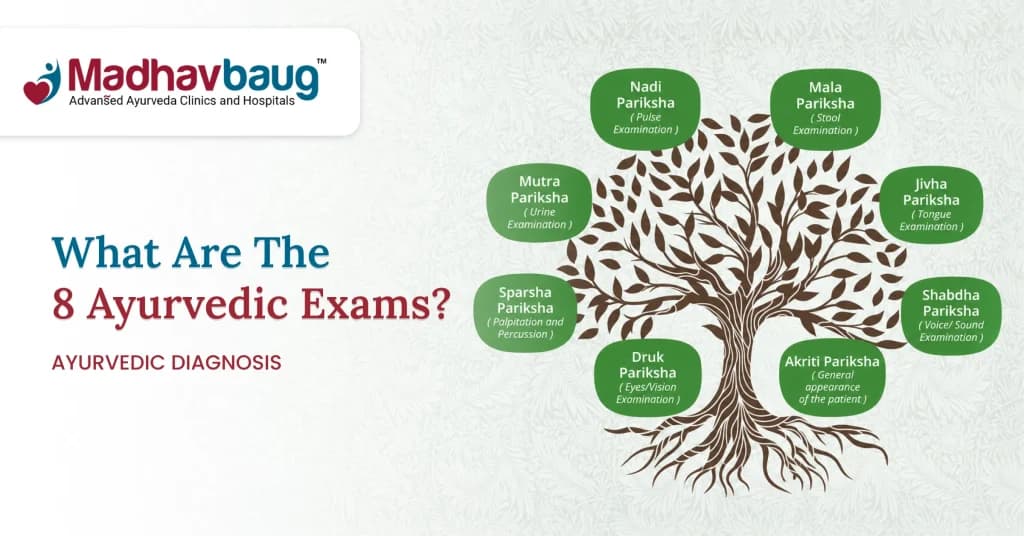
Nadi Pariksha is an Ayurvedic method of examining the pulse to understand a person’s health condition. The physician feels the pulse at the wrist and observes its qualities according to traditional Ayurvedic principles. It is one of the eight examinations included in Ashtavidha Pariksha.
When you go for a Nadi Pariksha, your doctor will usually ask about how you have been feeling. You may be asked about your digestion, sleep, appetite or bowel habits. Your doctor may also ask about your food and daily routine. Once the pulse is examined, these details help the physician understand the findings in relation to your health.
What Is Nadi Pariksha in Ayurveda?
Nadi Pariksha is the Ayurvedic examination of the pulse. It is one of the traditional methods used to assess a person’s health and one of the eight examinations included in Ashtavidha Pariksha.
Have you ever noticed that an Ayurvedic doctor may spend some time feeling your pulse before asking you more questions? During Nadi Pariksha, the physician uses the fingers to examine the pulse at the wrist. The way the pulse feels under the fingers is observed carefully.
Your doctor may pay attention to how the pulse moves and whether it feels steady, strong, soft or changing. Ayurveda describes these pulse qualities in relation to Vata, Pitta and Kapha. The physician then looks at what you are experiencing in your everyday life.
“When I examine the pulse, I also listen to what the patient tells me about their health. The pulse gives me one set of observations, while their symptoms, daily routine and health history give me the rest of the picture. Looking at these together helps me understand the patient better.”
— Dr. Bipin Gond, Zonal Medical Head, Madhavbaug
For example, you may have been dealing with poor sleep, changes in appetite or digestive discomfort for some time. You may also have noticed changes in your energy levels. These details become useful when your doctor interprets the pulse findings.
Classical Ayurvedic texts describe different pulse characteristics and their association with Vata, Pitta and Kapha patterns. (Giri Kumar et al., 2019; Tiwari & Dhakad, 2022)
This is what makes Nadi Pariksha different from simply counting your pulse rate. The examination looks at the quality of the pulse and connects that observation with the overall lifestyle of the patient.
Want to understand your health through Nadi Pariksha?
How Does Nadi Pariksha Work?
During Nadi Pariksha, you sit comfortably while the Ayurvedic physician examines the pulse at your wrist. The doctor uses the fingers to feel the pulse and observes how it moves under the skin.
You may notice the physician changing the pressure of the fingers during the examination. This helps them observe different qualities of the pulse. Ayurveda describes these qualities using specific terms.
| Ayurvedic term | What the doctor observes | Simple meaning |
| Gati | Movement of the pulse | How the pulse moves under the fingers |
| Vega | Speed of the pulse | How fast or slow the pulse feels |
| Tala | Rhythm of the pulse | Whether the pulse feels regular and steady |
| Bala | Strength of the pulse | How strong or weak the pulse feels |
| Kathinya | Consistency of the pulse | Whether the pulse feels firm or soft |
Your doctor looks at these qualities together. One pulse characteristic on its own does not give the complete picture. For a complete diagnosis, the physician also considers the five-step disease process called Nidana Panchaka along with what you have been experiencing and may ask about your digestion, sleep, appetite, energy and daily routine.
This makes the examination more personal. The pulse findings are understood in the context of your health and the symptoms you have been experiencing.
What Does Nadi Pariksha Tell You?
When your Ayurvedic doctor examines your pulse, they are looking at more than how fast it beats. In traditional Ayurveda, the feel and movement of the pulse are studied for patterns linked with Vata, Pitta and Kapha. Your doctor then considers these observations along with what you have been experiencing in your daily life.
Vata Nadi
If your Ayurvedic doctor finds a pulse pattern traditionally associated with Vata, the movement is described as Sarpa, meaning snake-like.
Think of the way a snake moves in a curving path. Traditional Ayurvedic descriptions use a similar idea for the Vata pulse. It is associated with a moving and changing quality.
You may be experiencing things such as disturbed sleep, irregular digestion or changes in your energy when your doctor is assessing a Vata-related pattern. These symptoms are considered along with the pulse findings to understand your overall health picture. (Giri Kumar et al., 2019)
Pitta Nadi
The pulse associated with Pitta is traditionally described as Manduka, meaning frog-like.

The comparison comes from the way the pulse is said to feel as if it is moving or jumping under the fingers. Pitta symptoms are traditionally linked with heat and transformation in the body.
During your consultation, your doctor may also ask about your appetite, digestion, body heat or other changes you have noticed. These details help the physician interpret the pulse finding in the context of your health. (Giri Kumar et al., 2019)
Kapha Nadi
Kapha is traditionally associated with stability and steadiness. Its pulse is described as Hamsa, meaning swan-like.

The movement is traditionally considered slower and more steady under the fingers. Your doctor may look at this quality along with your energy, digestion, sleep and other health concerns before forming an Ayurvedic assessment regarding the Kapha imbalance. (Giri Kumar et al., 2019)
These descriptions come from the traditional Ayurvedic understanding of Nadi Pariksha. They help an Ayurvedic physician interpret the pulse as part of a wider health assessment. They should not be taken as direct equivalents of modern measurements such as heart rate or blood pressure.
What Can Nadi Pariksha Help an Ayurvedic Doctor Understand?
When your doctor examines your pulse, they are trying to understand where your health stands at that point in time. The pulse findings are considered along with your symptoms, daily habits and other details you share during the ayurvedic consultation.
| What your doctor looks at | What it means in your Ayurvedic assessment |
| Prakriti | Your natural constitution. Pulse findings may give your doctor clues about your individual constitution along with other observations. |
| Vikriti | Your current state of health. Your doctor looks for changes from your usual balance and considers these findings along with your present symptoms. |
| Dosha patterns | Traditional pulse examination looks for patterns associated with Vata, Pitta and Kapha. Your doctor considers these findings together with your health history and symptoms. |
| Overall health pattern | Your pulse is one part of the consultation. Your doctor may also ask about digestion, appetite, bowel habits, sleep, stress, food and physical activity. |
You may wonder why your doctor asks so many questions after checking your pulse. A change in digestion or sleep may give useful context to what they have felt during the examination. Your food habits and daily routine can also help them understand what may be affecting your current state of health.
Nadi Pariksha is therefore best understood as part of a personalised Ayurvedic assessment. Your doctor brings together the pulse findings with your symptoms and everyday health patterns to understand you as an individual.
How Is Nadi Pariksha Performed?
Nadi Pariksha usually starts with a few questions about your health. Your Ayurvedic doctor may ask about the problem you have been facing, your digestion, appetite, sleep, bowel habits, food and daily routine. The doctor then checks your pulse at the wrist by gently placing the fingers over it.
| Your health concerns ↓ Your daily routine ↓ Pulse examination ↓ Pulse qualities are observed ↓ Findings are understood with your symptoms |
The pulse examination is done by touch. The physician observes how the pulse feels and moves under the fingers. Traditional Ayurvedic practice gives importance to different qualities of the pulse while assessing Vata, Pitta and Kapha patterns. Nadi Pariksha is also understood alongside broader Ayurvedic examination methods such as Trividha Pariksha and Dashavidha Pariksha, which help the physician assess different aspects of a person’s health.
What you tell your doctor also matters during this examination. For example, if you have been having poor sleep or digestive problems, your doctor may consider these details while looking at the pulse findings.
This is how a Nadi Pariksha consultation usually moves from a conversation about your health to pulse examination and then to an Ayurvedic assessment.
Is Nadi Pariksha Enough for Ayurvedic Diagnosis?
Nadi Pariksha is one part of Ayurvedic assessment. It gives your doctor information about the pulse and its traditional patterns. Your symptoms, health history and other examinations are also considered during your assessment.
When you visit an Ayurvedic doctor, you may be asked about your digestion, sleep, appetite, bowel habits, food habits and daily routine. Your doctor may also ask about any existing health conditions and changes you have noticed recently.
Nadi Pariksha is one of the eight examinations described under Ashtavidha Pariksha. The other examinations look at urine, stool, tongue, voice, touch, eyes and physical appearance.
Your Ayurvedic physician may also consider your Prakriti, your natural constitution, and Vikriti, your current state of health. These details help your doctor understand your health from different aspects.
For chronic conditions such as diabetes, heart disease, obesity or hypertensive disorders, your doctor may recommend blood tests, imaging or other investigations when needed. These provide measurable information that can be considered alongside your Ayurvedic assessment.
| Clinical Insight “In my 20 years of clinical practice, I have found that a patient’s pulse is one part of the larger clinical picture. Nadi Pariksha can offer useful Ayurvedic insights, but I always consider it along with the patient’s symptoms, health history and appropriate medical investigations. Looking at these findings together gives us a better understanding of the person’s health.” Dr. Pravin Jayram Ghadigaonkar, BAMS, MD, PhD (Scholar) – Preventive Cardiology 20+ Years of Clinical Experience, Head Medical Operations & Patient Improvement, Madhavbaug |
Nadi Pariksha and Modern Pulse Examination
When you visit a modern doctor, checking your pulse is a routine part of a physical examination. Your doctor may look at your pulse rate, rhythm and strength to understand how your heart and circulation are functioning.
Nadi Pariksha looks at the pulse through a different traditional Ayurvedic framework. The Ayurvedic doctor observes how the pulse feels and moves and interprets these qualities in relation to Vata, Pitta and Kapha.
Research reviews have examined whether some of these traditional pulse observations can be studied alongside measurable pulse parameters. The relationship between traditional Nadi Pariksha findings and modern physiological measurements still needs further research. (Giri Kumar et al., 2019).
Who Can Consider Nadi Pariksha?
You can consider Nadi Pariksha if you want to understand your health from an Ayurvedic perspective. At Madhavbaug, your doctor may include Nadi Pariksha during a health consultation based on your symptoms and health needs.
You may discuss it with your doctor if you have concerns about digestion, sleep, low energy, weight, stress or a long-standing health condition. Our doctor will also ask about your health history and daily habits before deciding how to assess your condition.
If you already have a medical diagnosis or take regular medicines, tell your Madhavbaug doctor about them. Visit your nearest Madhavbaug clinic and your doctor can then decide whether you need any additional examinations or medical tests along with the Ayurvedic assessment.
Frequently Asked Questions
What is Nadi Pariksha in Ayurveda?
Nadi Pariksha is the Ayurvedic examination of the pulse. The physician feels the pulse and observes its qualities as part of Ayurvedic health assessment.
What is Nadi Parikshan?
Nadi Parikshan is another term used for Nadi Pariksha. Both refer to Ayurvedic pulse examination.
What is pulse diagnosis in Ayurveda?
Pulse diagnosis in Ayurveda refers to Nadi Pariksha. It involves examining the pulse through touch and interpreting its qualities according to Ayurvedic principles.
What are Vata Pitta and Kapha pulses?
Ayurvedic texts describe different pulse movements associated with Vata, Pitta and Kapha. Traditional comparisons include Sarpa for Vata, Manduka for Pitta and Hamsa for Kapha.
Who is a Nadi Vaidya?
A Nadi Vaidya is an Ayurvedic physician or practitioner experienced in examining and interpreting the pulse according to Ayurvedic principles.
Is Nadi Pariksha part of Ashtavidha Pariksha?
Yes. Nadi Pariksha is one of the eight examinations included in Ashtavidha Pariksha.
References
Giri Kumar, P.V., Deshpande, S. and Nagendra, H.R. (2019). Traditional practices and recent advances in Nadi Pariksha: A comprehensive review. Journal of Ayurveda and Integrative Medicine, 10(4), 308–315.
Tiwari, Y. and Dhakad, H.S. (2022). Nadi Pariksha: An ancient Ayurvedic method of diagnosis and prediction. Journal of Ayurveda and Integrated Medical Sciences, 7(3).



 Locate a Centre

