

Key Takeaways
|
Stage 1 hypertension is when the blood pressure is above the normal range. Whether medication is needed depends on your overall cardiovascular risk, other health conditions and repeated blood pressure measurements, not on a single reading. It’s also not the kind of reading that needs a prescription on the spot. So what are you actually supposed to do with it? Here’s what Stage 1 hypertension means, how doctors decide whether you need more than lifestyle changes, which changes are actually backed by evidence, how a supervised Ayurvedic approach helps, and when it’s time to consider treatment beyond lifestyle alone.
What is Stage 1 Hypertension?
Stage 1 hypertension is defined as a systolic reading of 130-139 mmHg or a diastolic reading of 80-89 mmHg (Whelton et al., 2018). This threshold came from the 2017 American College of Cardiology and American Heart Association guidelines, which lowered the bar for what counts as high blood pressure from the older 140/90 mmHg cutoff.
| Category | Blood Pressure Reading |
| Normal | Below 120/80 mmHg |
| Elevated | 120-129 systolic, below 80 diastolic |
| Stage 1 Hypertension | 130-139 systolic or 80-89 diastolic |
| Stage 2 Hypertension | 140/90 mmHg or higher |
Stage 1 hypertension is defined as a systolic reading of 130-139 mmHg or a diastolic reading of 80-89 mmHg. The 2017 ACC/AHA guideline used lower blood pressure thresholds than some earlier guidelines. Blood pressure definitions and treatment thresholds may vary across clinical guidelines.
This lower threshold means a lot more people now have Stage 1 hypertension than they would have a decade ago. It doesn’t mean all of them need medicine. It means this group needs a closer look to figure out who does, and so preventing high blood pressure becomes important before looking for medicine.
Does Everyone at Stage 1 Need Medicine?
No. Current guidance is clear that the decision isn’t based on the blood pressure number alone. For adults with Stage 1 hypertension and a low 10-year cardiovascular risk and no existing heart disease, diabetes, or chronic kidney disease, the recommended starting point is lifestyle change, not medicine. (Jones et al., 2021)
Where you land depends on a risk calculation. Someone with Stage 1 hypertension who is otherwise young and healthy is treated very differently from someone with the same reading who also has diabetes or an existing 10-year cardiovascular risk above 7.5%. In the second case, medication alongside lifestyle changes may be recommended from the start, particularly when a person has cardiovascular disease, diabetes, chronic kidney disease, a previous stroke, or a 10-year PREVENT-CVD risk of 7.5% or higher. (American Heart Association, 2025).
“A blood pressure number by itself doesn’t tell the whole story. Two patients can have the exact same reading and need completely different plans because their overall risk isn’t the same. That’s where we spend the most time working through in that first consultation.”
— Dr. Priyadarshini Bhalekar, Zonal Medical Head, Madhavbaug
If you’ve been told you have Stage 1 hypertension, a consultation can help you understand your actual risk level and what that means for your treatment plan.
Which Lifestyle Changes Improve Hypertension?
Lifestyle changes for stage 1 hypertension include small, consistent changes to diet, physical activity, sleep and daily habits, which can make a meaningful difference to blood pressure. Simply being told to “eat healthier” is not enough. The specific changes you make matter, and research has measured how different lifestyle interventions can affect blood pressure and naturally help reduce blood pressure.
| Lifestyle Change | Typical Blood Pressure Effect |
| DASH diet alone | Systolic down about 7.6 mmHg, diastolic down about 4.2 mmHg |
| DASH diet + weight loss + exercise combined | Systolic down about 16.1 mmHg, diastolic down about 9.9 mmHg |
| Sodium reduction (about 2,300 mg/day less) | Systolic down about 7.7 mmHg, diastolic down about 3.0 mmHg |
| Mediterranean diet | Systolic down about 3.0 mmHg, diastolic down about 2.0 mmHg |
Source: American Heart Association Scientific Statement on weight-loss strategies for hypertension (Hall et al., 2021)
Combining lifestyle changes helps disease reversal more than focusing on only one. Someone who adopts the DASH diet, cuts sodium, and starts regular exercise together tends to see a bigger drop in the blood pressure level than the sum of doing each alone. However, sodium reduction is an important factor to be followed along with any dietary plans. Also, a Mediterranean-style diet has a measurable effect as well.
None of these numbers guarantee a specific result for you. But they explain why doctors push for real, specific changes at Stage 1.
| Clinical Insight “Patients often start with just cutting salt and stop there. Salt matters, but on its own, it’s rarely enough to bring Stage 1 readings down to target. The patients who see the biggest change are the ones who combine a few lifestyle changes like diet, weight, and activity together.” Dr. Gurudatta Amin, BAMS, MD, PGDEMS, 19+ Years of Clinical Experience, CMO, Madhavbaug |
Ayurvedic Treatment Approach to Stage 1 Hypertension
Ayurveda’s approach to stage 1 hypertension majorly comprises Panchakarma, diet, lifestyle and exercise guide, and stress reduction. It is a more personalised structure around those changes, built around your individual constitution.
When understanding hypertension through the lens of Ayurveda, it is generally linked to early Vata and Pitta imbalance, often connected to stress, poor sleep, irregular routine, sedentary lifestyle and dietary patterns heavy in salt, fried food, and stimulants. The approach at this stage typically focuses on correction through diet and routine first, with herbal formulations considered as an addition where appropriate alongside your doctor’s guidance.
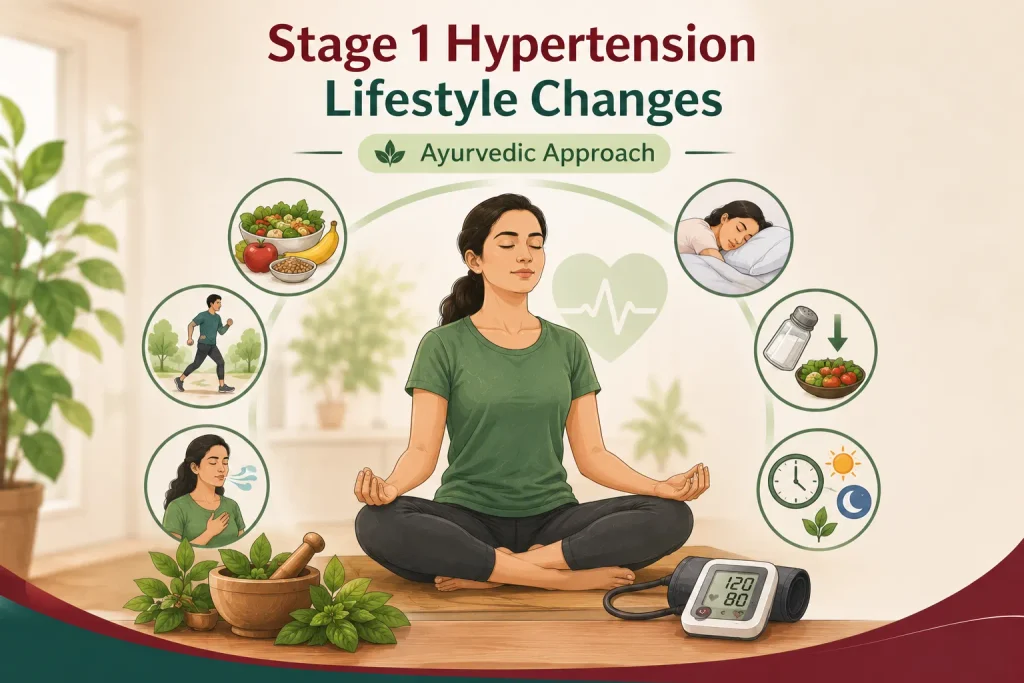
Research shows patients who added Ayurvedic medication, diet, and yoga to standard lifestyle measures showed significant improvement in blood pressure at six months, alongside better symptom control than lifestyle measures alone. (Sharma et al., 2021).
Separate research of Ayurvedic treatment in essential hypertension found meaningful reductions when Ayurvedic care was combined with regular monitoring (Deshmukh et al., 2025).
What Does a Supervised Ayurvedic Early Hypertension Treatment Include?
| Diet | Reduced salt, sugar, oil, fried and sour food, and more fruit, vegetables, and lighter meals |
| Daily routine | Fixed sleep and wake times, regular meal timing, reduced stress |
| Lifestyle and Exercise | Breathing practices and gentle postures to calm the nervous system |
| Herbal formulations | Considered where appropriate, prescribed and monitored by your doctor |
| Monitoring | Regular blood pressure checks alongside your existing follow-up schedule |
When Lifestyle Changes Are Not Enough For Stage 1 Hypertension
For adults with stage 1 hypertension and a lower 10-year cardiovascular risk, lifestyle changes are recommended initially. If average blood pressure remains above 130/80 mmHg after 3 to 6 months of sustained lifestyle changes, antihypertensive medication should be continued. (Jones et al., 2021). This isn’t a sign that lifestyle change failed. Lifestyle measures usually continue even after medicine starts, reducing the risk of an increase in hypertension, since they support whatever treatment comes next.
| Stage 1 reading confirmed (130-139/80-89 mmHg) ↓ 10-year cardiovascular risk ↓ Lifestyle modification initiated ↓ Recheck blood pressure at 3 to 6 months. ↓ At target: continue lifestyle measures, recheck periodically ↓ Not at target: consider medicine alongside continued lifestyle change. |
A few situations may affect this flow. If your 10-year cardiovascular risk is increased or you develop diabetes or kidney disease, or if your blood pressure moves into Stage 2 territory (140/90 mmHg or higher) during this window, your doctor may recommend earlier treatment instead of waiting for 3 to 6 months.
Madhavbaug’s Approach to Stage 1 Hypertension
At Madhavbaug, Stage 1 hypertension treatment begins with understanding more than just your blood pressure reading. An Ayurvedic physician reviews your health history, current medicines, lifestyle, weight, diet, blood pressure pattern and relevant diagnostic reports. The Ayurvedic assessment also considers your Prakriti and current health status to help personalise the plan.
Treatment may focus on Panchakarma, a personalised diet plan, lifestyle and personalised exercise guide, stress management, sleep and daily routine, along with Ayurvedic formulations when considered appropriate. Blood pressure is monitored regularly to see how you are responding. If you are already taking prescribed medicines, they remain part of the treatment plan and are not stopped or changed without medical guidance. You can learn more about Madhavbaug’s hypertension treatment approach before your consultation.
“A lot of patients come to us hoping Ayurveda means skipping medicine altogether. What we actually offer at Stage 1 is a structured, personalised version of the same lifestyle changes the guidelines recommend, tracked closely enough that we know quickly whether it’s working or whether it’s time to bring in additional treatment.”
— Dr. Cinni Vijay Pandey, Regional Medical Head, Madhavbaug
Madhavbaug brings Ayurvedic assessment, modern diagnostics and ongoing blood pressure monitoring together across its 350+ clinics and hospitals in India. This allows the treatment plan to be reviewed as your blood pressure and other health markers change.
Book a Consultation
If you have recently been diagnosed with Stage 1 hypertension, a consultation can help you understand your individual cardiovascular risk and what needs to change to bring your blood pressure under better control. Bring your recent blood pressure readings, test reports and current medication list so our doctors can assess your health more completely.
Book a consultation at your nearest Madhavbaug clinic to have your blood pressure, health risks and current treatment reviewed and to discuss a personalised plan for managing hypertension.
Recently diagnosed with Stage 1 hypertension? Understand your blood pressure risk and discuss a personalised treatment plan with a Madhavbaug doctor.
Frequently Asked Questions
Do I need blood pressure medicine if I have Stage 1 hypertension?
Not necessarily. If your 10-year cardiovascular risk is low and you don’t have diabetes, existing heart disease, or kidney disease, lifestyle changes alone are the recommended starting point. If your risk is higher, medicine alongside lifestyle change is usually recommended from the start.
Which lifestyle change lowers blood pressure the most at Stage 1?
Combining lifestyle interventions can provide greater blood-pressure reduction than focusing on a single intervention alone. The DASH diet alone can lower systolic blood pressure by about 7.6 mmHg on average, while a comprehensive approach incorporating diet, weight management, and regular physical activity may produce substantially greater reductions. However, these effects should not be assumed to be simply additive and can vary between individuals.
How long should I try lifestyle changes before considering medicine?
For adults with Stage 1 hypertension and a 10-year CVD risk below 7.5%, antihypertensive medication is recommended if average blood pressure remains ≥130/80 mmHg after an initial 3–6-month trial of lifestyle modification. Lifestyle measures should continue even when medication is started.
Can Ayurveda help manage Stage 1 hypertension instead of lifestyle changes?
Ayurvedic care may be used as a complementary approach to lifestyle management, with individualized attention to diet, daily routine, physical activity, stress management, and other healthy habits. Where herbal formulations are considered, they should be used under appropriate medical supervision and should not replace evidence-based antihypertensive treatment when medication is indicated.
What raises my risk enough that I’d need medicine even at Stage 1?
Certain conditions increase cardiovascular risk and may favor earlier medication, including established cardiovascular disease, previous stroke, diabetes, or chronic kidney disease. For adults with Stage 1 hypertension without these conditions, a 10-year PREVENT-CVD risk ≥7.5% is another indication to initiate antihypertensive medication alongside lifestyle measures.
Related reading
- Stages of Hypertension and Treatment Options Explained
- Natural Ways to Reduce Blood Pressure Without Medication
- High Blood Pressure Treatment Without Lifelong Medication
References
American Heart Association (2025) Top Things to Know: 2025 High Blood Pressure (BP) Guideline. Professional Heart Daily. Updated 14 August 2025. Available at: American Heart Association – 2025 High Blood Pressure Guideline (Accessed: 31 August 2026).
Jones, D.W., Whelton, P.K., Allen, N. et al. (2021) ‘Management of stage 1 hypertension in adults with a low 10-year risk for cardiovascular disease: filling a guidance gap: a scientific statement from the American Heart Association‘, Hypertension, 77(6), pp. e58–e67.
Hall, M.E., Cohen, J.B., Ard, J.D., Egan, B.M., Hall, J.E., Lavie, C.J., Ma, J., Ndumele, C.E., Schauer, P.R. and Shimbo, D. (2021) ‘Weight-loss strategies for prevention and treatment of hypertension: a scientific statement from the American Heart Association‘, Hypertension, 78(5), pp. e38–e50.
Sharma, R., Goyal, A., Singh, R., Khanduri, S., Ota, S., Goel, S., Rana, R.K., Singhal, R., Shahi, V.K., Srikanth, N., Swasticharan, L. and Dhiman, K.S. (2021) ‘Effect of Ayurveda intervention in the integrated management of essential hypertension: a retrospective observational study‘, Journal of Ayurveda and Integrative Medicine, 12(3), pp. 521–528.
Deshmukh, S., Choudhary, K., Ahmad, A., Reddy, G., Rao, B.C.S., Srikanth, N. and Acharya, R. (2025) ‘Effectiveness and safety of Ayurvedic intervention in essential hypertension: a systematic review with meta-analysis‘, Frontiers in Pharmacology.


 Locate a Centre
