
Key Takeaways
|
Vata Dosha is responsible for movement and communication within the Ayurvedic understanding of the body. It is associated with breathing, swallowing, speech, sensory perception, movement of food through the digestive tract and the elimination of waste.
Think about how many different movements your body performs throughout the day. You breathe in and out, blink, speak, walk and pass urine and stool. Ayurveda explains these varied functions through Vata and its five subdivisions.
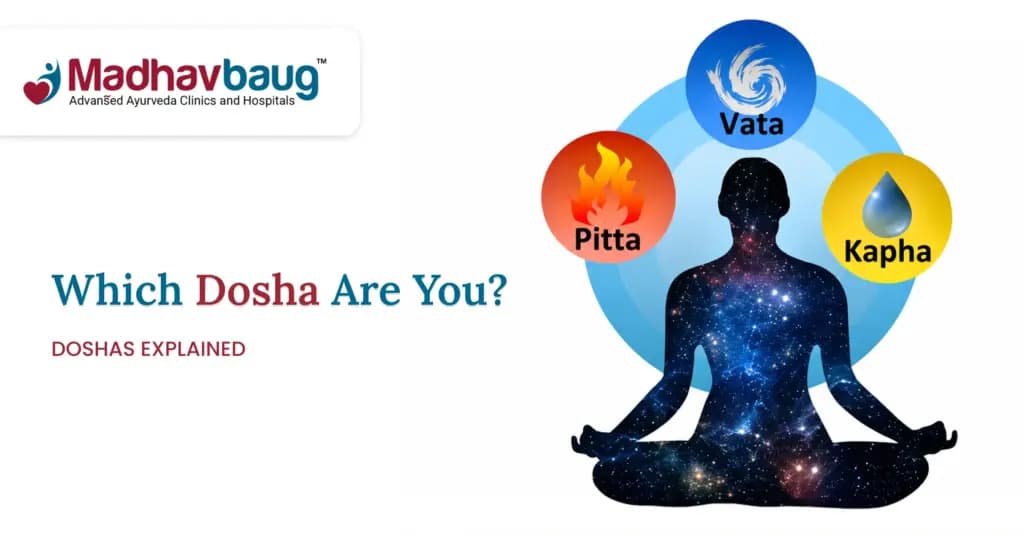
Vata works alongside Pitta and Kapha. Pitta is associated with transformation and digestion, while Kapha supports structure, stability and cohesion. Ayurveda considers the three Doshas together when interpreting your constitution and current health.
What Are Vata Dosha Symptoms?
Vata Dosha symptoms in Ayurveda are understood through changes in movement, dryness, appetite, sleep and daily bodily functions. You may notice dry skin, constipation, irregular hunger, restless sleep or difficulty following a regular routine. An Ayurvedic practitioner considers how these experiences fit your overall constitution and health.
Vata is one of the three Doshas in Ayurveda. It is associated with the elements of space and air and governs movement throughout the body. The Charaka Samhita describes Vata through its qualities and functions, including sensory activity, speech, elimination and the movement of bodily tissues. (Charaka Samhita, Sutra Sthana 12)
When Vata is considered aggravated, its qualities may become more prominent in the Ayurvedic assessment. Understanding those qualities gives you a clearer picture of why certain dietary and lifestyle measures are traditionally recommended.
Looking for guidance on Vata balance?
What Are the Gunas of Vata Dosha?
In Ayurveda, Guna means a quality or characteristic. The Gunas help explain how a Dosha behaves and why particular foods, environmental conditions and habits may be considered suitable for balancing it.
Charaka describes Vata through qualities including dryness, lightness, coldness, roughness, subtlety and mobility. Each quality has a specific meaning in the Ayurvedic framework. (Charaka Samhita, Sutra Sthana 1/58)
| Vata Guna | Meaning | How Ayurveda interprets it |
| Ruksha | Dry | Associated with dryness of the skin and hair and reduced unctuousness |
| Laghu | Light | Associated with a light body frame and quick movements |
| Sheeta | Cold | Associated with sensitivity to cold and a preference for warmth |
| Khara | Rough | Associated with roughness and coarse texture |
| Sukshma | Subtle | Associated with subtle processes and functions that are difficult to observe directly |
| Chala | Mobile | Associated with movement, activity and variability |
| Vishada | Clear or non-slimy | Associated with clarity and a lack of sliminess in the classical description |
These qualities help explain why Ayurvedic approaches to Vata often favour warmth, nourishment, oiliness and regularity.
For example, if dryness is prominent, an Ayurvedic practitioner may consider suitable nourishing foods and external oil application. If your routine is irregular, the practitioner may recommend consistent meal times and adequate rest.
The approach depends on your symptoms and overall health. Each Guna is part of a wider assessment rather than a conclusion drawn from a single observation.
What Is Vata Prakriti?
Prakriti means your natural constitution in Ayurveda. It is understood to develop at conception and remain relatively stable throughout life. Your Prakriti reflects the relative predominance of Vata, Pitta and Kapha.
When Vata is predominant in your constitution, Ayurveda describes you as having Vata Prakriti or a Vata-dominant constitution. You may have a lighter body frame, a variable appetite, dry skin or a tendency to sleep lightly. Your movements and speech may also be quick.
The Charaka Samhita discusses the characteristics of different constitutions in Vimanasthana 8. It describes Vata-predominant individuals through physical, behavioural and functional features. (Charaka Samhita, Vimana Sthana 8/98–99)
Vata Prakriti Features According to Charaka Samhita
The following table explains traditional features associated with Vata Prakriti in everyday language.
| Feature | Classical Ayurvedic description | What it means in everyday life |
| Body frame | Lean or less compact body build | You may naturally have a slender frame |
| Skin and hair | Dryness and roughness | Your skin or hair may tend towards dryness |
| Veins and tendons | More prominent veins and tendons | Veins, tendons or joints may appear more visible |
| Voice | May be dry, rough or less steady | Your voice may sound rough or change in tone |
| Movement | Quick and variable | You may walk, speak or perform tasks quickly |
| Appetite | Variable appetite and eating habits | Your hunger may vary from one day to another |
| Sleep | Light or easily interrupted sleep | You may wake easily or have difficulty maintaining a regular sleep schedule |
| Joints | Greater prominence or instability of joints in the classical description | Your joints may appear prominent or produce sounds during movement |
| Temperature preference | Greater sensitivity to cold | You may prefer warm surroundings |
| Mental activity | Quick understanding and rapid responses in classical descriptions | You may grasp ideas quickly and move between tasks rapidly |
These features describe a traditional constitutional pattern. Your body frame, sleep or appetite cannot independently establish your Prakriti. An Ayurvedic practitioner considers several characteristics together, along with your health history.
Does Vata Prakriti Mean You Have a Vata Imbalance?
Your Prakriti describes your natural constitution. Vikriti refers to the current state of the Doshas in relation to that constitution.
For example, you may have a naturally lean body frame and a quick pace of activity. If these features have been consistent throughout your life, an Ayurvedic practitioner may consider them while assessing Vata Prakriti.
Suppose your appetite has recently become irregular and you have developed persistent constipation and disturbed sleep. The practitioner would examine these changes alongside your usual pattern to understand whether an aggravated Vata state may be involved.
The difference matters because your usual constitutional features and a recent change in health require different considerations.
What Are the Five Types of Vata Dosha?
Ayurveda divides Vata into five functional types known as the Pancha Vayu. Each type has a particular location and role in the body. Together, they explain different aspects of movement, from breathing and speech to digestion-related movement and elimination.
The Charaka Samhita discusses these five types in Chikitsa Sthana 28, the chapter on Vata disorders. (Charaka Samhita, Chikitsa Sthana 28/5–10)
1. Prana Vata
Main role: Breathing, swallowing and sensory functions.
Prana Vata is associated with the head, chest, throat, tongue, mouth and nose in classical Ayurvedic descriptions. It supports functions such as breathing, swallowing, sneezing, belching and the intake of food.
In everyday life, Prana Vata helps explain the importance Ayurveda places on the coordination of breathing and other functions involving the mouth, throat and senses.
Ayurveda considers this type when assessing symptoms related to these functions. Difficulty breathing or swallowing requires prompt medical assessment, as these symptoms can have serious causes.
2. Udana Vata
Main role: Speech, effort, enthusiasm and expression.
Udana Vata is associated with the navel, chest and throat. Its functions include speech, effort, energy, strength and aspects of expression.
Think about speaking clearly during a conversation or finding the energy to complete a task. Ayurveda discusses these functions in relation to Udana Vata.
Within this framework, an Ayurvedic practitioner considers the person’s overall condition and the pattern of symptoms when assessing Udana. Persistent voice changes, marked weakness or difficulty speaking may require medical evaluation.
3. Samana Vata
Main role: Supporting digestion and the movement of digestive contents.
Samana Vata is described as functioning near the digestive fire, or Agni. Ayurveda associates it with the movement and processing of food in the digestive tract and with the separation of useful material from waste.
Your appetite and bowel habits can offer useful information about your digestive health. Ayurveda may consider irregular hunger, bloating or changes in bowel movements when assessing Samana Vata and digestive function along with Jatharagni (digestive fire).
Such symptoms have several possible causes. Persistent digestive discomfort deserves an appropriate medical assessment.
4. Vyana Vata
Main role: Movement throughout the body.
Vyana Vata is described as spreading throughout the body. Its functions include walking, bending, stretching, movement of the limbs and other coordinated bodily actions.
When you reach for an object, walk across a room or move your arms and legs, Ayurveda considers these actions within the functions of Vyana Vata.
“Vyana Vata is described in Ayurveda through its role in movement throughout the body. When assessing a patient, I look at their mobility, coordination and any changes in physical activity along with their overall health. These observations help guide the assessment and determine whether further medical evaluation is needed.”
– Dr. Bipind Gond, Zonal Medical Head, Madhavbaug
The classical description connects Vyana with widespread movement. It should not be treated as a direct equivalent of any single modern body system.
Sudden weakness, loss of coordination or difficulty moving a limb requires urgent medical attention.
5. Apana Vata
Main role: Elimination and reproductive functions.
Apana Vata is associated with the lower abdomen and pelvic region. Its functions include passing stool and urine, ejaculation, menstruation and childbirth.
Ayurveda considers Apana Vata when assessing bowel movements, urinary functions and aspects of reproductive health.
If you experience persistent constipation, painful urination, unusual menstrual changes or pelvic discomfort, seek suitable medical advice. An Ayurvedic assessment may be discussed alongside appropriate clinical evaluation.
Summary of the Five Vata Types
| Type of Vata | Main location described in Ayurveda | Primary functions |
| Prana | Head, chest, throat, mouth and nose | Breathing, swallowing, sneezing and sensory functions |
| Udana | Navel, chest and throat | Speech, effort, enthusiasm and strength |
| Samana | Near the digestive fire | Digestive movement and processing of food |
| Vyana | Throughout the body | Movement of the limbs and coordinated actions |
| Apana | Lower abdomen and pelvic region | Elimination, menstruation, ejaculation and childbirth |
The five types are interconnected within Ayurvedic physiology. Their functions are considered together when assessing the movement and coordination of bodily activities.
What Causes Vata Dosha to Become Aggravated?
Ayurveda considers the qualities of your food, daily routine, surroundings and activity levels when assessing a possible Vata imbalance. Habits that increase dryness, coldness, lightness or irregularity are traditionally associated with Vata aggravation.
Common factors considered in Ayurvedic practice include:
| Factor | How it may affect Vata according to Ayurveda |
| Irregular meal times | Skipping meals or eating at changing times may increase irregularity in the body’s routine. |
| Excessively dry or light foods | These foods share qualities associated with Vata and may be reviewed during dietary planning. |
| Cold and dry surroundings | Coldness and dryness are qualities associated with Vata. |
| Insufficient rest | An inconsistent sleep schedule may disturb daily routines and recovery. |
| Excessive activity | Physical exertion without adequate rest may contribute to fatigue. |
| Frequent changes in routine | Unpredictable meal times and sleep schedules may increase irregularity in daily habits. |
These factors are part of traditional Ayurvedic reasoning. Their presence does not establish the cause of a medical symptom. Your practitioner should consider your complete health history and relevant investigations.
How Can You Recognise Vata Imbalance Symptoms?
When Vata is considered aggravated, Ayurveda looks for changes that reflect its qualities and functions. The pattern may involve digestion, skin, sleep, movement or general activity.
Dryness of Skin and Hair
Ruksha is the dry quality of Vata. Ayurveda may consider dry skin, rough hair and cracked lips when assessing a possible increase in this quality.
Weather, skin conditions, dehydration and other factors can contribute to dryness. Persistent itching, painful cracks or inflammation may need medical attention.
Constipation and Irregular Bowel Movements
Vata is associated with movement and elimination. Constipation, hard stools and irregular bowel habits may be considered in a Vata assessment.
Your fluid intake, diet, activity levels, gut health and medicines can affect bowel movements. Persistent constipation or a sudden change in bowel habits should be discussed with a healthcare professional.
Variable Appetite and Bloating
Ayurveda associates Vata with Vishamagni, a state of digestive fire characterised by irregularity. You may experience changing hunger patterns, gas or bloating.
An Ayurvedic practitioner may assess these symptoms alongside your food habits and routine. Persistent digestive problems can also indicate conditions that require medical evaluation.
Light or Disturbed Sleep
Light sleep and irregular sleep patterns are described among the characteristics associated with Vata. Stress, caffeine, pain and changes in routine may also affect your sleep.
If sleep problems continue and affect your daily life, seek professional advice to identify possible causes.
Restlessness and Variable Activity
Chala means mobile. Ayurveda associates Vata with movement and variability. You may recognise this pattern in a tendency to move quickly or shift between activities.
Changes in behaviour or energy levels can have many explanations. An Ayurvedic practitioner considers the wider pattern before relating them to Tridosha.
Sensitivity to Cold
Sheeta means cold. Greater sensitivity to cold is a traditional feature associated with Vata Prakriti.
Feeling unusually cold can also occur with conditions such as anaemia or thyroid disorders. If this is a new or persistent change, discuss it with your doctor.
| Clinical Insight “Over the years, I have learned that symptoms such as constipation, disturbed sleep, dry skin and sensitivity to cold need to be understood in the context of the person’s overall health. From an Ayurvedic perspective, I assess the individual’s Prakriti and look for changes from their usual patterns before considering Vata aggravation. I also review their medical history and current symptoms to guide appropriate care.” Dr. Gurudatta Amin, BAMS, MD, PGDEMS, 19+ Years of Clinical Experience, CMO, Madhavbaug |
How to Balance Vata Dosha Through Ayurveda
Ayurveda traditionally recommends warmth, nourishment, regularity and adequate rest when Vata is considered aggravated. The aim is to choose habits that suit your constitution and current health.
1. Choose Warm and Nourishing Meals
Warm, freshly prepared food is commonly recommended in Ayurvedic approaches to Vata. Soft-cooked vegetables, soups, khichdi and cooked grains may be useful options depending on your nutritional needs.
Try to maintain regular meal times and eat enough to meet your energy requirements. Ayurveda may also consider foods with unctuous qualities, such as suitable amounts of oil or ghee according to your individual needs.
If you have diabetes, kidney disease or another condition that requires dietary management, consult your doctor or dietitian before making significant changes.
2. Keep Your Routine Regular
A predictable daily routine supports regular meals, sleep and activity. Ayurveda describes this approach through Dinacharya, or daily regimen.
You can begin with a consistent waking time, regular meals and a bedtime that allows adequate sleep. Give yourself time to rest between demanding activities.
Choose changes you can sustain. A routine that fits your work, family responsibilities and health needs is more practical than one that is difficult to maintain.
3. Consider Abhyanga Under Suitable Guidance
Abhyanga refers to the Ayurvedic practice of oil application or massage. It is traditionally used in Vata-oriented care because oiliness and warmth are considered opposite to qualities such as dryness and coldness.
The type of oil, method and frequency depend on the person and the purpose of treatment. Ask a qualified practitioner whether Abhyanga is appropriate for you, particularly if you have skin problems.
4. Choose Gentle and Appropriate Movement
Walking, gentle yoga and suitable stretching can help maintain mobility and support general health. Choose activity according to your fitness, age and medical history.
Ayurveda considers the amount of activity in relation to a person’s strength and current condition. Allow adequate recovery after exertion, especially if you are unwell or recovering from an illness.
5. Support Healthy Sleep Habits
A regular sleep schedule can help you establish a consistent routine. Reduce stimulating activities before bed and make your sleeping environment comfortable.
If you continue to have difficulty sleeping, consider factors such as stress, caffeine, pain, medicines and possible sleep disorders. Persistent sleep problems may require medical evaluation.
6. Seek Individualised Ayurvedic Advice
Your practitioner may recommend dietary adjustments, changes to your routine or selected Ayurvedic therapies after reviewing your constitution and current health.
Treatment decisions should account for your medical history, current medicines and any ongoing condition.
Herbal preparations can interact with medicines. Keep your healthcare team informed about any products you use and continue prescribed treatment unless your treating clinician advises a change.
How Madhavbaug Can Help You Manage Aggravated Vata Dosha
Understanding your Vata Prakriti and recognising signs of Vata imbalance can help you make better choices about your diet and daily routine.
At Madhavbaug, treatment planning involves an individual health assessment that considers your symptoms, medical history, current medicines and lifestyle. Depending on your health needs, the care plan may include personalised dietary guidance, lifestyle changes and selected Ayurvedic therapies under medical supervision.
If you are experiencing symptoms of Vata imbalance, visit your nearest Madhavbaug clinic for a doctor’s consultation and guidance tailored to your health needs.
What Can Nidana Panchaka Reveal About How a Disease Develops?
Frequently Asked Questions
What are the most common Vata Dosha symptoms?
Commonly described Vata imbalance symptoms include dry skin, constipation, variable appetite, disturbed sleep and restlessness. Ayurveda assesses the pattern of symptoms alongside your constitution and overall health.
What are the Gunas of Vata Dosha?
Vata is described through qualities such as Ruksha (dry), Laghu (light), Sheeta (cold), Khara (rough), Sukshma (subtle) and Chala (mobile). These qualities explain its traditional functions and inform Ayurvedic approaches to balance.
What are the five types of Vata?
The five types are Prana, Udana, Samana, Vyana and Apana. They are associated with breathing and swallowing, speech and effort, digestion-related movement, movement throughout the body, and elimination and reproductive functions, respectively.
What are the features of Vata Prakriti according to Charaka Samhita?
The Charaka Samhita describes features such as a lean body frame, dry skin and hair, variable appetite, light sleep, quick movements and greater sensitivity to cold. An Ayurvedic practitioner considers multiple characteristics when assessing Prakriti.
Can you have Vata Prakriti without a Vata imbalance?
Yes. Vata Prakriti describes your natural constitution, while Vikriti refers to the current state of the Doshas. A Vata-predominant constitution does not automatically indicate an aggravated Vata state.
How can you balance Vata Dosha naturally?
Ayurveda commonly recommends warm and nourishing meals, regular meal times, adequate rest and a consistent daily routine. A practitioner can help you choose suitable measures based on your health and individual needs.
Which foods are suitable for Vata Dosha?
Ayurveda often favours warm, freshly prepared and nourishing foods for Vata-related concerns. Cooked vegetables, soups and soft-cooked grains may be suitable choices. Your nutritional needs and medical conditions should guide your food choices.
When should you consult a doctor for Vata symptoms?
Consult a healthcare professional if constipation, digestive discomfort, disturbed sleep, fatigue or other symptoms persist. Sudden severe symptoms or significant changes in health require prompt medical attention.
References
Agnivesha (n.d.) Charaka Samhita. Sutra Sthana, Chapter 1, verse 58.
Agnivesha (n.d.) Charaka Samhita. Sutra Sthana, Chapter 12.
Agnivesha (n.d.) Charaka Samhita. Vimana Sthana, Chapter 8, verses 98–99.
Agnivesha (n.d.) Charaka Samhita. Chikitsa Sthana, Chapter 28, verses 5–10.



 Locate a Centre

