

Key Takeaways
|
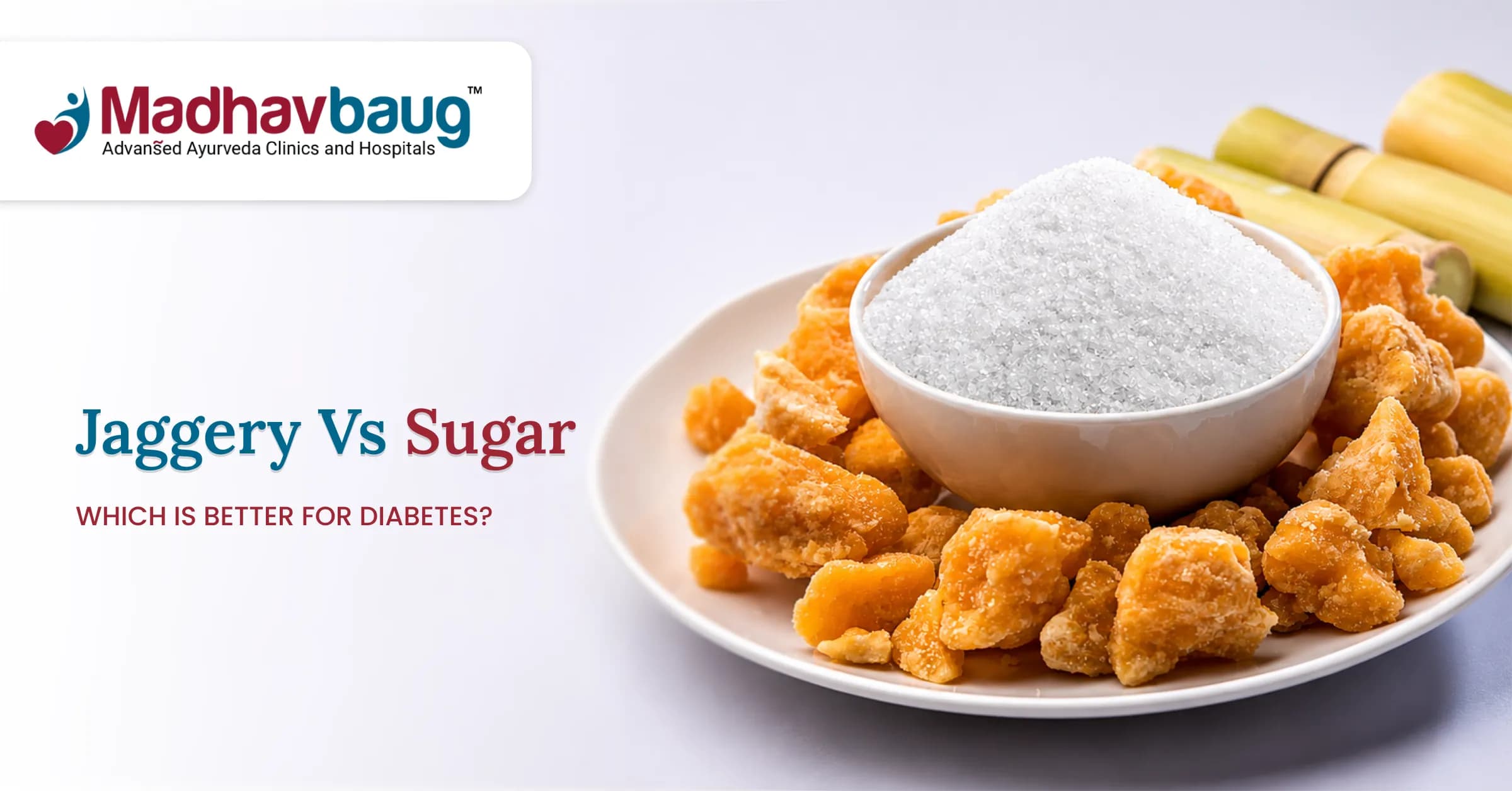
Jaggery, commonly called ‘gur’ or ‘gud’ in India, is often seen as a healthier alternative to white sugar. It is less refined than white sugar and retains small amounts of minerals such as iron.
But if you have diabetes, switching from white sugar to jaggery does not automatically make a food or drink better for your blood sugar.
Your HbA1c test gives a broader picture of your blood sugar control over time. What you eat regularly matters more than whether one sweetener sounds healthier than another.
Is Jaggery Good for Diabetes?
Jaggery is not a better sugar substitute for diabetes just because it is natural or less refined.
It does contain small amounts of iron and other minerals. But these nutrients do not stop gur from raising your blood sugar.
If you have diabetes, you do not necessarily have to avoid jaggery completely. A small amount once in a while is very different from using it every day.
For example, a little gur after a meal is not the same as adding it to tea several times a day. Chikki, til-gur and jaggery-based sweets can also add more sugar than you may expect.
| Remember No refined sugar” does not mean sugar-free. A sweet made with jaggery still contains sugar. If you have diabetes, check the portion instead of assuming it is a better choice because white sugar has been replaced with gur. |
Not sure how jaggery or other sweet foods fit into your diabetes diet?
Jaggery vs Sugar: What’s the Difference?
Jaggery and white sugar both come from sugarcane but are not processed in the same way.
White sugar is more processed. Jaggery is processed less, so it retains small amounts of minerals that are mostly removed during sugar refining.
The table below shows the main differences between jaggery and white sugar.
| Jaggery | White Sugar |
| Less refined and usually retains some molasses. | More refined and purified during processing. |
| Mostly contains sugars, with sucrose as the main one. | Mostly contains sucrose as its main sugar. |
| Contains small amounts of minerals such as iron and potassium. | Contains very little iron or potassium. |
| Does not provide a meaningful amount of fibre. | Does not provide a meaningful amount of fibre. |
| Can raise your blood glucose after eating. | Can raise your blood glucose after eating. |
| It counts as added sugar in your diet. | It counts as added sugar in your diet. |
Jaggery does contain a few nutrients that white sugar largely loses during refining. But the amount you would normally use as a sweetener is small. Eating more gur to get more iron or minerals would also mean eating more sugar.
If you eat gur with roti or dal, the carbohydrate portion of the rest of the meal matters too. An Indian diabetes diet chart can show how carbohydrate, protein and vegetables fit together on the same plate.
Jaggery vs Sugar: Their Effect on Blood Glucose
Both jaggery and white sugar can raise your blood glucose. Jaggery may be less refined, but your body still has to handle the sugars it contains.
Research comparing the two has not shown a clear blood sugar benefit from choosing jaggery instead of sugar.
STUDY HIGHLIGHT
What happened when jaggery and sugar were tested in people with type 2 diabetes?
43 adults with type 2 diabetes were studied. Their average HbA1c was 9.17%. Researchers found no significant difference in peak blood glucose or overall glucose exposure after coconut jaggery versus cane sugar.
The researchers concluded that coconut jaggery could not be considered a healthier substitute for cane sugar in people with type 2 diabetes. (Pathirana et al., 2022)
This study looked at coconut jaggery, so the findings should not be applied to every type of gur. Still, it gives us no reason to assume that a less refined sweetener will automatically be easier on your blood sugar.
Why GI Values for Jaggery Need Careful Interpretation
The glycemic index (GI) tells you how quickly a carbohydrate food can raise blood glucose compared with a reference food. A higher GI generally means a faster rise.
For jaggery, you may find different GI values depending on the source. That is partly because gur is not one standard product. Cane jaggery, palm jaggery and coconut jaggery can differ in composition and processing.
An older Indian study reported a one-hour GI of about 84 for jaggery, compared with 69.2 for sucrose and 70.1 for honey. By two hours, the differences between jaggery, sucrose and honey were no longer significant (Uma et al., 1987).
So it would be misleading to treat 84 as the fixed GI of every jaggery product.
GI does not account for how much you actually eat. The portion you eat and what you eat with it can also change your glucose response.
If you monitor at home, your post-meal blood sugar can help you see how a particular meal affected you.
| Clinical Insight “When we advise someone with diabetes, we do not decide whether a sweetener is suitable from its glycemic index alone. We also look at HbA1c, post-meal glucose, current medicines and the person’s usual eating pattern. These details can change the dietary advice we give.” Dr Gurudatta Amin, BAMS, MD, PGDEMS 19+ Years of Clinical Experience, CMO, Madhavbaug |
Jaggery Benefits: What Is Real and What Is Overstated
Jaggery does have a few nutritional advantages over white sugar. Because it is less refined, it retains some minerals from sugarcane.
Cane jaggery contains iron, calcium, magnesium and potassium. It also contains small amounts of naturally occurring plant compounds such as polyphenols. White sugar loses most of these during refining.
So, the nutritional difference between jaggery and white sugar is real.
Where the confusion starts is when these nutrients are used to describe jaggery as a good source of iron or as a health food. The amount of gur you would normally eat is much smaller than the 100 g quantity used in food-composition tables.
Jaggery is also sometimes promoted for digestion, immunity or “detox”. These claims go beyond what its nutrient content can prove. Having some minerals does not make jaggery a treatment for anaemia or another health condition.
| PORTION PERSPECTIVE What do the nutrients in jaggery look like in a small portion? Indian Food Composition Tables show that cane jaggery contains several minerals. Here is what that looks like in 100 g and a more realistic 10 g portion. If you eat around 10 g of jaggery, that works out to roughly: Around 0.5 mg iron Around 11 mg calcium Around 12 mg magnesium Around 49 mg potassium Around 8.5 g available carbohydrate So yes, you get some minerals from gur. But you also get sugar with them. ICMR-NIN, Indian Food Composition Tables 2017. |
How Much Jaggery Can You Have With Diabetes?
There is no single amount of jaggery that is right for everyone with diabetes.
Current Indian dietary guidance includes jaggery in the same added sugar category as table sugar and honey. It recommends keeping added sugar to around 25 g per day or less for a 2,000 kcal diet (ICMR-NIN, 2024).
That does not mean 25 g of jaggery is a daily allowance for someone with diabetes. The guideline is for the general population and refers to total added sugar from all sources.
If you use gur, measure it instead of guessing from the size of a piece. A small piece can look harmless, but repeated use through tea, sweets or after meals can add up over the day.
Your fasting sugar, post-meal sugar and HbA1c do not tell you the same thing. Understanding the difference between them can help you make better sense of your glucose pattern.
What Changes Jaggery’s Effect on Blood Sugar?
The same amount of jaggery will not affect every meal in exactly the same way.
Adding a little bit of gur to a meal with vegetables, dal, and protein has a different effect than having the same gur on its own or in a sweet dish. The rest of the plate changes how quickly carbohydrate is digested and absorbed.
A few things are worth looking at:
- Portion size – 5 g of jaggery and 20 g of jaggery do not add the same amount of carbohydrate to your meal.
- What you eat with it – If gur is eaten with foods that provide fibre, protein or fat, the rise in blood glucose may be slower than when it is eaten on its own.
- How often you use it – A small piece once in a while is different from adding jaggery to tea every day or eating jaggery-based sweets regularly.
- Your glucose response – The same food can produce different post-meal readings in different people.
- Your diabetes treatment – Medicines and insulin can also influence how your blood glucose looks after a meal.
Pairing jaggery with nuts, seeds or protein may slow the glucose rise, but it does not cancel the sugar in the gur. The same applies to your wider diabetes diet. Controlling diabetes depends on more than changing one food or sweetener.
Gur in Tea, Chikki and After Meals
How you eat jaggery can change how much sugar ends up in the meal.
A spoon of gur in tea, a piece after lunch and a jaggery-based sweet may all look like small amounts on their own. But if they appear several times through the day, the total can add up quickly.
Here are some common ways gur is eaten in Indian diets:
| How you eat gur | What to keep in mind |
| In tea or coffee | Replacing white sugar with jaggery still adds sugar to the drink. |
| After a meal | Gur is still an extra source of carbohydrate after the rest of the meal. |
| Gur with chana | Chana adds protein and fibre, but the jaggery still contributes sugar. |
| Til-gur or chikki | Sesame, peanuts or nuts add useful nutrients, but the portion of jaggery still matters. |
| “No refined sugar” sweets | Using jaggery instead of white sugar does not make the sweet sugar-free or automatically suitable for diabetes. |
Should You Replace Sugar With Jaggery for Diabetes?
If your aim is better blood sugar control, simply swapping white sugar for jaggery is unlikely to make a big difference on its own.
A better place to start is with the amount of sweetness you use. For example, reducing the sugar or gur in tea from two teaspoons to one changes the total carbohydrate more than replacing the same amount of sugar with jaggery.
The rest of your meals matter as well. Large portions of rice or roti, frequent sweets and sweetened drinks can all add to your daily carbohydrate intake. In that situation, choosing ‘gur’ instead of ‘sugar’ does not solve the bigger problem.
You can still use a little jaggery for taste if it fits your diet. Just do not count it as a free or healthier form of sugar.
Managing diabetes also involves your overall food pattern, physical activity and glucose monitoring. One sweetener is only a small part of that picture.
“In diabetes care, we look at the person’s daily food habits and glucose readings together. Changing one ingredient may help in a small way, but the overall meal pattern usually tells us much more about where dietary changes are needed.”
– Dr. Bipin Gond, Zonal Medical Head, Madhavbaug
Diabetes Care at Madhavbaug
If you have diabetes, your food choices need to make sense alongside your glucose readings and current treatment.
At Madhavbaug, diabetes care can include a review of your blood sugar readings, food habits and lifestyle. Your current medicines and other health concerns may also be considered while planning care.
Dietary guidance can then be adjusted to your usual eating pattern rather than focusing only on one food such as sugar or jaggery.
If you already have fasting glucose, post-meal glucose or HbA1c reports, take them with you for your diabetes health checkup. Looking at the reports together can give your doctor a better picture of your current glucose pattern.
Want guidance based on your food habits and blood sugar readings?
Frequently Asked Questions
Is organic jaggery better for diabetes?
Not necessarily. Organic jaggery may differ in how it is produced, but the organic label does not mean it contains less sugar or will have a smaller effect on your blood glucose.
Is palm jaggery better than cane jaggery for diabetes?
Palm and cane jaggery can differ in their composition and processing. However, there is not enough evidence to say that palm jaggery is consistently better for blood sugar control. The portion you eat still matters.
Can jaggery increase HbA1c?
If jaggery is eaten regularly or in larger amounts, the sugar it provides can contribute to higher blood glucose. HbA1c reflects your average blood sugar over the previous few months, so your overall eating pattern matters more than one occasional serving.
Is jaggery better than honey for diabetes?
Neither should be treated as a diabetes-friendly sweetener simply because it is natural. Both jaggery and honey contain sugars that can raise blood glucose. An older study also found no clear reason to consider honey or jaggery a better substitute for people with type 2 diabetes.
Can you eat jaggery if you have prediabetes?
You do not necessarily need to completely avoid jaggery, but it should still be counted as an added sugar. If you use it, keep the portion small and consider how often other sweet foods and drinks appear in your diet.
References
Hewa Pathirana, H.P.D.T., Wijesekara, I., Yalegama, L.L.W.C., Garusinghe, C., Jayasinghe, M.A. and Waidyarathne, K.P. (2022) ‘Comparison of blood glucose responses by cane sugar (Saccharum officinarum) versus coconut jaggery (Cocos nucifera) in type 2 diabetes patients’, Journal of Future Foods, 2(3), pp. 261–265.
ICMR-NIN Expert Committee (2024) Dietary Guidelines for Indians 2024. Hyderabad: ICMR-National Institute of Nutrition, Indian Council of Medical Research.
Longvah, T., Ananthan, R., Bhaskarachary, K. and Venkaiah, K. (2017) Indian Food Composition Tables 2017. Hyderabad: National Institute of Nutrition, Indian Council of Medical Research.
Uma, P., Hariharan, R.S., Ramani, V. and Seshiah, V. (1987) ‘Glycaemic indices of different sugars’, International Journal of Diabetes in Developing Countries, 7, pp. 78–82.


 Locate a Centre

