

Key Takeaways
|
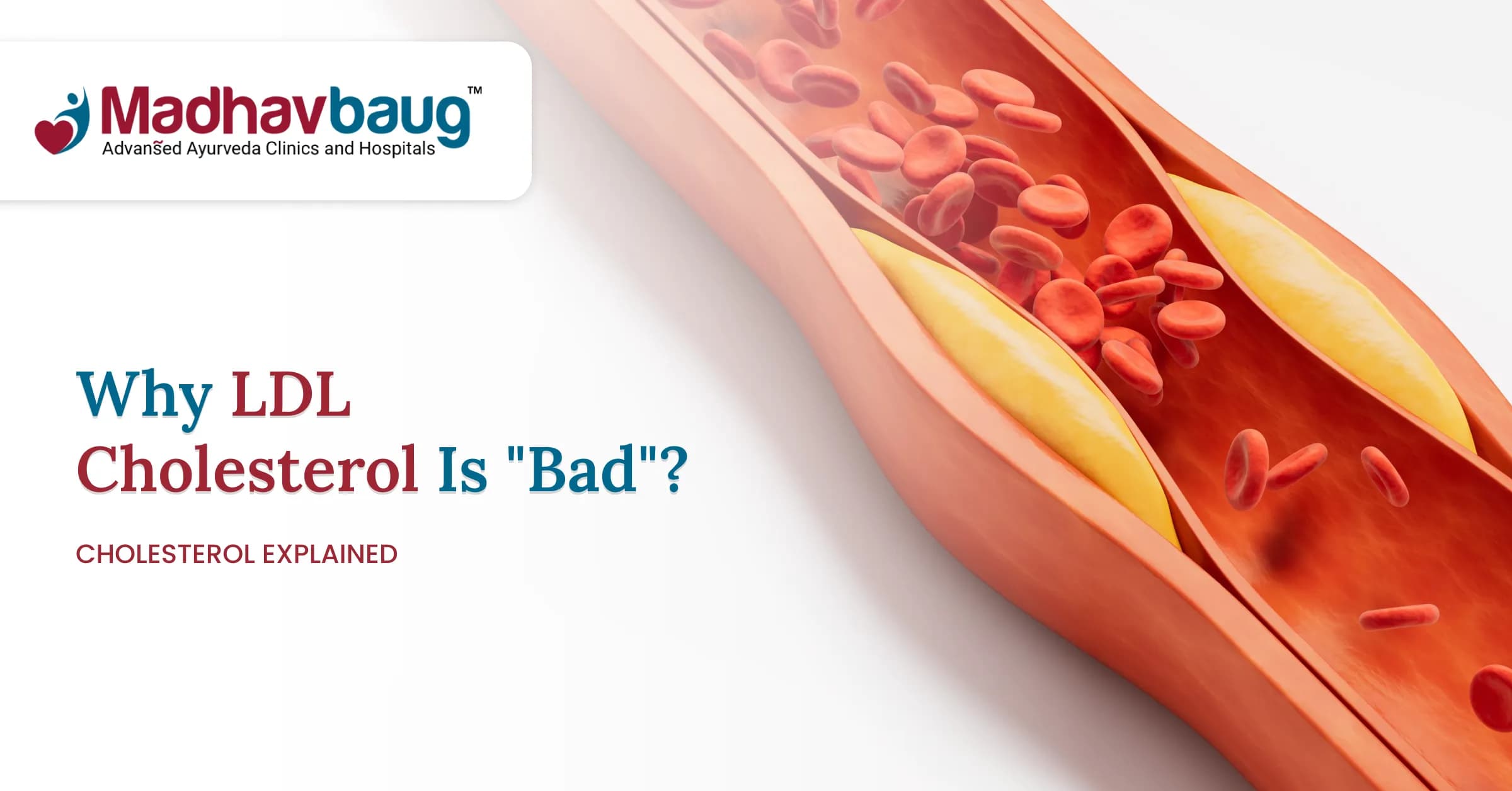
LDL cholesterol is a type of cholesterol that travels through your blood. It is commonly called “bad cholesterol” because too much LDL can contribute to plaque buildup inside the arteries over time.
If you are checking your cholesterol, a lipid profile test shows your LDL along with other important cholesterol numbers. For older adults, understanding LDL becomes important when there are other health concerns such as high blood pressure, diabetes or an existing heart condition.
What Is LDL Cholesterol?
LDL stands for low-density lipoprotein. It is a particle that carries cholesterol through the bloodstream.
Your body needs cholesterol for normal functions such as maintaining cells and making certain hormones. The concern is not cholesterol itself but having too much LDL cholesterol circulating in the blood over time.
Research shows that LDL plays a direct role in the development of atherosclerosis. Atherosclerosis means the gradual buildup of plaque inside the artery walls. The longer arteries are exposed to higher levels of LDL, the greater the opportunity for LDL particles to become trapped in the artery wall and cause plaque formation (Ference, Braunwald and Catapano, 2024).
This helps you understand why LDL cholesterol means “bad cholesterol”.
Want to understand your LDL cholesterol report better?
Why Is LDL Called Bad Cholesterol?
LDL is called bad cholesterol because LDL particles can enter and build up in the artery wall. Over time, this can lead to plaque formation.
You can think of your arteries as pathways that carry blood around your body. When plaque builds up inside these pathways, the space available for blood flow can become smaller.
This process is called atherosclerosis. It develops gradually and may not cause noticeable symptoms in its early stages.
A high LDL result does not mean that a heart problem will definitely happen. Heart health depends on several factors, including age, blood pressure, blood sugar, smoking, family history and previous cardiovascular disease.
What Are the LDL Cholesterol Levels?
An LDL cholesterol level below 100 mg/dL is generally considered a healthy range for many adults, but the right LDL target depends on your overall heart health and risk factors.
People who have diabetes, previous heart disease, or a higher risk of heart attack or stroke may be advised to aim for a lower LDL level.
Commonly used adult categories are:
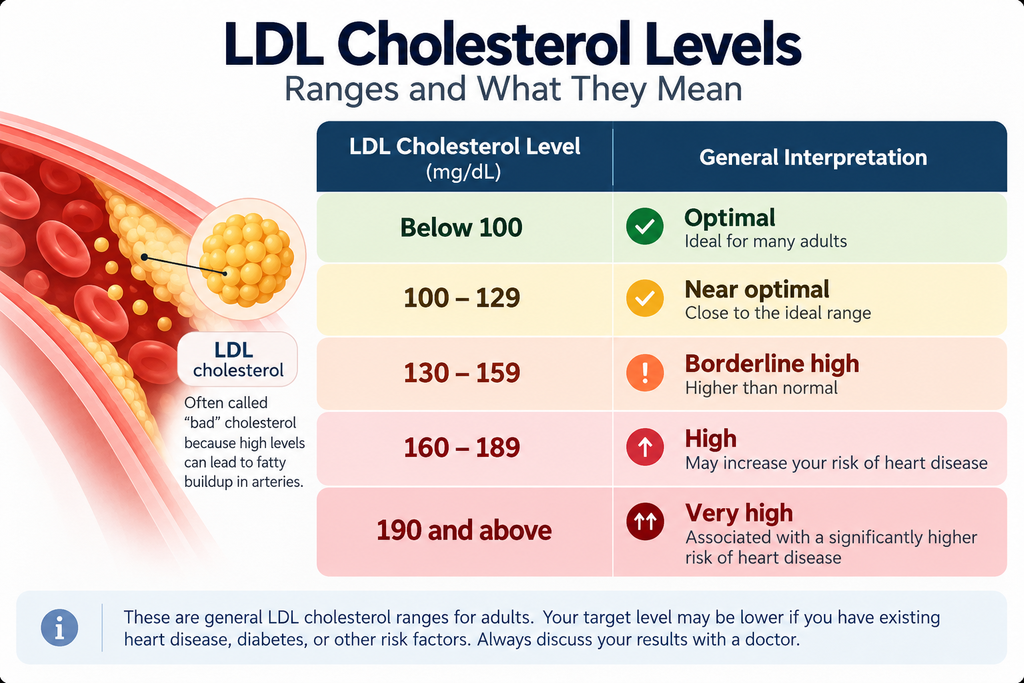
These ranges are useful for understanding a blood report, but they do not automatically tell you what your personal LDL target should be.
For example, an LDL level of 120 mg/dL may be interpreted differently in a person without known heart disease compared with someone who has already had a heart attack.
Your doctor may therefore consider your LDL along with your age, blood pressure, diabetes status, family history and previous heart health.
“When I review an LDL result, I do not look at the number alone. I also consider the person’s age, blood pressure, blood sugar, medical history and other cholesterol levels. This helps us understand what the result means for their overall heart health.”
– Dr. Bipin Gond, Zonal Medical Head, Madhavbaug
What Does High LDL Cholesterol Mean?
High LDL cholesterol means your LDL level is above the range considered suitable for your health profile.
One important thing to know is that high LDL usually does not cause symptoms. You can feel completely normal and still have high LDL cholesterol.
This is one reason cholesterol testing can be useful, particularly as you get older.
Several factors can affect LDL cholesterol, including diet, physical activity, body weight, diabetes, thyroid health, family history and age.
Some people are born with high LDL cholesterol because it runs in their family. Healthy food and regular activity can still help, but they may need to check their cholesterol more often and stay in regular touch with their doctor.
Why Does High LDL Matter After 60?
After the age of 60, your LDL cholesterol should be looked at as part of your overall heart health. A high LDL level should not be ignored simply because you are older.
Research in adults aged 75 years and older found that lowering LDL cholesterol was linked with a lower risk of major heart problems, including heart attack and stroke (Gencer et al., 2020).
However, your LDL result is only one part of your health picture. Your blood pressure, blood sugar, existing heart problems, other health conditions, daily activity and current medicines also matter when your doctor reviews your cholesterol report.
So, if you are over 60, the important question is not only “Is my LDL high?”
A more useful question is “What does my LDL level mean for my overall heart health?”
What Is LDL Cholesterol in a Blood Test?
An LDL cholesterol test checks how much LDL cholesterol is present in your blood. It is usually part of a lipid profile test, which checks different types of cholesterol and other fats in your blood.
The result is usually written in mg/dL on your blood test report. Your doctor checks this number along with your other cholesterol results, blood pressure, blood sugar, age and heart health.
LDL is usually included in a lipid profile, along with:
- Total cholesterol
- HDL cholesterol
- Triglycerides
- LDL cholesterol
Your doctor may also compare your current result with previous reports.
This can be useful because a change over time may provide more information than one isolated result.
For an older adult who is already being monitored for diabetes, high blood pressure or heart disease, keeping previous reports together can make these changes easier to understand.
| Clinical Insight “An LDL result should not be looked at on its own. For example, two people may both have an LDL of 130 mg/dL. One may have no known heart disease, while the other may have diabetes and a previous heart attack. Their doctors may therefore interpret the same LDL number differently.” Dr. Pravin Jayram Ghadigaonkar, BAMS, MD, PhD (Scholar) – Preventive Cardiology 20+ Years of Clinical Experience, Head Medical Operations & Patient Improvement, Madhavbaug |
What Does Low LDL Cholesterol Mean?
If your blood test shows low LDL cholesterol, it usually means there is less LDL cholesterol in your blood. Lower LDL levels are generally linked with a lower risk of heart problems.
A low LDL result is not usually a reason to worry on its own. What is considered a suitable LDL level can depend on your age, heart health and other health conditions.
Research has also found that lowering LDL can reduce the risk of major heart-related events (Baigent et al., 2010).
If you are taking treatment to lower your cholesterol, do not stop or change it on your own just because your LDL is low. Your doctor may have advised that level because of your personal heart health and risk factors.
What Do LDL, HDL and Total Cholesterol Mean?
LDL is an important part of your cholesterol report, but it is not the only number your doctor checks.
HDL is often called “good cholesterol” because it helps carry cholesterol away from the blood vessels. Understanding the HDL levels along with LDL levels can make your cholesterol report easier to understand.
Your doctor may also check total cholesterol and triglycerides, along with your blood pressure, blood sugar, weight, age and previous heart health. Looking at these blood tests together gives a better picture of your overall heart health.
If you want to understand how these numbers relate to each other, compare all three numbers to see how LDL, HDL and total cholesterol are read together.
Can Lifestyle Changes Help Lower LDL Cholesterol?
Lifestyle changes like healthy eating, regular physical activity and other daily habits can help lower LDL cholesterol and support better heart health. The amount of improvement is different from person to person, especially with age, other health conditions and current cholesterol levels.
For many older adults, this does not mean making big changes all at once.
A heart-friendly way of eating can include more vegetables, fruits, whole grains, lentils, and other beans. It can also mean reducing how often we eat deep-fried foods and foods that are high in saturated fat.
Staying active is important as well. A daily walk, gentle yoga, or other light exercises can be included based on your age, how mobile you are, and your health condition.
Keeping a healthy weight, not smoking, and managing your blood pressure and blood sugar can really help your heart stay healthy.
If you have diabetes, high blood pressure, or a heart condition, it’s important to talk to your doctor before making big changes to your diet or exercise routine. They can help guide you in the right direction.
Please do not stop, start, or change any medicine that your doctor has prescribed just because of your cholesterol report. It’s important to talk to your doctor first.
When Should You Get Your LDL Cholesterol Checked?
A lipid profile can measure LDL cholesterol along with other important blood tests.
Your doctor may recommend cholesterol testing if you have:
- High blood pressure
- Diabetes
- A family history of high cholesterol or heart disease
- Previous heart disease
- A previous high cholesterol result
- Other cardiovascular risk factors
For older adults, regular follow-up can also help compare the current report with previous results.
If you are arranging a cholesterol test for an elderly parent, a family member can accompany them or help keep previous reports ready for the proper consultation.
LDL Cholesterol and Heart Health at Madhavbaug
At Madhavbaug, an LDL result is considered along with other aspects of your cardiovascular and metabolic health.
Our doctors review your recent cholesterol report along with previous reports, blood pressure, blood sugar, weight, current medicines and relevant medical history.
Diet and lifestyle guidance may form part of the overall treatment plan based on your individual health needs. This can include practical changes to food choices, daily activity and routine.
If you already have diabetes, high blood pressure or a heart condition, your cholesterol goals may need to be considered alongside these conditions.
Understand Your LDL Before You Act on It
LDL cholesterol is an important part of your heart health, but one number does not tell the whole story.
If you have not checked your cholesterol recently, a lipid profile test can provide a clearer picture of your current cholesterol levels.
If you have a recent cholesterol report, bring it along with your previous reports and current medicines when consulting a doctor at your nearest Madhavbaug centre.
Have a recent cholesterol report?
Frequently Asked Questions
What is LDL cholesterol?
LDL cholesterol is cholesterol carried through the blood by low-density lipoprotein particles. Higher LDL can contribute to plaque buildup inside the arteries over time.
Is LDL cholesterol of 130 mg/dL high?
An LDL level of 130 mg/dL falls into the borderline-high category in commonly used adult ranges. Your doctor will consider your age, health conditions and overall cardiovascular risk before deciding what the result means for you.
What does LDL cholesterol low mean?
A low LDL level generally means there is less LDL cholesterol in the blood. Lower LDL is usually favourable for cardiovascular health, but your doctor should interpret the result along with your complete health profile.
What is LDL cholesterol in a blood test?
LDL cholesterol is the amount of cholesterol carried by low-density lipoprotein particles in your blood. It is usually reported in mg/dL and forms part of a lipid profile test.
Is high LDL cholesterol dangerous?
High LDL can contribute to plaque buildup in the arteries over time. However, the level of concern depends on your overall cardiovascular risk, including age, blood pressure, diabetes and previous heart disease.
How can I lower LDL cholesterol naturally?
A balanced diet, regular physical activity, healthy weight management and avoiding smoking can support healthier LDL levels. If you take prescribed medicines or have a heart condition, discuss changes with your doctor before making them.
References
Baigent, C., Blackwell, L., Emberson, J., Holland, L.E., Reith, C., Bhala, N., Barnes, E.H., Keech, A., Simes, J. and Collins, R. (2010) ‘Efficacy and safety of more intensive lowering of LDL cholesterol: a meta-analysis of data from 170,000 participants in 26 randomised trials’, The Lancet, 376(9753), pp. 1670–1681.
Ference, B.A., Braunwald, E. and Catapano, A.L. (2024) ‘The LDL cumulative exposure hypothesis: evidence and practical applications’, Nature Reviews Cardiology, 21, pp. 701–716.
Gencer, B., Marston, N.A., Im, K., Cannon, C.P., Sever, P., Keech, A., Braunwald, E., Giugliano, R.P. and Sabatine, M.S. (2020) ‘Efficacy and safety of lowering LDL cholesterol in older patients: a systematic review and meta-analysis of randomised controlled trials’, The Lancet, 396(10263), pp. 1637–1643.
Rozing, M.P. and Westendorp, R.G.J. (2023) ‘Altered cardiovascular risk pattern of LDL cholesterol in older adults’, Current Opinion in Lipidology, 34(1), pp. 22–26.





 Locate a Centre

